You may often have to reach behind you to massage your shoulders and find a tight, sensitive area that is painful to touch. People commonly seek out massage for knots. Massage can help to reduce tight muscles, encourage relaxation, and so improve mobility. This article will explore what muscle knots are, how and why they occur, and which massage therapies are most suitable. Information is also given on how frequently to receive massage and on how to safely massage muscle knots at home. Finally, we advise on when to consult a doctor.
What Are Muscle Knots?
Muscle knots are an area within a muscle that is continually tense and does not fully relax. As explained by a clinical massage therapist at UW Health, they are “hyperexcitable” sections of muscle. Sometimes, a knot can be felt as a lump or a firm area.
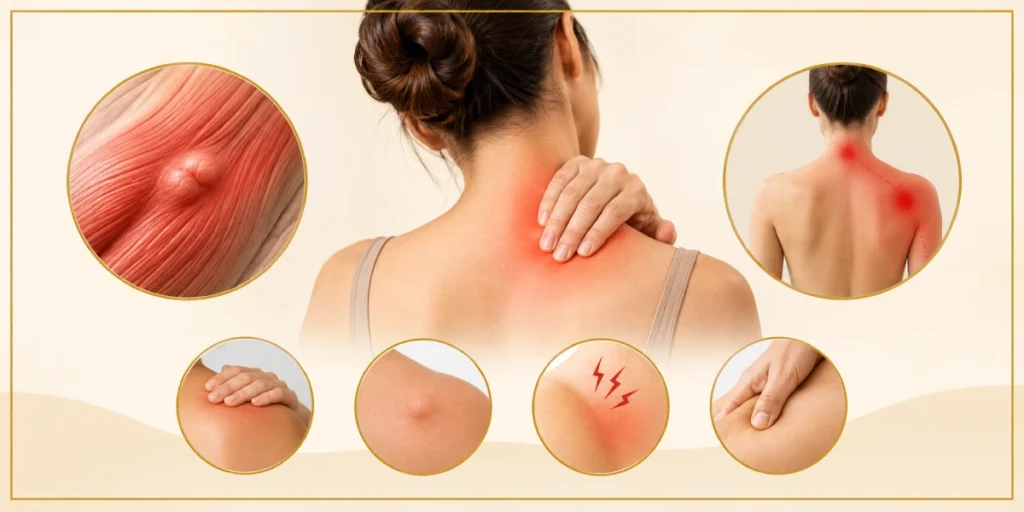
Muscle knots can be sensitive to touch and can present themselves in various ways, including as sore, pulsating, taut, or rigid. Typically, muscle knots are also painful to touch or massage. Furthermore, the surrounding area may be sensitive.
Knots vs. Trigger Points: Are They the Same?
Generally, yes. Muscle knots are generally referred to medically as myofascial trigger points. According to StatPearls, these are described as localized knots within a band of tense skeletal muscle. Unique to trigger points is that they can refer pain, meaning they cause pain in a different area.
What Causes Knots in Your Muscles?
Muscle knots develop gradually and are often the result of continual use of particular muscles. Contributing factors include:
- Carrying out repetitive actions such as typing, lifting, and playing sports
- Poor posture, particularly slouching at a computer or phone
- Long periods of sitting
- Overtraining without sufficient recovery time
- Stress, which causes people to subconsciously tense their muscles
As well as stress, overexertion is associated with muscle knots. In addition, prolonged periods of tension in a specific area can contribute, according to the Cleveland Clinic. UW Health adds both vigorous exercise and extended computer usage to the list.
Where Do Knots Usually Form?
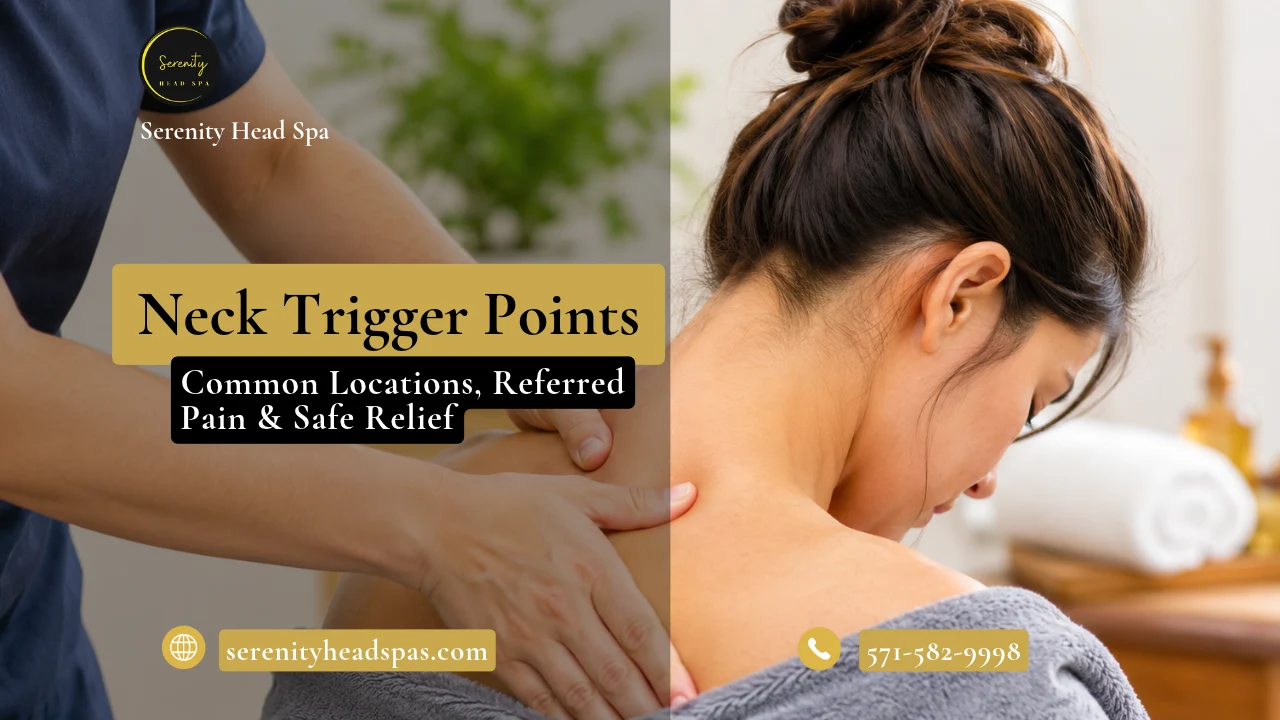
You can develop muscle knots in most areas of the body, but some regions are more commonly affected. Banner Health states that knots often show up in the muscles that you use frequently or repetitively, like the ones in the neck, shoulders, and back. Some common locations for knots are:
- Top of the shoulders, where people often feel tension from working at a desk
- Across and between the shoulder blades and in the upper back
- Back of the neck and the base of the skull
- Lower back, especially after long periods of sitting or lifting
- Hips and glutes
- Calves, particularly if you run or stand for long periods
Upper back and shoulder muscle knots can also contribute to headaches. UW Health affirms that this type of muscle knot can lead to headaches and even radiate pain to the ear and head.
How Does Massage Therapy for Knots Work?
Massage therapy for knots involves applying steady, comfortable pressure to the knot and the surrounding muscle. Initially, a massage therapist will work the area in long, flowing motions to help relax the muscles. They will then concentrate on the knot and hold pressure on it until it becomes more supple. Then, they will finish with lighter strokes and stretching.
Although it can feel as though the massage literally dispels muscle knots, this is no longer considered accurate. Instead, research suggests that massage primarily affects the nervous system to encourage muscles to relax. Australia’s Association of Massage Therapists confirms this has been the case since at least 2003.
Evidence supports the value of applying pressure to a muscle knot. A 2022 meta-analysis found that persistent massage of trigger points increased an individual’s pain threshold. However, it did not significantly reduce immediate pain levels. Therefore, massage for muscle knots is most beneficial when combined with exercise and postural adjustments.
Which Massage Is Best for Muscle Knots?
While there is no universally ideal massage type, a therapist will tailor their approach to the location of the muscle knot, its sensitivity, and how much pressure you prefer. Typically, the most effective massage blends elements of the three approaches below.
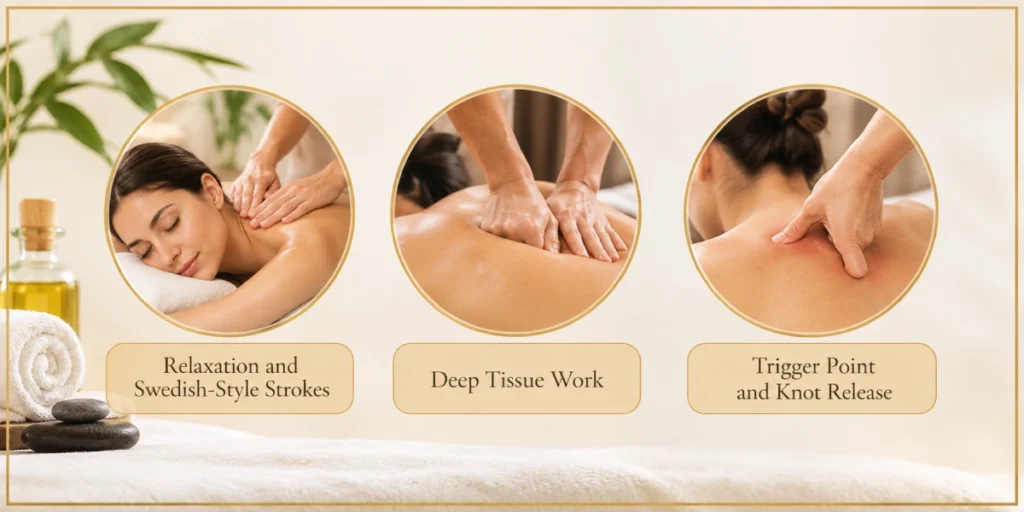
Relaxation and Swedish-Style Strokes
This comprises flowing massage movements which both warm the muscles and promote overall relaxation. It is a light massage, so it is well suited if your muscle knots are stress-related or you prefer a less intense massage.
Deep Tissue Work
This involves deeper, slower massage to reach the lower layers of muscle. It is especially suitable for muscle knots that sit within a wider area of tension, for example, someone’s whole upper back. As noted by the UW Health massage therapist, deep tissue massage can be useful for muscle knots.
Trigger Point and Knot Release
This is the most focused massage type. Your therapist applies continuous pressure to your muscle knot until it lessens in sensitivity. They then massage the area more lightly and stretch it. This works best if you can point to one distinct area of sensitivity.
What to Expect During Massage Therapy for Muscle Knots at Serenity Head Spa
At Serenity Head Spa, massage therapy for muscle knots is built into our Neck and Shoulder Massage. This special therapy generally lasts 30 to 60 minutes. Your session will follow this process:
- A brief consultation about your areas of concern and the pressure you prefer
- An opening massage of the upper back and shoulders
- Focused work on muscle knots and tension points
- Massage of the neck and shoulder muscles
- Light stretching and closing strokes
Our massage will combine relaxation strokes, deep tissue work, acupressure, and trigger point and knot release. If your muscle knots sit lower down, our Back Massage will go a bit deeper through the back. And if you have muscle knots in more than one area, our Full Body Massage therapist will work from head to toe.
During your massage, you should feel a deep, slightly sore pressure on the knot, which will ease as your therapist keeps working on it. You should not feel any sharp or burning sensations. If you do, please tell your therapist. After your massage, it is common to feel some tenderness for a day or two. For more on post-massage soreness, see our guide on being sore after a massage.
How Often Should You Get a Massage for Knots?
It depends on both the age and the cause of your muscle knots. Generally, new muscle knots can be resolved in one or two sessions. Older knots usually take more treatment.
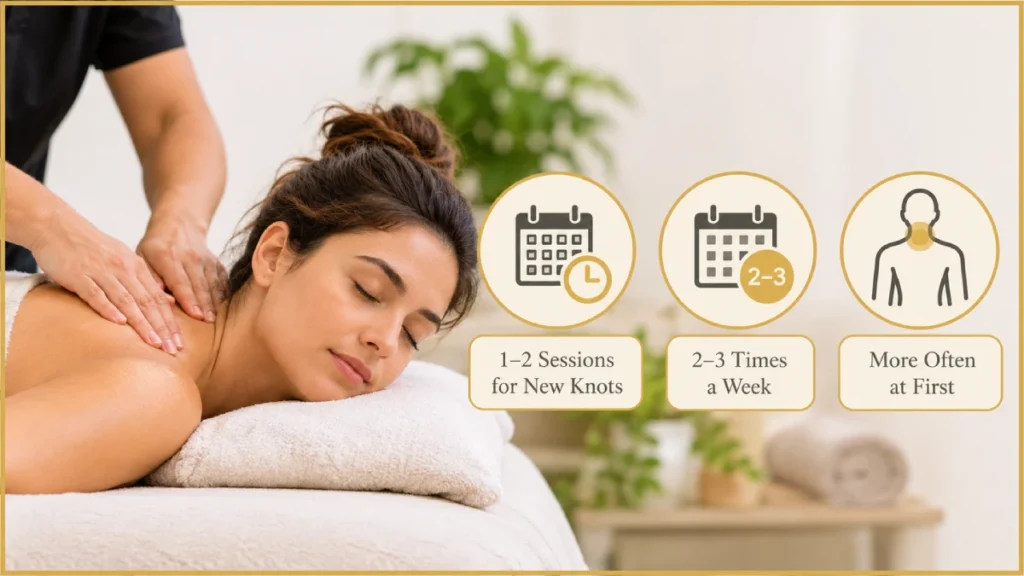
Research on neck pain offers another useful clue. In one 2014 trial, adults with chronic neck pain responded better to 60-minute massages two or three times a week for four weeks than those who had less frequent or shorter sessions. This may not mean that everyone needs such a schedule, but it does suggest that regular massage often helps more.
Initially, it is sensible to book more often while you are dealing with active muscle knots. As you improve, you can take longer breaks between sessions. Your massage therapist can advise on the right frequency for you, based on your lifestyle and body.
How to Release Trigger Points at Home Safely
A simple self-massage can support your muscle knot treatment between appointments. If you want to know how to release trigger points on your own, try these steps:
- Apply heat to the area with a heat pad or a warm shower.
- Find your muscle knot with your fingers, a tennis ball, or a foam roller.
- Apply steady, comfortable pressure. UW Health suggests pressing for 5 to 10 seconds, then releasing.
- Keep going, but ease off if the pain gets sharper.
- Then stretch gently. UW Health recommends stretching only halfway and holding for 3 to 5 minutes, rather than forcing a full stretch.
Avoid massaging the front of your neck, and do not press directly on your spine or bones. If a muscle knot is not improving after about two weeks of self-massage, it is time to book a professional appointment.
Habits That Help Keep Knots From Coming Back
Alongside massage, it is everyday behavior that largely decides whether muscle knots come back. The good news is that a few simple changes can make a real difference:
- Take a movement break at least once an hour when you are sitting.
- Set up your workspace so your screen sits at eye level and your shoulders stay relaxed.
- Offset repetitive actions. UW Health suggests counterbalancing repetitive motions at work and in sports.
- Stretch regularly.
- Use breathing exercises, walks, or other methods to manage stress.
- Switch the shoulder you carry a heavy bag on.
These habits all help to boost and prolong the benefits of massage.
When a Knot Needs a Doctor, Not a Massage
While muscle knots are not serious for most people, there are some cases that call for a closer look. Before booking a massage, see a doctor if you:
- Feel numbness, tingling, or weakness in your arms or legs
- Are in pain after a fall, accident, or injury
- Notice swelling, redness, or warmth in an area
- Have pain that keeps getting worse or lasts more than a few weeks
- Run a fever along with muscle pain
In addition, the Cleveland Clinic notes that if pressing on a sore spot causes intense pain, a sharp pinch, or tingling, you should get it checked by a healthcare professional. These can signal something beyond simple muscle tension.
Frequently Asked Questions
Still have questions about muscle knots and massage? Here are quick answers to the ones that come up most.
Do Massages Actually Get Knots Out?
Massages can help to reduce muscle knots as they relax the muscle. Often this will cause the knot to reduce or even resolve. However, massage doesn’t physically remove or slice up muscle. Rather, it primarily works on the nerves so that the muscle can relax. Muscle knots may come back if the underlying behavior isn’t modified.
Why Do Knots Pop When Massaged?
On occasion, massage may produce a creaking or popping noise. Although there is little evidence that muscle knots themselves ‘pop’, it is more likely that this is due to the muscle relaxing in response to pressure, or simply is a common noise made by joints in the area. Nothing is being damaged. Should the cracking be accompanied by severe pain, please tell your therapist.
Why Do I Keep Getting the Same Knot?
Generally speaking, muscles tend to knot in areas where there is continual strain. This may be due to regularly sitting in the same position, slouching with a bag on one shoulder, or repeatedly performing the same task at work or in the gym. Modifying your environment and ensuring you take suitable rest and stretching breaks can all assist in interrupting this process.
Can Massage Break Up Muscle Knots?
Again, not in a literal way. The belief that massage can break up muscle knots is now known to be incorrect. Massage can aid muscle knots; it relaxes muscles and soothes the nerves to lessen muscle tension. This is often felt as if the muscle knot has been broken up, but no such thing occurs.
Should a Knot Hurt During a Massage?
Whilst the sensitivity of the area being massaged will affect this, there may be some degree of pain experienced. As your therapist maintains the pressure on the muscle knot, this should subside. You should not feel severe, stabbing, or scalding pain. Inform your therapist immediately if you do.
Final Thoughts
Muscle knots are common and often frustrating, but they are very treatable. Massage helps by relaxing tight muscles and easing the tenderness that comes with knots, especially when it is paired with exercise, rest, and better posture. Swedish massage, deep tissue work, and trigger point and knot release can all help, and the most effective sessions often blend all three. Keep the pressure comfortable, care for your knots gently at home, and see a doctor if pain comes with numbness or swelling.
When you are ready for focused, hands-on relief, book a Neck and Shoulder Massage at Serenity Head Spa in Springfield or Rockville.
Serenity Head Spa offers neck and shoulder, back, and full-body massage in Springfield, VA, and Rockville, MD. Book your massage today.