
While both can be used as skin cleansers and often appear comparable, what is the difference when it comes to cleanser vs face wash? Despite frequently sharing branding, there is often a difference in consistency and effectiveness at removing the skin’s natural oil (known as sebum). Typically, a face wash will produce a foamed product that can then be washed off, often resulting in a cooling sensation. Compared to this, many cleansers are more gentle. Here, we outline the difference between cleanser and face wash and provide guidance on which is most appropriate for your skin type.
What Is a Facial Cleanser?
Generally, a facial cleanser is any item that can remove makeup and sunscreen, as well as dirt and grime. These can be gentle and are available in differing consistencies. Surprisingly, there are even water-free facial cleansers.
Common forms of facial cleanser are:
- Cream cleanser or lotion: good for dry and/or sensitive skin types
- Gel cleanser: often suggested for combination skin
- Oil or balm: highly effective for dissolving makeup and sunscreen, often incorporated into a two-step cleansing process
- Micellar water: applied to the skin using a cotton pad
- Non-foaming cleanser or milk cleanser: extremely gentle and appropriate for skin that becomes flaky easily
As there are so many different facial cleansers, the term tends to refer more to a product’s purpose than its consistency. Again, it is key to analyze an item’s ingredients and to adhere to the guidance provided by the manufacturer.
What Is a Face Wash?
A face wash is itself a type of facial cleanser. Frequently it has a gel or foamy consistency and produces a foam when water is introduced. Typically, face washes are formulated for normal and/or oily skin. They often provide a cooling effect. When comparing face wash vs cleanser, it is generally the face wash that produces a foam.

Foam is generated by surfactants, which enable oil and water to combine and so allow impurities to be removed. While not all face washes are aggressive, certain foaming cleanser formulas can be. An article in Dermatologic Therapy emphasizes that aggressive surfactants can be detrimental to the skin. They can disrupt the skin’s proteins and lipids and so result in dryness and/or tightness. It can also weaken the skin barrier and, in some cases, make the skin itchy.
If your skin feels squeaky clean and/or tight after cleansing, this does not usually mean that you have cleansed thoroughly. Rather, it may mean that the face wash is too harsh. Therefore, when deciding on facial cleanser vs face wash, it is vital to consider how each type affects your skin.
Cleanser vs Face Wash: Key Differences
So, is cleanser the same as face wash? Although not exactly the same, the terms are often used interchangeably by manufacturers. As a result, you may find mild face washes and stronger facial cleansers. Nonetheless, there are usually some key differences.
The table below sums up the difference between facial cleanser and face wash products at a glance.
| Feature | Face wash | Facial cleanser |
|---|---|---|
| Texture | Gel or foam | Cream, lotion, gel, oil, and/or balm |
| Foam | Usually foams | Often low foam or no foam |
| Sebum removal | Stronger | Gentler |
| Rinse | Required | Usually, although there are no-rinse versions |
| Most suitable for | Normal, oily, and/or acne-prone skin | Dry, sensitive, and/or mature skin |
| How skin feels after washing | Refreshed, sometimes slightly tight | Soft and comfortable |
(These are general patterns only. Product labels often overlap, so always check the ingredients and how your skin responds.)
Although labeling can often be similar, it is usually the formula that has the greatest impact on the difference between face wash and cleanser. A review on soaps and syndets explains that syndets (synthetic detergents) are generally better at protecting the skin barrier than traditional soaps, which can harm the skin and change its pH balance. Checking the cleansing ingredients is often more informative than simply reading a product’s label.
Which Should You Choose for Your Skin Type?
Alongside choosing the right type of cleanser, it is just as important to understand your skin’s needs. When it comes to face cleanser vs face wash, first consider how your skin usually feels a few hours after cleansing. Then, refer to the advice below.
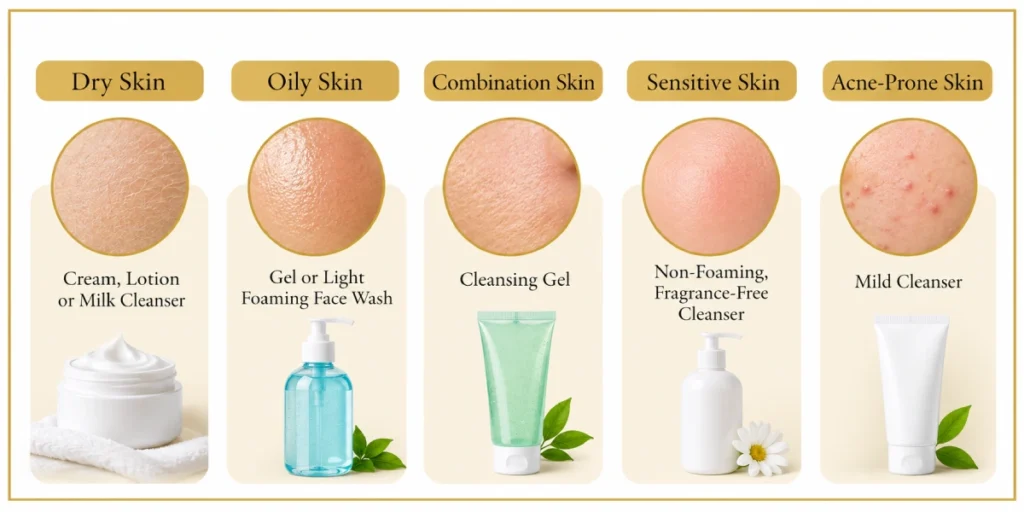
Dry Skin
Choose a cream, lotion, or milk cleanser for dry skin. These remove impurities effectively without over-drying the skin. Avoid very foamy options. After cleansing, apply moisturizer while your skin is still damp.
Oily Skin
Generally, a gel or lightly foaming face wash for oily skin is a good choice, as it removes excess sebum effectively. Make sure your cleanser does not leave your skin feeling tight. Furthermore, over-cleansing can irritate oily skin.
Combination Skin
Gels are often the best facial cleanser for combination skin. Being neither too rich nor too light, they suit both the oily T-zone and drier areas. As for the difference between cleansing gel and face wash, cleansing gels are typically clear and do not foam as much as face washes.
Sensitive Skin
It is best to choose a non-foaming, fragrance-free cleanser for sensitive skin, ideally with a simple formula. Avoid anything abrasive or anything that causes a stinging feeling. Test new cleansers on your jawline before using them on your whole face.
Acne-Prone Skin
The same focus on mildness applies when choosing a cleanser for acne-prone skin. The American Academy of Dermatology suggests cleansing no more than twice a day (and after sweating) with a mild, non-abrasive cleanser, applied with your fingertips. Some face washes contain acne-fighting ingredients. However, greater strength is not always better. If you continue to have breakouts, a dermatologist can provide further guidance.
Can You Use Both Cleanser and Face Wash?
This is possible but usually unnecessary, as in most cases a single mild cleanser is enough.
Nonetheless, if you often wear heavy makeup and/or water-resistant sunscreen, a two-step face cleansing routine can be helpful in the evening. First, use an oil, balm, or micellar water to dissolve makeup and sunscreen. Then, use a mild face wash to cleanse the skin.
If double cleansing causes dryness or irritation, cut back to one cleansing product. Usually, a mild facial cleanser or even a simple lukewarm water rinse is enough in the morning, especially if you have dry or sensitive skin.
How to Choose and Use a Facial Cleanser
Knowing how to choose a facial cleanser is important, but so is using it the right way. The American Academy of Dermatology suggests the following basic method, which suits most skin types:
- Choose a gentle facial cleanser that is non-abrasive and alcohol-free.
- Wet your skin with lukewarm (not hot) water.
- Use your fingertips to apply the cleanser to your skin.
- Avoid scrubbing, as this can cause irritation.
- Rinse with lukewarm water, then pat your skin dry with a soft towel.
- After cleansing, apply moisturizer if your skin is dry or feels tight.
The AAD also recommends cleansing no more than twice a day (in the morning and evening), plus after heavy sweating. If your skin often feels tingly, flaky, or tight, try a milder cleanser before experimenting with new products.
When a Professional Deep Cleanse Helps
Alongside regular cleansing to remove oil, makeup, and sunscreen, it can be helpful to “reset” your skin. This may be needed after wearing heavy makeup for long periods, after traveling, or during a busy season.
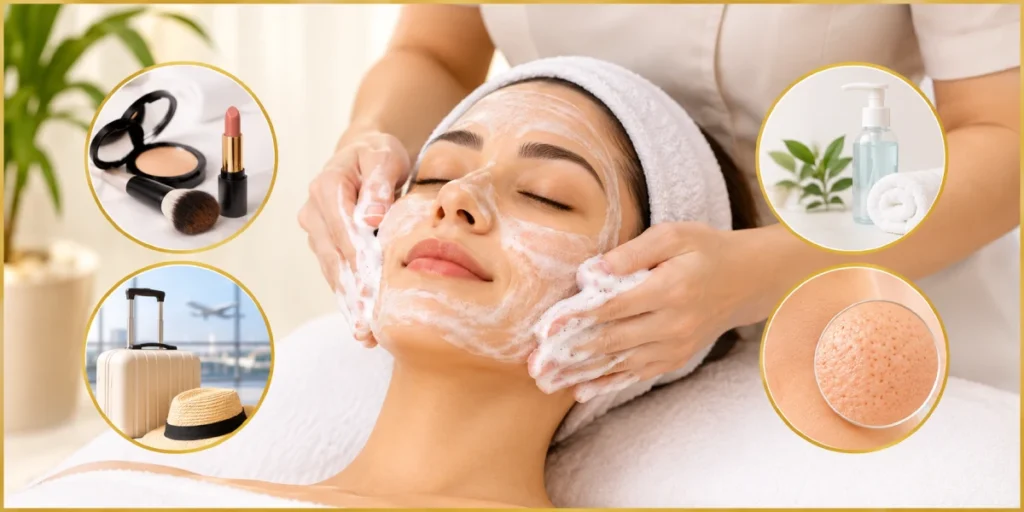
At Serenity Head Spa, our 30-minute Deep Cleansing Facial is aimed at unclogging pores and removing excess oil, as well as dirt, sweat, and makeup. Alternatively, if you would like something lighter, our 30-minute Mini Facial provides basic cleansing along with some nourishing care. Our estheticians can also analyze your skin and suggest a suitable daily facial cleanser. Find out more about our facial treatments, and see our advice on choosing the right facial for your skin type.
Frequently Asked Questions
Below are answers to some of the most commonly asked questions about choosing between a cleanser and a face wash. If you have any further questions, our estheticians will be happy to help during your appointment.
What Is the Difference Between Cleanser and Face Wash?
While both can be used to cleanse the skin, the difference between face wash and face cleanser products usually comes down to texture and strength. Typically, face washes are gels or foams that lather and are more effective at removing sebum. Facial cleansers come in various forms, such as creams, lotions, oils, and balms, and are often milder. Watching how your skin reacts to a product is a more reliable guide than its label alone.
Can You Use a Cleanser Instead of Face Wash?
Yes. As long as a mild facial cleanser cleans your skin well and feels comfortable, it can easily replace a face wash. For dry and/or sensitive skin, it may even be the better option. Just make sure your cleanser removes your makeup and sunscreen properly. If it does not, you may want to add a first cleansing step in the evening.
How Often Should You Wash Your Face?
The American Academy of Dermatology advises cleansing up to twice a day (in the morning and evening), as well as after heavy sweating. However, over-cleansing can lead to dryness and/or irritation, even if you have oily skin.
Is Micellar Water a Facial Cleanser?
Yes. Micellar water is a no-rinse facial cleanser. It can easily be wiped over the skin with a cotton pad and is a handy on-the-go option. If you have worn heavy makeup or sunscreen, it is often a good idea to follow micellar water with a mild rinse-off cleanser.
Should I Use Soap on My Face?
Generally, bar soap is not ideal for cleansing your face, as it is typically alkaline. Research shows that bar soap is more likely to affect the skin barrier than mild synthetic cleansers. If you prefer bar soap, try to choose one that is described as mild or as a syndet bar and is made for facial use.
Do I Need Separate Day and Night Facial Cleansers?
Not necessarily. Generally, one mild facial cleanser can be used in both the morning and evening. If you have worn makeup and/or water-resistant sunscreen, you may want to add a first cleansing step in the evening. Usually, however, a mild cleanser or a lukewarm water rinse is enough in the morning.
Final Thoughts
When it comes to cleanser vs face wash, the label matters, but the formula usually has the biggest effect. Typically, face washes are foamy and remove more sebum, while facial cleansers are often milder. Choose a product that cleanses thoroughly and leaves your skin feeling good, and avoid any that cause tightness. Gently massage a mild cleanser into skin dampened with lukewarm water. Ideally, cleanse twice a day and after heavy sweating. To reset your skin, book our Deep Cleansing Facial through our facial treatments page. We can help give your skin a fresh start.
Serenity Head Spa offers deep cleansing, hydrating, and mini facials in Springfield, VA, and Rockville, MD. Book your facial today.