Both are often described as deep massages, and both aim to relieve muscular tension. So how do you decide which massage is suitable for you? When it comes to trigger point massage vs. deep tissue, the main difference is focus.
Trigger point massage deals with a limited number of sensitive areas, whereas deep tissue massage involves slow and firm massage of extensive muscle areas. Often, therapists use aspects of both. Below, we explain how each type of massage works and how it feels. We also show which is better for treating muscle knots and guide you toward the right choice.
Deep Tissue vs. Trigger Point Massage: What’s the Difference?
Although different in extent, the two types of massage are equally valuable. When comparing deep tissue vs. trigger point massage, both are massage techniques used to treat muscle tension, but trigger point massage is the more targeted massage of the two.
- Trigger point massage applies firm, constant, focused pressure to individual sensitive areas (often referred to as knots).
- Deep tissue massage involves slow, firm pressure on deeper layers of muscle and the connective tissue surrounding it.
If one area keeps troubling you, trigger point massage is the more direct option. If a whole region feels tight, such as your entire upper back, deep tissue massage covers more ground. Many sessions combine the two.
What Is Trigger Point Massage?
A trigger point is a small, oversensitive area within a tight band of muscle. As explained by StatPearls, these areas can be painful where they are located and can also send pain to another area, which is known as referred pain.
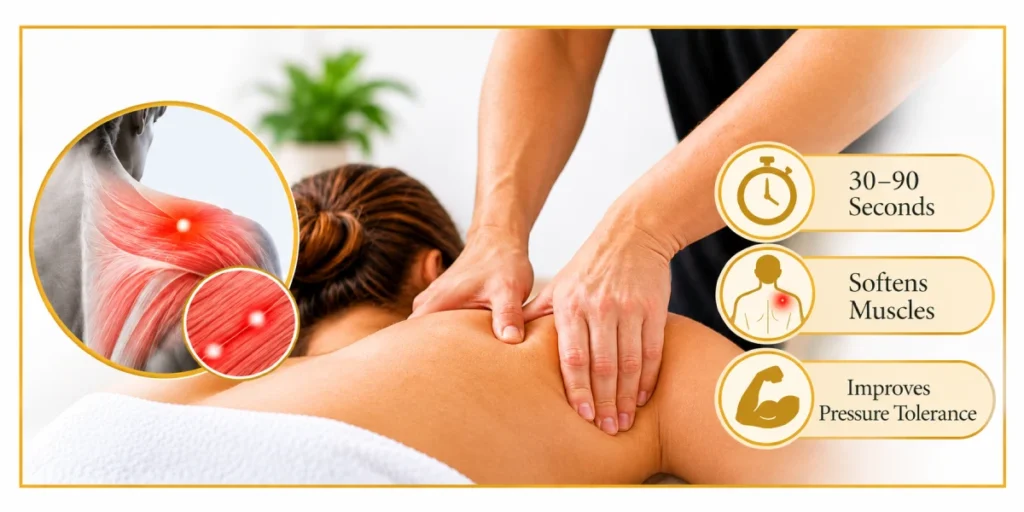
Trigger point treatment, also called trigger point massage therapy, uses direct, sustained pressure on that area. According to a 2022 meta-analysis, this pressure is typically held for 30, 60, or 90 seconds. As the pressure is held, the tenderness usually eases, and the muscle begins to soften. Therapists refer to this as trigger point release. Your therapist will then use gentler massage movements around the area.
The research is encouraging but modest. The same review found that the technique improved how much pressure people could tolerate. However, it did not significantly lower pain scores immediately after treatment.
What Is Deep Tissue Massage?
Deep tissue massage involves slow, firm pressure to reach the deeper layers of muscle and the surrounding connective tissue. According to a licensed massage therapist cited by Cleveland Clinic, it works into your muscles and tendons to release tightness. It also notes that it can help with general muscle tightness, long-term muscle pain, and injuries.
While trigger point massage targets defined areas, deep tissue massage involves a therapist using their forearm, knuckles, and/or thumbs to glide along a muscle. Frequently, therapists will also incorporate myofascial release, which is a slow form of connective tissue stretching. Compared to a relaxation massage, deep tissue massage is slower, and the pressure is increased gradually as the tissue warms up.
Deep tissue massage is not all about firm pressure, though. A good therapist adapts their approach to suit the individual. For more information, see our guide on what deep tissue massage is and our comparison of therapeutic vs. deep tissue massage.
Trigger Point vs. Deep Tissue: Key Differences
Although both aim to relieve muscle tension, there are key differences in the extent of treatment, the way pressure is applied, and the desired outcome of each massage. The table below compares trigger point vs. deep tissue massage side by side, so you can quickly see how the two approaches differ.
| Feature | Trigger point massage | Deep tissue massage |
|---|---|---|
| Main focus | Specific sensitive areas | Extensive areas of muscle |
| Pressure | Constant and focused | Gradual, firm gliding motion |
| Extent of treatment | Limited and localized | Potentially a whole area |
| Desired outcome | Relieve a particular knot or area of referred pain | Release overall deep muscle tension |
| Experience | Generally strong, then soothing | Consistently firm |
| Additional elements | Stretching and softer massage | Myofascial release and stretching |
(These are general guidelines only. Every therapist works slightly differently, and the ideal combination will depend on your body and what you tell your therapist.)
Which One Is Better for Muscle Knots?
If you can point to a particular area of sensitivity (for example, a sensitive area near your shoulder blade), then trigger point massage is a good fit. Applying firm pressure to this area can often ease that specific ache quickly.
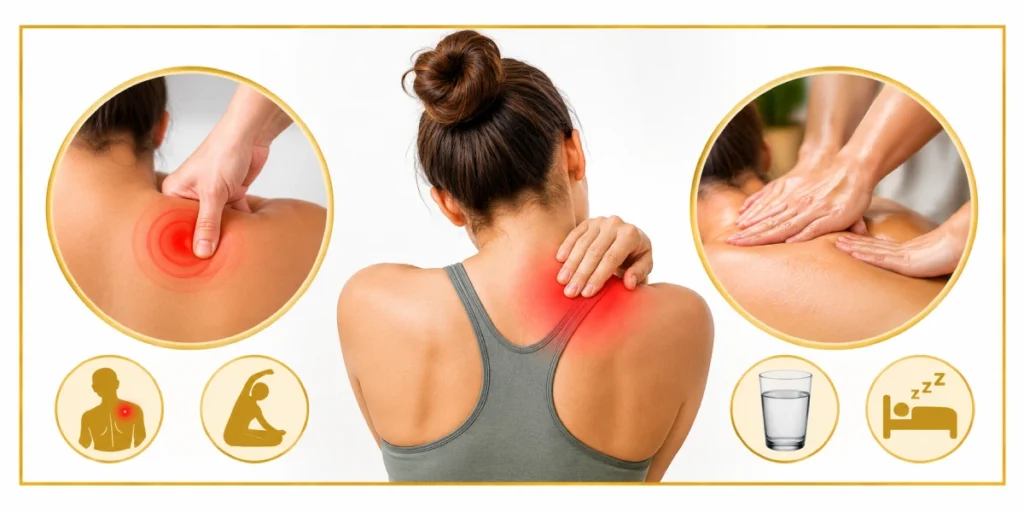
Should a muscle knot be embedded in more extensive, tense muscle, deep tissue massage can be used to relax this wider area. This in turn allows the knot to relax without the surrounding muscles pulling against it. Typically, therapists will initially perform deep tissue massage on a wider area and then target particular spots.
However, neither type of massage will get rid of muscle knots permanently. Poor posture, stress, and repetitive movements can all cause them to return. Massage works best alongside regular movement, stretching, and rest breaks.
Can Deep Tissue Massage Include Trigger Point Work?
Yes, many therapists will do this, and it is known as deep tissue trigger point massage. A therapist may predominantly carry out a deep tissue massage, for example, on your back and shoulders. Alongside this, they will commonly pause to apply trigger point pressure to two or three tender points.
Often, a therapist will start with a deep tissue massage to loosen the muscles. They will then use trigger point massage on particular points. Finally, a lighter massage is provided to help everything relax. Tell your therapist which points in your body are causing you the greatest difficulty, and they can adapt the massage to suit you.
Which Massage Should You Choose?
Think about what you need, and then consider which of the situations below most relates to you. It comes down to where you feel tightness and how much pressure you would like. Often, where more than one situation applies to you, a combination of trigger point and deep tissue massage is most appropriate.
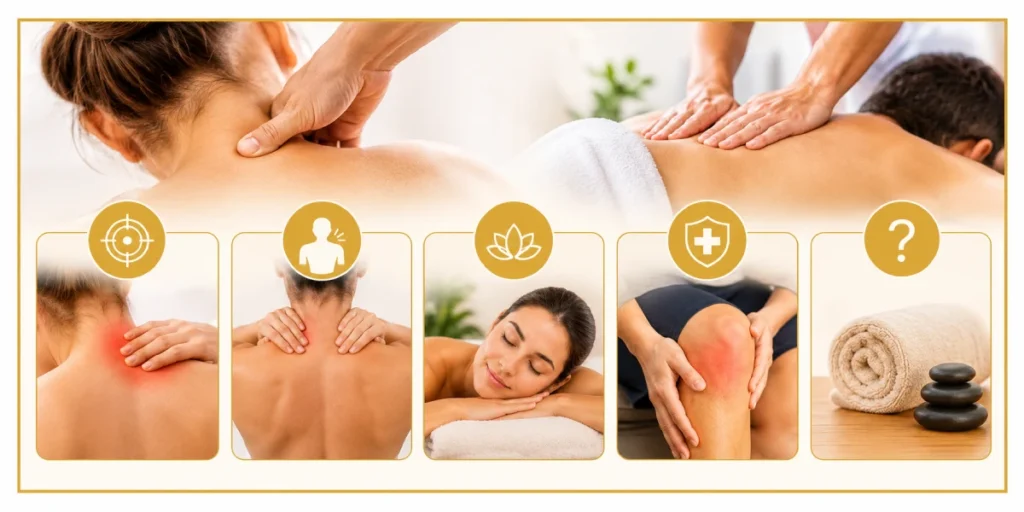
I Have a Particular Area of Concern
Trigger point massage is generally suitable. If you can press on a tender point and feel a sharp, recognizable pain, it is often a good sign that trigger point massage can help you.
I Feel Tight Across My Back or Neck
Deep tissue massage is usually a good solution, as it is more effective for working on wider areas of tight muscle.
I Mainly Want to Unwind
Neither of the above may be ideal. Instead, you may find that a relaxing massage, with slightly more focus on problem areas, is more suitable. Tell your therapist which areas of your body you would like them to focus on.
I Have an Injury or Chronic Pain
Before having a massage, always check with your doctor. If you are currently taking blood-thinning medication, you should also speak to your healthcare provider, as these medications can increase the risk of bruising, according to Cleveland Clinic.
I Am Still Not Sure
Ask for a massage that combines deep tissue and trigger point techniques. Your therapist will assess your muscle tightness during the warm-up stage and can then adjust your massage accordingly.
What to Expect at Serenity Head Spa
Our therapists combine deep tissue release, trigger point and knot release, and light Swedish massage in our Neck and Shoulder Massage, which typically lasts 30 to 60 minutes. First, we talk with you briefly about the areas of your body that concern you and the pressure you would like. Your therapist will then begin by loosening your upper back and shoulders. Next, they will work on knots and problem points, paying particular attention to your neck and shoulders. Finally, light stretching and massage are carried out. If most of your muscle tightness is lower down your body, our Back Massage will place more focus on your back.
After your massage, you may feel some aches. Cleveland Clinic notes that because deep tissue massage works on particular muscle groups, it can occasionally lead to more aching than lighter massage. Drinking plenty of water and making sure you move around comfortably can help. For more information, see our guide on being sore after a massage.
Frequently Asked Questions
Below are answers to some of the most commonly asked questions about deep tissue massage vs. trigger point massage. If you have a question that is not answered here, our therapists will be happy to help before your appointment.
What Is the Difference Between Trigger Point Massage and Deep Tissue?
While both involve a therapist applying firm pressure, trigger point massage works on small sections of muscle that contain tender points. Deep tissue massage, by contrast, involves slow, firm, sweeping movements to work on deeper muscle across a wider area.
Does Trigger Point Massage Hurt More Than Deep Tissue Massage?
This depends on where you feel the pain. As trigger point massage works on an individual tender point, it can, on occasion, feel more painful. However, this usually eases quickly while the pressure is held. Typically, deep tissue massage feels like steady, firm pressure over a wider area. Neither should be unduly painful. Alert your therapist immediately if you feel any stinging, burning, or tingling sensations.
Is Trigger Point Massage the Same as Deep Tissue Massage?
No. While there is much common ground between the two, they are not identical. Trigger point massage applies firm, constant pressure to individual sensitive areas. On the other hand, deep tissue massage involves slow, firm gliding strokes on deeper muscles and the surrounding connective tissue. Often, therapists will use both types of massage in the same session.
How Can I Ask for My Preferred Massage Style?
Show your therapist which areas concern you most. Also, tell them your preferred pressure level and let them know about any injuries. As your massage progresses, give quick feedback on pressure, such as “a bit softer” or “stay there.” Your therapist will then adjust the balance of deep tissue and trigger point massage accordingly.
Will I Be Sore After My Massage?
Yes, possibly. After deep tissue and/or trigger point massage, it is not uncommon to feel mildly sore for one or two days. This is especially likely if your muscles were very tense to begin with. Drinking water, continuing to move gently, and applying a warm compress can all help. If your soreness gets worse or lasts more than a few days, it would be wise to consult your doctor.
Final Thoughts
When it comes to trigger point massage vs. deep tissue, the two often work best together. Trigger point massage works on individual tender points, whereas deep tissue massage works on wider areas of muscle. If you know exactly where you are feeling pain, trigger point massage is usually a sound first choice. Conversely, if you feel generally tight, deep tissue massage may be more helpful.
Clearly telling your therapist how much pressure you would like is key to keeping your massage safe and effective. Book a Neck and Shoulder Massage with us, and we will adapt it to your needs.
Serenity Head Spa provides neck and shoulder, back, and full-body massage in Springfield, VA, and Rockville, MD. Book your massage now.