
Sometimes, when you put pressure on your neck, you may find an area that is both sore and stiff. You may then also feel referred pain in your head (either at the front or to one side) and/or in your shoulder. Often, this is caused by neck trigger points, a type of myofascial pain that comes from tender spots in tight muscles.
Here, we describe which muscles are most often involved, what these trigger points feel like, and why they can cause headaches. We also share safe self-care tips and explain when to see a professional or seek medical advice.
What Are Neck Trigger Points?
A neck trigger point is a highly sensitive area within a tense band of neck and/or upper shoulder muscle. As stated by StatPearls, trigger points can cause pain at the point itself and/or refer pain to another area, which is known as referred pain.
Neck trigger points are frequently found in people who suffer from neck pain. A blinded, controlled study showed that people with mechanical neck pain had, on average, 1.8 active trigger points in their upper trapezius, sternocleidomastoid, levator scapulae, and suboccipital muscles. None of the healthy controls had any active trigger points. All four muscles produced referred pain, and this was consistent with the patients’ symptoms.
Generally, neck trigger points develop as a result of lifestyle factors. MedlinePlus states that muscle strain and tension from everyday activities are a common cause of neck pain. Long periods spent looking down at a phone or computer (with a screen that is too low), poor sleeping positions, and stress can all contribute to this.
Where Are Common Neck Trigger Points Located?
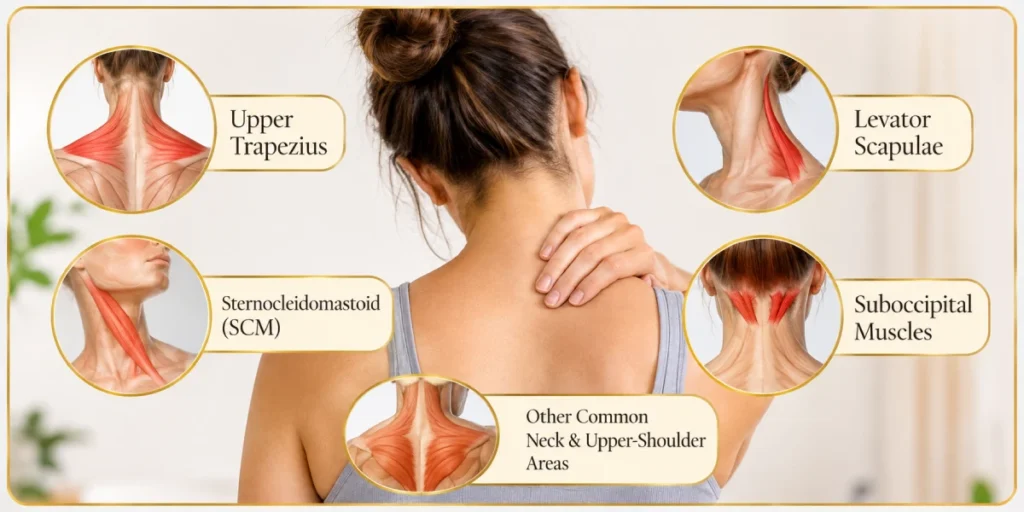
There are four muscle groups that are regularly identified in neck pain research. Understanding where they are located can help explain why your neck pain may not always be in the area where it first started to hurt.
Upper Trapezius
This wide muscle extends from the base of the skull across the top of each shoulder. It is the area you instinctively squeeze at the end of a long day. Trigger points here are frequently associated with referred pain along the side of the neck. Moreover, headache research has shown that in people with chronic tension-type headaches, this referred pain also spread to the temple.
Levator Scapulae
This muscle joins the side of the neck to the upper inner corner of the shoulder blade. It helps to lift the shoulder blade and rotate the head, according to StatPearls. If this muscle is tense, you may feel a deep ache where your neck meets your shoulder and may struggle to look over your shoulder while driving.
Sternocleidomastoid (SCM)
The SCM is a slanting muscle that runs down either side of the neck, from behind the ear to the collarbone. Trigger points in this muscle often refer pain in some of the most unusual ways. One case report published in the Journal of the Canadian Chiropractic Association described referred pain to the forehead, the area around the eye, the cheek, and in and behind the ear. As this muscle is close to major blood vessels, it is best treated by a professional.
Suboccipital Muscles
These small muscles sit just beneath the base of the skull. People tend to tense these muscles when their head leans forward to view a screen. Trigger points here are commonly associated with pain at the back of the head. Indeed, alongside the upper trapezius, they are routinely analyzed in research into tension-type headaches, so they are closely associated with head pain.
Other Commonly Discussed Neck and Upper-Shoulder Areas
Tension can also build up in the back of the neck (splenius muscles), the side of the neck (scalenes), and between the shoulder blades (rhomboids). Often, these muscles are involved alongside the ones above, so tension in one area can make the others feel worse.
What Does a Neck Trigger Point Feel Like?
So, what does a trigger point feel like in your neck? Generally, a neck trigger point feels like a lump or a tense string that can be felt under the skin. As stated by Cleveland Clinic, it can be likened to “a small marble.” You may experience:
- Pain in a defined area
- A tense, string-like structure
- Pain radiating to your head, jaw, and/or shoulder
- Discomfort that makes it painful to move or rotate your head
- An aching sensation rather than stinging or shooting pain
While many neck pains are due to trigger points, joint, disc, and nerve issues can also cause pain. If your neck pain does not match the above, it is wise to consult a doctor.
Can Neck Trigger Points Cause Referred Pain?
Yes, and this is why neck trigger points can be so misleading. Frequently, the area that is painful is not where the tense muscle is. The table below summarizes the referred pain locations for the muscles described in the research above. It shows how tension in a neck muscle may explain pain in your head or face.
| Muscle | Location | Potential referred pain |
|---|---|---|
| Upper trapezius | Shoulders and back of the neck | Side of the neck and temple |
| Levator scapulae | Side of the neck to the shoulder blade | Where the neck meets the shoulder |
| Sternocleidomastoid | Front and side of the neck | Forehead, eye area, cheek, and ear |
| Suboccipitals | Base of the skull | Back of the head |
(These are common patterns only and should not be used for self-diagnosis. Referred pain can overlap between muscles, and other health conditions can produce similar symptoms.)
MedlinePlus highlights that tension in the shoulder, neck, scalp, and jaw muscles is commonly linked to tension headaches.
How Are Neck Trigger Points Released?
If you are wondering how to relieve trigger points in neck muscles, neck trigger point release generally involves applying steady, comfortable pressure to the affected area until it eases. Usually, this pressure is held for 30, 60, or 90 seconds, according to a 2022 meta-analysis.
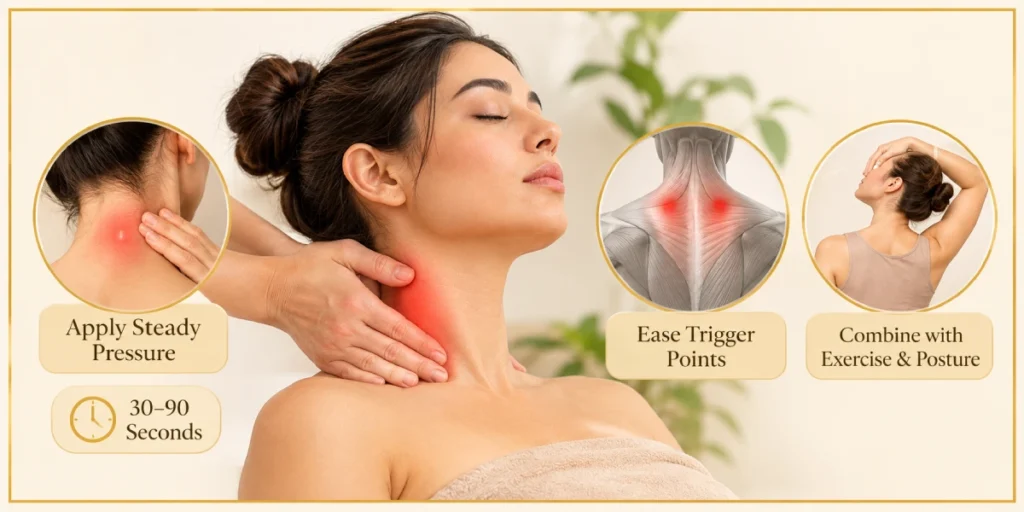
There is good evidence that this technique changes how sensitive a trigger point feels. A randomized controlled trial demonstrated that massage of upper trapezius and suboccipital trigger points increased pressure pain thresholds in adults who suffered from tension-type headaches. Neither the sham nor the waitlist group experienced such an effect.
While massage can be an effective treatment, it is often most beneficial as part of an overall approach. As outlined by Mayo Clinic, neck pain that lasts longer than several weeks often responds well to a combination of exercise, stretching, physical therapy, and massage. In other words, pressure eases a trigger point, while regular exercise and good posture help stop it from tensing again.
Self-Massage for Neck Trigger Points
Between sessions, you can self-treat minor neck trigger points. Make sure the pressure you use is both gentle and controlled. Follow these steps to self-massage neck trigger points safely:
- Heat the area. Use a warm shower or heat pad for a few minutes to help loosen the muscle.
- Find the trigger point. Run two or three fingers over your shoulders and the back of your neck to locate a tender area.
- Apply pressure. Press gently but firmly on the area. According to Cleveland Clinic, this can be held for up to 90 seconds.
- Breathe. Allow the area to relax as you apply pressure. Reduce the pressure if the pain intensifies.
- Stretch gently. Slowly tilt your ear toward the opposite shoulder.
Concentrate on the back of your neck and shoulders when self-treating. Do not massage the front of your neck. The Associated Bodywork and Massage Professionals explains that the front and sides of the throat contain key blood vessels, including the carotid artery, so continuous pressure should not be applied there. It can even cause a loss of consciousness. Likewise, do not use a massage gun on your neck.
If you are still unsure how to release trigger points in neck muscles that remain stubborn after a couple of weeks, it is time to seek professional treatment.
Neck Trigger Point Massage: What to Expect
Compared to self-massage, a professional neck trigger point massage is more precise. A trained therapist can also treat the delicate areas of the neck more safely. At Serenity Head Spa, this is included in our Neck and Shoulder Massage, which generally lasts 30 to 60 minutes.
Usually, your treatment will involve:
- A brief consultation about your area(s) of pain and preferred pressure
- A warm-up of the upper back and shoulders
- Pressure to ease trigger points and tension
- Focused massage of the neck and shoulder muscles
- Gentle stretching and light strokes
As well as trigger point and knot release, your therapist will incorporate Swedish massage, deep tissue massage, and acupressure into your treatment. Please let your therapist know if at any point you feel discomfort or the pressure does not feel right. For further guidance on self neck massage, see our guide to neck massage techniques.
Trigger Points vs. Muscle Knots
In everyday use, the terms “trigger point” and “knot” are very similar. Both refer to a tense lump within a muscle that can be painful. Technically speaking, however, trigger points can also refer pain to another area, while general muscle knots may only be painful where they are located.
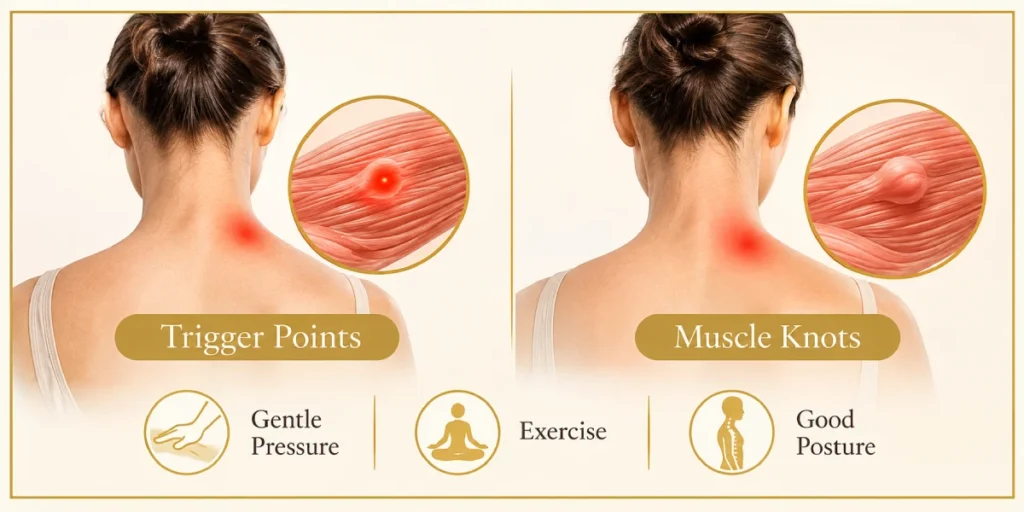
For you, the approach to both is largely the same. Both can benefit from gentle, steady pressure, together with exercise and good posture.
When Neck Pain Should Be Evaluated by a Healthcare Professional
While most musculoskeletal neck pain eases within a few days, Mayo Clinic recommends contacting a doctor if your neck pain:
- Continues to worsen despite self-treatment
- Lasts for several weeks
- Radiates down your arms or legs
- Is accompanied by headache, weakness, numbness, or tingling
In addition, seek immediate medical attention if you:
- Have neck pain after a fall, an accident, or a blow to the head
- Have weakness in an arm or leg and/or difficulty walking
- Have a stiff neck combined with fever, nausea, and/or vomiting
- Have a sudden, severe headache
- Have numbness and/or tingling in an arm or hand
According to MedlinePlus, numbness, tingling, and/or weakness in an arm or hand can indicate that a nerve is under pressure. In such cases, massage should not be the first step.
Frequently Asked Questions
Below are answers to some of the most common questions about neck trigger points. If your question isn’t covered here, our therapists will be happy to help before your session.
How Can I Treat My Neck Trigger Points?
Apply heat to the area to relax the muscles. Then, gently but firmly press on the trigger point at the back of your neck or upper shoulder for up to 90 seconds. During this time, breathe slowly. Finally, carry out a gentle side stretch. Avoid the front of the neck, and stop if your pain becomes sharper.
Can Neck Tension Cause Headaches?
Yes. Research has shown links between trigger points in the upper trapezius, suboccipital, and sternocleidomastoid muscles and tension-type headaches. Tense neck muscles can refer pain to your temples, forehead, and/or the back of your head. However, if you have a sudden, severe headache, you should seek urgent medical attention.
Why Do I Keep Getting Knots in My Neck?
Generally, this is due to lifestyle factors. Repeated habits such as looking down at a phone, sitting with a screen too low, and carrying a heavy bag on one side, along with stress, all cause the same muscles to become overused. Regular movement, a better desk setup, and stretching all help more than massage alone.
Is It Safe to Massage the Front of My Neck?
It is best not to. As mentioned above, the front and sides of the throat contain vital blood vessels, such as the carotid artery. Continuous pressure on these areas can pose serious risks. Only self-treat the back of your neck and upper shoulders, and let a professional decide how to treat the front.
How Long Does It Take to Resolve a Neck Knot?
It varies. Usually, mild muscle tension can be eased with self-care within a few days. However, knots that are related to posture can persist until your habits change. If your neck pain has not improved after a couple of weeks, or it continues to get worse, you should consult a doctor.
Final Thoughts
Neck trigger points can seem like a small issue, but they can have a big impact by referring pain to your head, face, and shoulders. Fortunately, for most people, they are linked to lifestyle factors and can often be eased with gentle massage, stretching, and good posture.
When self-treating, stick to the back of the neck and the upper shoulders, and leave the more delicate areas to a professional. If your neck pain radiates down your arm or you experience numbness, consult a doctor first. Then, book a Neck and Shoulder Massage at Serenity Head Spa for expert, hands-on treatment.
Serenity Head Spa provides neck and shoulder, back, and full-body massage in Springfield, VA, and Rockville, MD. Book your massage today.