It’s pretty common to get sore after a massage. If you’re wondering, “Is It Normal to Be Sore After a Massage?”, the answer is yes. Soreness doesn’t mean there is anything wrong with the massage or the quality of the massage service. It is a common physical response where the muscles feel tender, stiff, or achy for 24 to 48 hours following a session. During a professional massage service, the manual manipulation of soft tissue stimulates blood flow and releases metabolic waste from tight muscle fibers, which can temporarily cause soreness.
Why am I so sore after a massage?
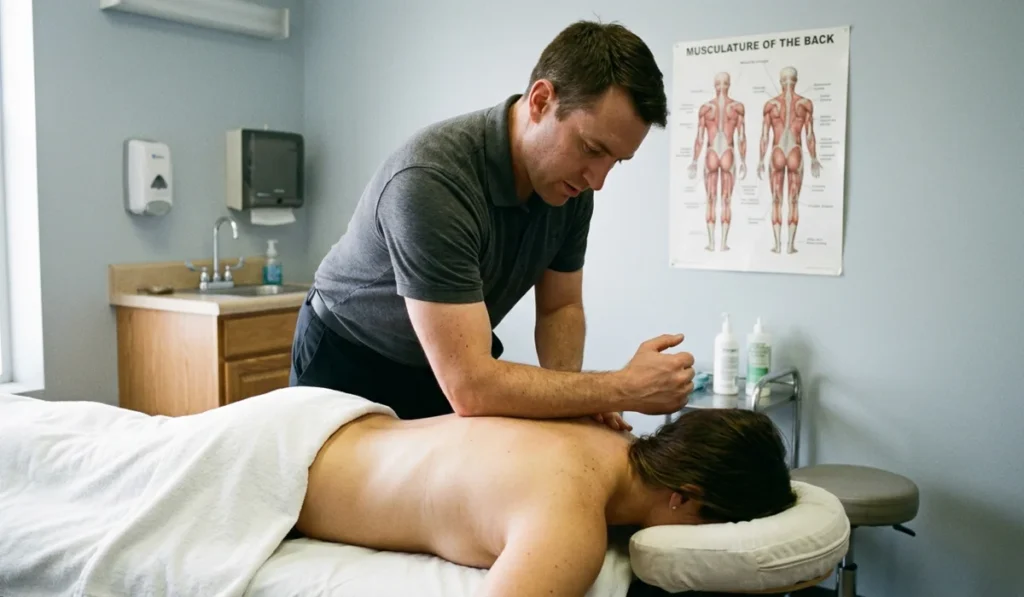
When a massage is done, there are some physical explanations for the sensation of discomfort afterward, which can help reduce anxiety. There are multiple processes going on within a muscle when a therapist applies pressure.
Muscle manipulation, micro-tears
The therapist presses on muscle and fascia during a massage, particularly when working on trigger points or chronic tension to “unstick” the fibres of the body. Micro tears can occur in the tissue during this process. Now, don’t panic hearing “tear”; this is exactly what happens during weightlifting also. The body gets the job done by repairing the tissues, making them stronger and more flexible.
The inflammatory and healing response
The local inflammatory response is caused by physical manipulation. The body’s response to the therapist’s activity on “knots” (adhesions) is to increase the blood flow and white blood cells to the area to promote healing. This added fluid and nutrients can lead to temporary swelling and pressure on nerve endings that results in that familiar dull ache.
Dehydration’s role in recovery
Dehydrated muscles are stiffer and more easily irritated. Drinking insufficient fluids prior to the appointment can cause your tissues to be firmer and make the manipulation more difficult, which can cause more friction and pain afterwards. In addition, water helps to remove the metabolic waste products that are produced by the muscles during the workout.
Individual sensitivity and “muscle memory”
The way you feel after your massage has a lot to do with your own experiences. People who have never had a massage or who only have one massage every year will feel more sore. The “awakening” of the muscles after months of being locked in a chronic state of tension can be a surprise to the nervous system.
Can deep tissue massage bruise your body?
Your body gets sore after deep tissue massage because it targets the inner layers of your muscles and connective tissues. Unlike a Swedish massage, which focuses on relaxation and superficial blood flow, deep tissue work involves intense, slow strokes and deep finger pressure.
Because the therapist is working to break up scar tissue and physically realign muscle fibers, the level of micro-tearing is higher. We often get reports of feeling “bruised” (even without visible marks) after deep work on the upper back or neck. Sore muscles after massage are a direct result of the high-intensity pressure required to reach those deeper structural layers.
Why does a scalp or head massage cause soreness?
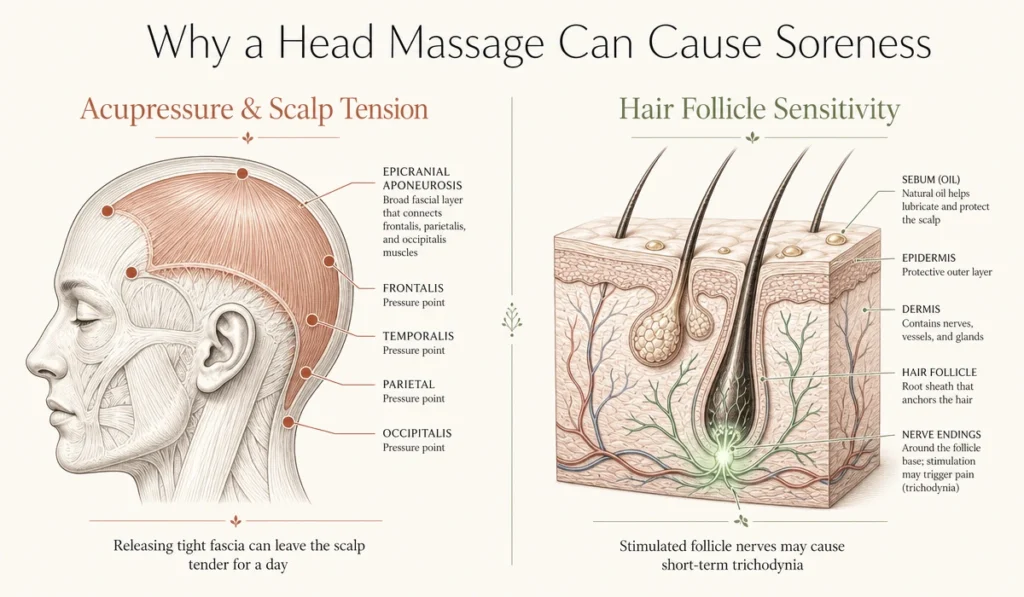
Most people assume a head massage is purely for relaxation, but professional head spa treatments involve significant acupressure and scalp manipulation, which can cause soreness.
Acupressure points and scalp tension
Epicranial aponeurosis is a thin layer of muscle and fascia that covers the scalp. As with all muscles, this can be very tight and cause tension headaches. When our therapists massage specific points, or apply pressure to them, they are releasing tension in a very sensitive area. This may cause the scalp to feel “tight” or tender to touch for a day.
Hair follicle sensitivity
The action of the head massage treatment, as well as the introduction of botanical oils, can activate the nerves located at the base of the hair follicles. Any tight hairstyles (ponytails or buns) could be stressing your hair follicles. These manipulations stimulate the follicles to travel in different directions, and may result in a perceived short-term pain or soreness of the scalp (trichodynia).
How long does soreness last after a massage?
The duration of your recovery depends largely on the intensity of the treatment and your body’s current state of health.
| Treatment Type | Typical Soreness Duration | When to Expect Peak Soreness |
| Swedish / Relaxation | 0 – 12 Hours | Immediately after or next morning |
| Head Spa / Scalp Treatment | 12 – 24 Hours | 4 to 8 hours post-treatment |
| Deep Tissue Massage | 24 – 48 Hours | 24 hours (the “Day Two” ache) |
| Hot Stone Massage | 12 – 24 Hours | Next morning |
If your soreness lasts longer than 72 hours or seems to be getting worse rather than better, it may no longer be standard post-massage recovery. Read through to know when you should consult with a doctor.
Sore neck after a massage
The neck is one of the most complicated regions of the body with a high concentration of nerves, blood vessels, and small muscles that stabilize and support it. The stress experienced from gazing down at phones and computers is known as “tech neck” and is something that many clients come to us for.
These muscles are in constant overstretch and are hypersensitive. Working on the suboccipital muscles (at the base of the skull) or the traps can result in a temporary “rebound” effect where the muscles get tight as they try to re-achieve their new, relaxed position. This is why Serenity Head Spas is recommending gentle mobility exercises for the neck after a session instead of static and heavy stretching.
Back sore after a massage
The most common place for post-massage pain is on the back as it contains the biggest muscle groups in the body.
Sore lower back after a massage
The reason your back is sore after a massage, especially the lower back (lumbar) area, is bears the brunt of the strain from weak core muscles or tight hips. When a therapist releases the quadratus lumborum or the erector spinae, the entire pelvic alignment can shift slightly. This “rebalancing” of the structure can result in a long-lasting ache as the postural muscles try to adapt to the new structure.
Upper back and shoulder soreness
Nits are a common place to get “knots,” located between the rhomboids (shoulder blade area). These knots are frequently places that are prone to poor blood flow. Massage can stimulate an influx of blood to their heads when they are massaged, which may lead to a “pulsing” sensation of pain. This is normal and will pass within 24 hours.
How to relieve soreness after a massage
If you find yourself reaching for the heating pad, follow these expert-recommended recovery steps to speed up the process.
Hydration is your first priority.
After your session at Serenity Head Spas, drink water to replenish body fluids; a minimum of 16 to 24 ounces. The kidneys need water to get rid of the metabolic waste, which is pushed out of the muscles. Caffeine and alcohol should be avoided for at least 12 hours before, as it can dry out tissues and make the achy sensation last longer.
Some gentle exercise, not an intense one
It is important not to “work out the soreness” for 24 hours; however, it may be tempting to do some heavy lifting or high-intensity interval training (HIIT). Rather, take a walk or gentle yoga, which should be no more than 20 minutes. This allows the blood to keep circulating, helping to heal, without the additional tearing of muscle fibers.
Epsom salts and hot compresses.
The best treatment to help you recover from massage is a warm bath of Epsom salts (magnesium sulfate). The magnesium is absorbed through the skin and has a natural muscle-relaxing effect. For those who don’t have a tub, a heating pad for 15 minutes on the sore area will help relax the nervous system and dilate blood vessels.
When to use cold therapy
If you notice actual swelling or a sharp, “hot” sensation in a specific spot, use an ice pack instead of heat. Ice is better for acute inflammation, while heat is better for general muscular dull aches.
Scalp and hair aftercare after a head spa treatment
After receiving a specialized treatment at Serenity Head Spas in Springfield or Rockville, your scalp recovery involves more than just muscle care.
- Wait to wash: We recommend waiting at least 24 hours before washing your hair again. This allows the essential oils and treatments used during the head spa to fully penetrate the scalp and hair shaft.
- Avoid heat styling: Your scalp and hair follicles are more sensitive immediately after a treatment. Avoid using high-heat blow dryers, curling irons, or flat irons for the first evening to prevent further irritation.
- Differentiate buildup from soreness: Sometimes, a “heavy” feeling on the scalp is simply the result of the nutrient-rich oils used. This is different from genuine muscle soreness. If the feeling is oily but not painful, a gentle rinse the following day will resolve it.
When soreness after a massage is a sign to see a doctor
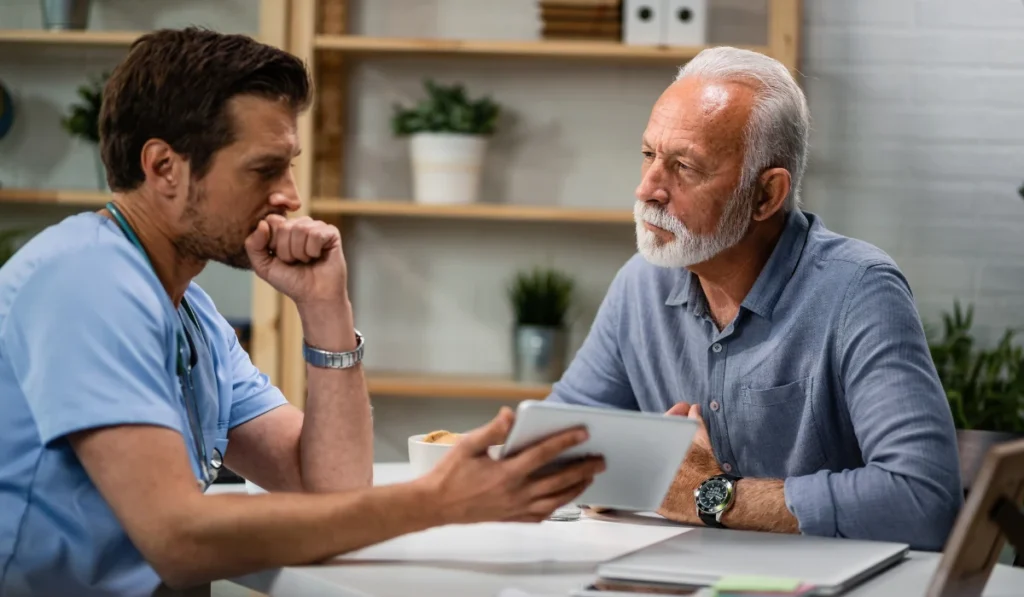
While 95% of post-massage soreness is healthy and normal, there are instances where it indicates a problem. You should contact a healthcare provider if you experience:
- Sharp, stabbing, or radiating pain (rather than a dull ache).
- Numbness or a “pins and needles” sensation that persists.
- Significant bruising or swelling in a localized area.
- A fever or general feeling of illness shortly after the massage.
If you have certain medical conditions, you must disclose them to your therapist at Serenity Head Spas before the session begins. Conditions like Deep Vein Thrombosis (DVT), recent bone fractures, severe osteoporosis, or being in a high-risk pregnancy require modified techniques to ensure safety.
Is It Normal to Be Sore After a Massage? Final Thoughts
After a body massage, you will be sore for around 12 hours. Sometimes, for a deep massage, the body may be sore for even 48 hours. There is nothing wrong with it. You can relieve yourself of the soreness by applying a hot compress and keeping your body hydrated. However, if the soreness is extremely painful and feels like stabbing, then it’s better to visit a doctor for hidden causes.
Frequently Asked Questions
Is soreness a sign the massage worked?
Not necessarily. While soreness often accompanies big structural change, a “relaxation” massage can be highly effective for the nervous system without causing any pain. However, if your goal was to release chronic knots, some level of soreness is a typical indicator that those adhesions were successfully manipulated.
Can I have another massage while I’m still feeling the pain from the previous massage?
Typically, wait 48-72 hours after the acute soreness has resolved. Over-treatment can result when muscles are already inflamed from a previous session, and will cause the body to tense up to avoid further stress – known as guarded muscles.
Is it normal to feel sore after a relaxation massage, not just deep tissue?
Yes. Light pressure can stimulate the lymphatic system and circulate fluids around, even if it’s light pressure. Even with a gentle Swedish massage, if a person has a lot of toxins in their body or is quite dehydrated, they may feel “flu-like” or slightly sore the following day.
What’s the maximum length of time for massage soreness?
If the soreness is present for more than 3 days (72 hours), it is unusual. It could be that the pressure applied was too much for the tissues at the moment, or that an injury was exacerbated.
Is it okay to take ibuprofen on days following a massage?
Ideally. no. As the inflammatory response is what the body uses to heal the micro-tears caused by the massage and is actually what you want to be suppressed. If it’s not disrupting sleep, the best way to ease the pain is through hydration and warm baths.
Experience the perfect balance of deep relief and expert care. Book your next treatment at Serenity Head Spas in Springfield, VA or Rockville, MD today.