
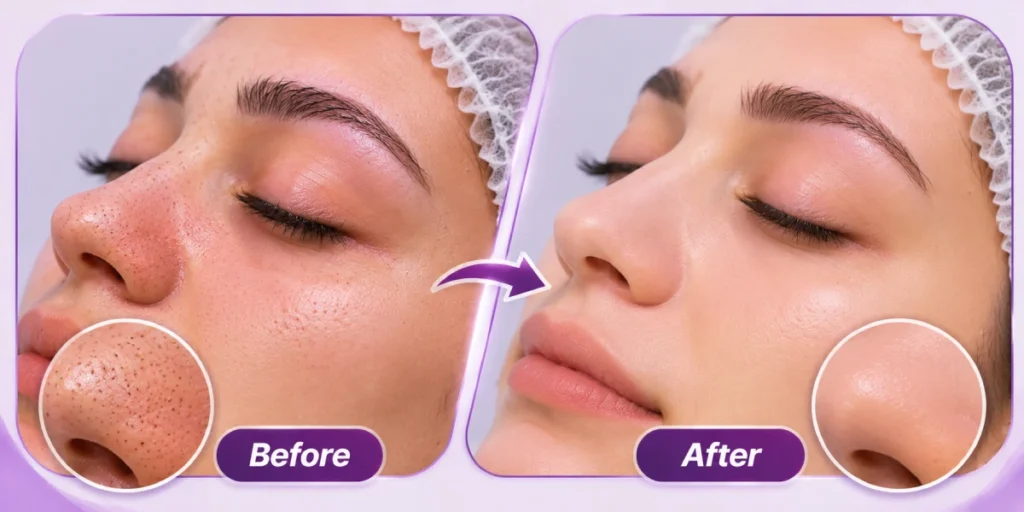
Tiny dark dots on your nose. A few stubborn white bumps on your chin. Some days your skin just feels clogged, and you start thinking a pro should deal with it. That’s what facial extractions are for. Put simply, a skincare professional carefully clears out pores that are plugged up, usually blackheads and whiteheads.
Here’s the catch, though. Blackheads are one thing. A sore red pimple or a deep cyst is something else entirely, and those shouldn’t be squeezed. We’ll go over how pros do extractions, who should and shouldn’t get them, the risks involved, and what to expect from your skin once you’re home.
What Are Facial Extractions?
Facial extractions are pretty much what they sound like. A trained skincare pro presses out the gunk from a few blocked pores. Since blackheads and whiteheads are both comedones, you’ll sometimes see it called comedone extraction. The American Academy of Dermatology (AAD) sums it up this way: “using sterile instruments to get rid of blackheads and whiteheads.”
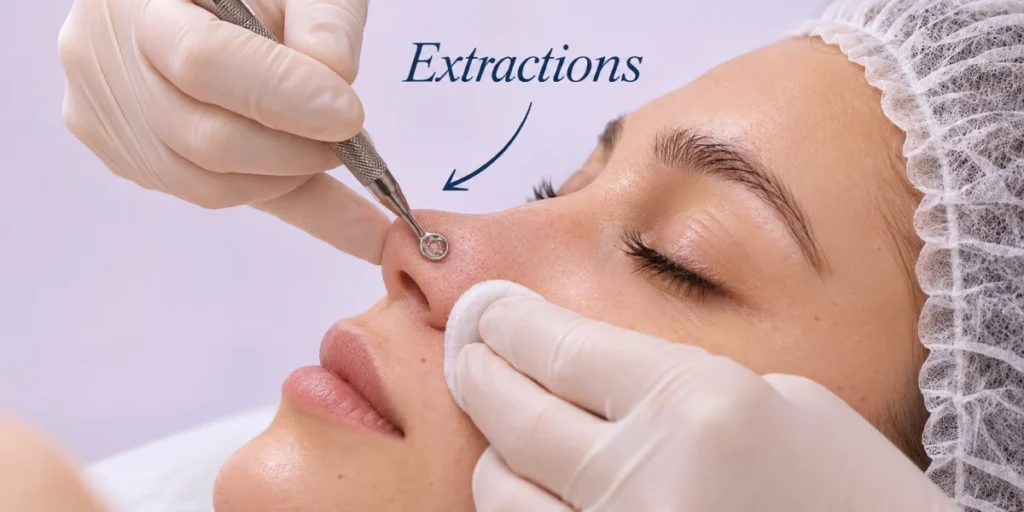
Good hands help. A good eye helps even more. Part of the job is choosing which pores to clear, leaving the stubborn ones be, and calling it a day before the skin gets overworked. Extractions clear out what’s in your pores today. That’s it. Your pores won’t shrink or seal shu;, new breakouts can still show up, and acne isn’t cured. In AAD’s words, “Blackheads and whiteheads can return.”
What Is the Difference Between Blackheads and Whiteheads?
They actually begin the same way. Pores get “clogged with dead skin cells and sebum,” says Cleveland Clinic, and sebum is just the natural oil your skin produces. What sets them apart is simple. Is the top of the pore open to the air, or is skin covering it? We’ll take them one at a time.
Blackheads
Dermatologists have a fancier term for blackheads: open comedones. Nothing covers the pore. The plug is right there at the top. That dark color isn’t dirt, either. Cleveland Clinic explains that “exposure to air at the surface of your skin causes the tip of the content to turn black.” Most people get them on the nose, chin, or forehead.
Still, some of the dots you see on your nose are plain old pores, not blackheads at all. A quick look from someone trained can save you from squeezing something that was never clogged.
Whiteheads
Whiteheads are the closed version, or closed comedones. A thin layer of skin stretches over the blocked pore. Cleveland Clinic calls them “small, plugged follicles that are covered with skin.” Air can’t get through that thin skin, so nothing darkens. You end up with a small raised spot that’s whitish or close to your natural skin color.
Why the Difference Matters
Blackheads and whiteheads don’t come with swelling or redness. Plenty of other acne does. Mayo Clinic puts papules in that group, calling them “small red, tender bumps.” Nodules sit deeper. Mayo describes them as “large, solid, painful lumps under the skin.” And cysts are a lot like nodules, only full of pus.
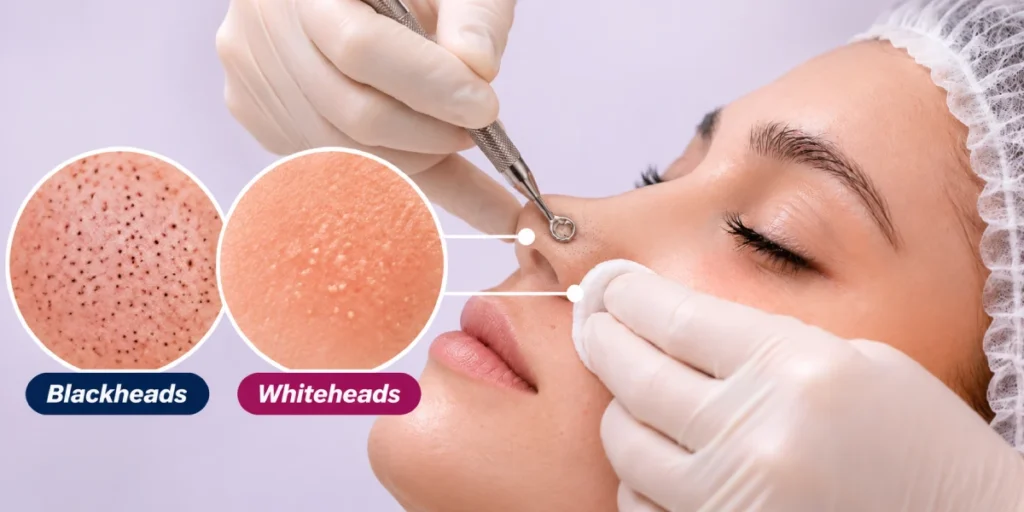
None of these should be squeezed. That’s the reason a provider first checks what they’re looking at, and how your skin is behaving, before deciding on anything.
How Do Professional Facial Extractions Work?
Spas don’t all follow one script, and the steps can vary depending on the types of facials and the service you choose. This is just a general outline of a visit.
It’s not meant as a home tutorial. It takes real training, so please leave the actual extraction to a pro.
Skin Assessment
First up, your provider takes a close look at your face. Some spots are good candidates, and some should be left alone. Anything inflamed or deep usually lands in the “leave it” pile.
Skin Preparation
Then your skin gets prepped. For most, skin preparation begins with washing your face. What comes next is the provider’s call. You might get a little steam or a softening product, or you might not. Both can be fine.
Extraction
Only then does the provider work on the pores they picked, gently. Four things matter here: skill, clean or sterile instruments, good hygiene, and knowing when to quit. Extra force won’t get a better result. A spot that won’t come out easily? A good provider moves on.
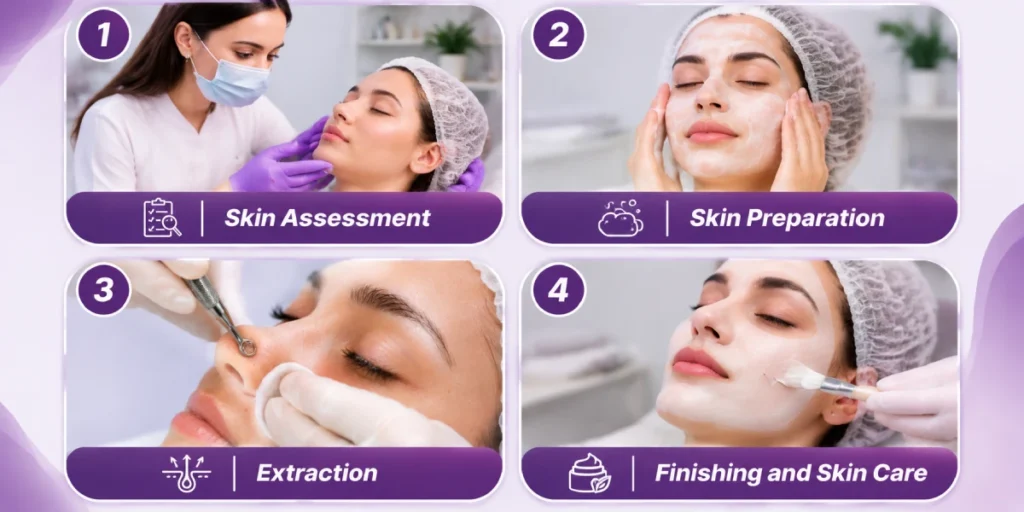
Finishing and Skin Care
To wrap up, your provider might smooth on something calming. Which product they use comes down to your facial and how your skin took the treatment. Curious? Ask us when you book.
What Are the Potential Benefits of Facial Extractions?
A facial and extraction appointment can make your face look somewhat clearer, if a skilled provider works on suitable pores. It helps, just in limited ways. The benefits of LED facial treatments include different potential skin benefits. Here’s the honest list:
- Not as many visible blackheads and whiteheads
- Clearer-looking pores right after
- Help with one type of congestion
Extraction can remove selected blackheads and whiteheads that are ready to come out. Those pores may look cleaner straight after treatment. For skin congestion, it works best as one piece of a wider routine. If you’re also concerned about acne scars, red light treatment for acne scars is another option to consider. Your pores will likely clog again at some point, and extractions can’t fix every reason acne happens. Your pores will likely clog again at some point, and extractions can’t fix every reason acne happens.
Red light therapy is another skincare treatment being studied for its potential effects on skin appearance. AAD notes you’ll need to “follow a skin-care plan to prevent new blemishes.” For a wider look at cleansing treatments, see our facial treatment services.
Are Facial Extractions Safe?
In most cases, yes, provided the person doing it is trained, uses clean tools, washes up, and knows which spots to leave alone. Where it goes wrong is heavy pressure, or going after a blemish that never should’ve been squeezed. Popping a pimple yourself may push its contents “deeper into the skin,” AAD warns, and inflammation gets worse. There’s also the risk of infection “from the bacteria on your hands,” the academy adds.
Picking at comedones can backfire, too. Cleveland Clinic mentions scarring, pore damage, infection, and blemishes that end up more noticeable. Deep, sore, puffy spots need a totally different approach. For large cysts and nodules, AAD notes that a dermatologist might drain them with sterile tools or use an injection that only a doctor should give.
We’re a spa, not a doctor’s office, and we’d never pretend otherwise. Bad acne, acne that’s spreading, or acne that keeps coming back should be seen by a dermatologist.
What to Expect After Facial Extractions
You may see some temporary redness or feel a bit sensitive, and how long it lasts differs from person to person. A bit of post-extraction aftercare goes a long way. The choice between different light-based treatments, including red light vs blue light therapy, also depends on your skin concerns.
- Hands off
- Gentle skincare
- Skip harsh products
- Follow your provider’s advice
- Know when to get help
Don’t touch, pick, or squeeze the treated areas. Wash with something mild and use a plain moisturizer, unless your provider suggested specific products. Give scrubs and strong acids a short break, since they can lead to skin irritation right now. Follow your provider’s tips first. They know what was done. Is the swelling, pain, or redness getting worse? That’s a reason to call a doctor.
Who May Need to Avoid or Delay Extractions?
Some blemishes, and some skin days, just aren’t right for extractions. Deep, inflamed breakouts are one example. Pressing on them can make the swelling worse and leave you more likely to end up with acne scarring. Irritated skin, or a spot that might be infected, is another. Get those looked at before an extraction.
Acne-prone skin or a lot of skin sensitivity matters too. Before your visit, let us know about skin problems, the products you use, and any treatments you’re getting. Then we can decide together whether to go ahead, change the plan, or have you see a dermatologist first.
Facial Extractions vs. Deep Cleansing Facial
A professional extraction has a single job, which is clearing a few chosen pores. A deep cleansing facial is bigger. It involves cleansing and may include other steps, depending on the types of facials and the skin concerns they address.
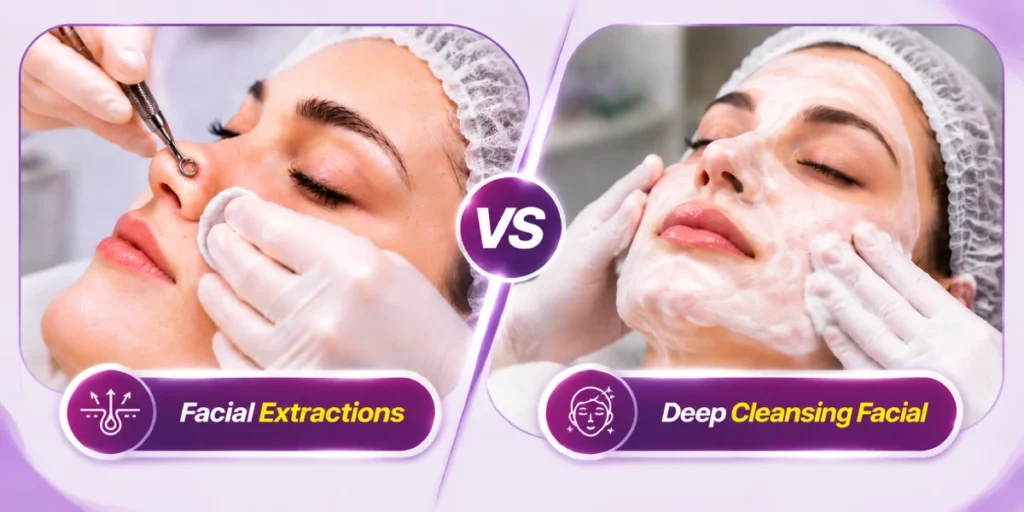
And extractions aren’t automatically part of every deep cleansing facial, so check before booking. At Serenity Head Spa, our Deep Cleansing Facial focuses on clearing away oil, sweat, dead skin, and leftover product. If you’re looking for facial treatment services in Springfield or Rockville, check our available treatments and pricing. If you’d like to know about extractions, just call us.
Frequently Asked Questions
Got more questions? Makes sense, because advice about extractions is all over the place. Here are short answers. For questions about your own skin, check with your provider or a dermatologist.
What Are Facial Extractions?
A trained professional empties selected clogged pores, usually blackheads and whiteheads.
How Are Blackheads and Whiteheads Extracted?
First, your skin gets checked and prepped. After that, ready pores get cleared gently with clean or sterile tools. Safe blackheads whiteheads extraction relies on care, not pressure.
What Is the Difference Between a Blackhead and a Whitehead?
A blackhead is open to the air, which darkens it. A whitehead is covered by skin, so it stays light.
Are Facial Extractions Safe?
Done right, they usually are. Most problems, such as irritation, infection, and scars, come from too much pressure.
Do Facial Extractions Hurt?
You’ll likely feel pressure and maybe a brief sting. It varies by person and spot. Tell your provider if you need a break.
Can Facial Extractions Cause Scarring?
Yes, when squeezing is too rough. That’s why deep or inflamed blemishes shouldn’t be forced out. Extractions also won’t remove scars you already have.
What Should You Expect After Facial Extractions?
Mild redness or tenderness is common. Be gentle with your skin, don’t pick, and follow your aftercare tips.
How Long Does Redness Last After Extractions?
There’s no fixed answer. Your skin and the amount of work done both play a part. See a doctor if it gets worse rather than better.
Can Every Blackhead or Whitehead Be Extracted?
No. Some sit too deep or aren’t ready, and forcing them causes damage. A good provider leaves those for another day.
Should Inflamed Pimples or Cysts Be Extracted?
No. Pressing on a painful, swollen spot can make it worse. A dermatologist has safer ways to treat it.
Can You Get Extractions During a Deep Cleansing Facial?
Sometimes. That’s up to each spa, so ask when booking.
Should You Squeeze Blackheads at Home?
We’d skip it. Squeezing at home can cause infection, inflammation, and scars, according to both AAD and Cleveland Clinic. Keep your home routine gentle and save extractions for a professional.
Final Thoughts on Facial Extractions
Done well, facial extractions can clear suitable blackheads and whiteheads and make your skin look a little cleaner. They won’t help everything, though. Swollen pimples, cysts, and nodules should never be squeezed, and they need other treatment. Have your skin checked, pick a skilled provider, treat your skin kindly afterward, and expect modest changes. Severe or stubborn acne? That’s dermatologist territory. Curious whether extractions fit into a facial with us? Browse our facial treatments and call us with any questions.
Have questions about facials? Contact Serenity Head Spa in Springfield, VA, or Rockville, MD.