So, what is red light therapy? In short, it’s a treatment that shines low levels of red light on your skin. Cleveland Clinic describes it as a way to “reportedly improve your skin’s appearance.” You’ll see it in dermatology offices, spas, and on plenty of social media feeds. It’s being studied for a range of uses, including some skin concerns.
But the evidence isn’t the same for every concern, and results depend a lot on the device. This guide sticks to skin: what it is, how it may work, what it’s used for, and how to stay safe.
What Is Red Light Therapy?
Red light therapy uses specific wavelengths of red light. Some devices also add near-infrared light, which you can’t see and which isn’t the same thing as visible red light. You might also hear the technical name, photobiomodulation. Same idea, fancier word.
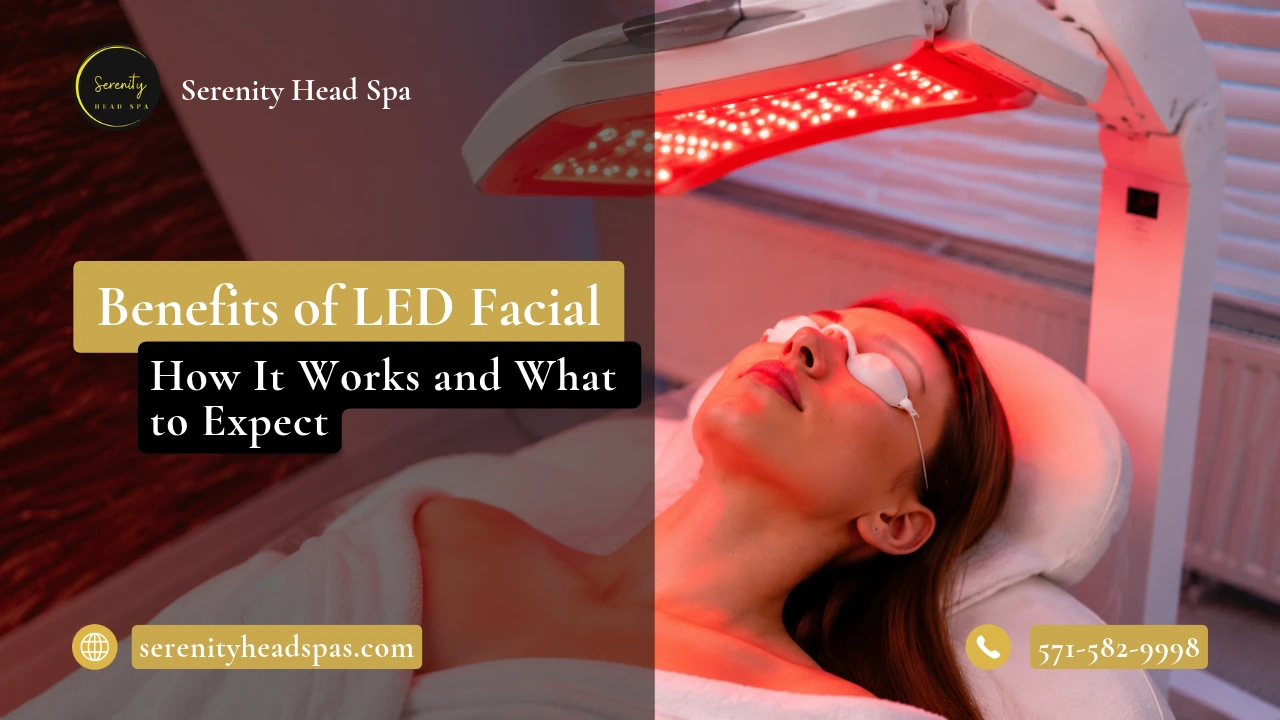
Many of today’s devices use a light-emitting diode (LED), the same kind of small, efficient bulb found in lots of electronics. That’s why you’ll see the term LED red light therapy. It just means red light delivered through LEDs.
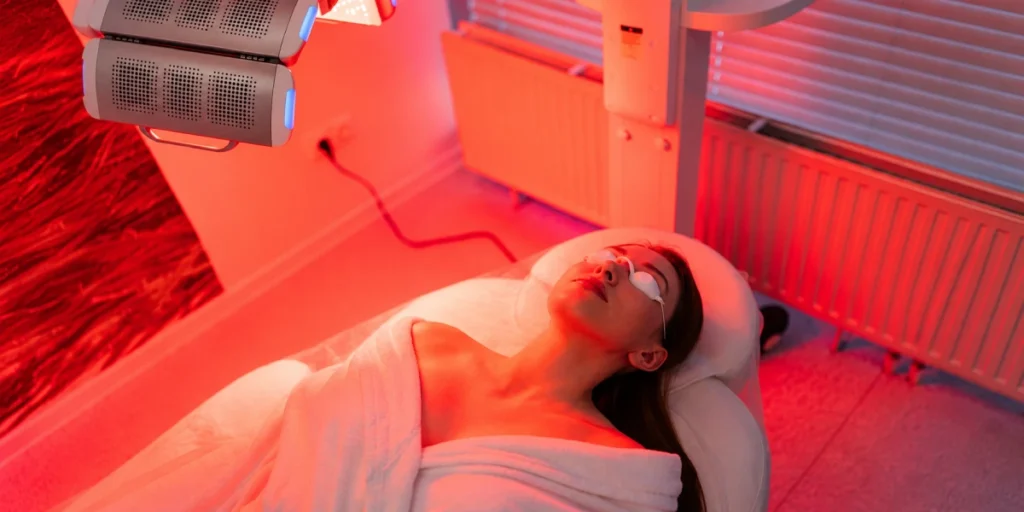
One thing it isn’t: UV light. According to Cleveland Clinic, red light therapy doesn’t use the “cancer-causing ultraviolet (UV) light from the sun or tanning booths.” It’s also different from laser resurfacing and photodynamic therapy, which work in other ways. And because the name covers lots of devices and treatment plans, two red light sessions aren’t automatically the same.
How Does Red Light Therapy Work?
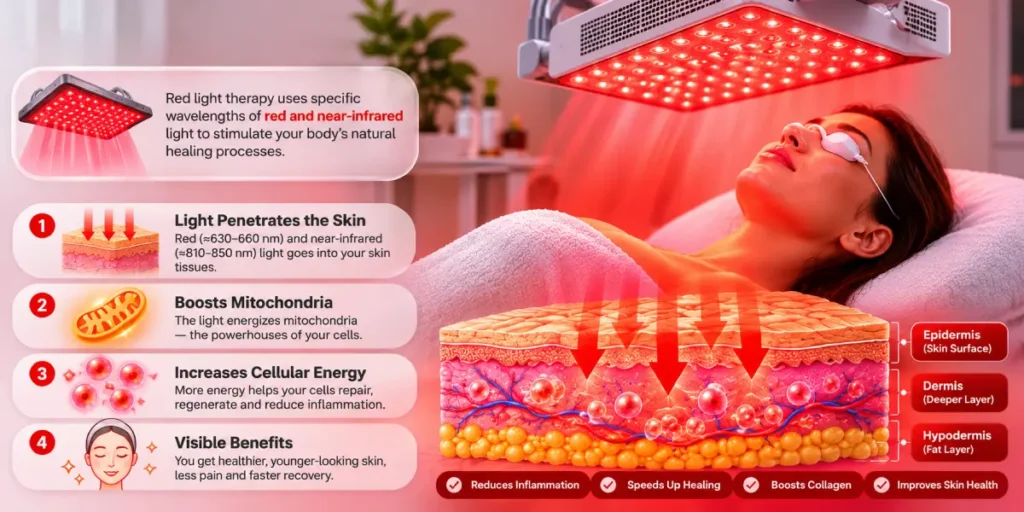
Scientists are still working this out. The main idea is that red light acts on mitochondria, the tiny “power plants” inside your cells. Cleveland Clinic lists possible effects such as stimulating collagen production and calming inflammation.
Wavelength matters here. Cleveland Clinic notes that “the wavelength affects how deeply the light penetrates your skin.” Red light travels further into the skin than blue light, for example. So the exact light a device gives off can change what it might do.
Keep in mind, though, that a proposed mechanism isn’t proof of results. Just because light may affect cells in a lab doesn’t mean every device will make a visible difference on your face.
What Skin Concerns Is Red Light Therapy Used For?
People turn to red light therapy for skin issues of all kinds, from early lines to uneven tone. But Cleveland Clinic is blunt about it: there’s “not enough evidence to support most uses.” Many studies were small or lacked a comparison group. Here’s where things stand for the most common concerns.
Fine Lines and Wrinkles
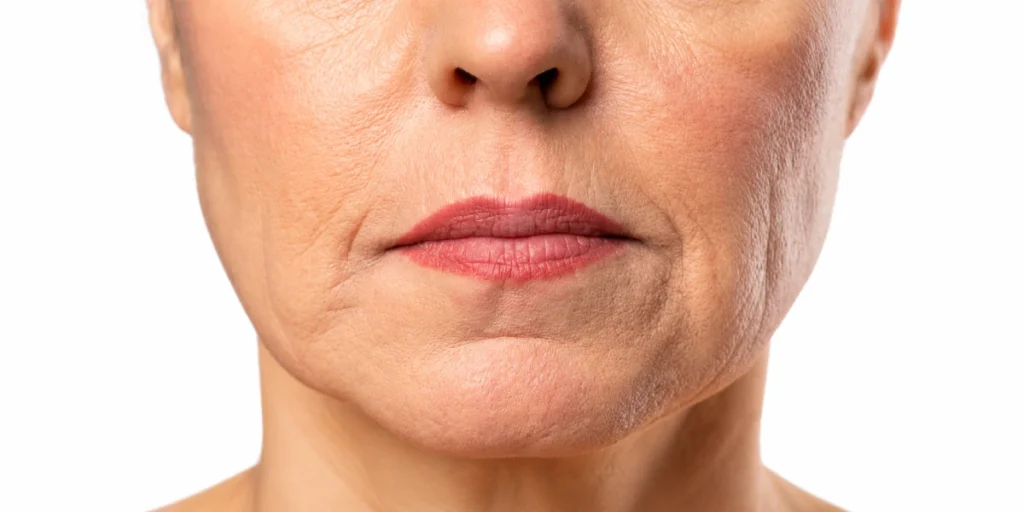
This is the most studied area. The American Academy of Dermatology (AAD) says studies suggest red-light LED devices “can produce subtle to noticeable results on the face.” Subtle is the key word. Red light therapy for wrinkles won’t give you a facelift, and nobody can promise a set percentage of improvement. More research is still needed.
Skin Texture and Overall Appearance
According to Harvard Health, research suggests red light may help “smooth skin texture.” Some people notice smoother-looking skin over time. That’s a change in skin appearance, though, not a guaranteed change in skin structure. And red light therapy for skin texture works best as one part of a bigger skincare routine.
Redness and Other Skin Concerns
Red light shows up in research on rosacea, eczema, psoriasis and age spots. Results really depend on the concern and the treatment method, though. If you’re thinking about red light therapy for dark spots, keep your hopes modest. It isn’t a proven way to remove pigment, and AAD notes that darker skin may be more prone to lasting dark spots from visible light. So it doesn’t treat every skin condition.
Acne and Scars
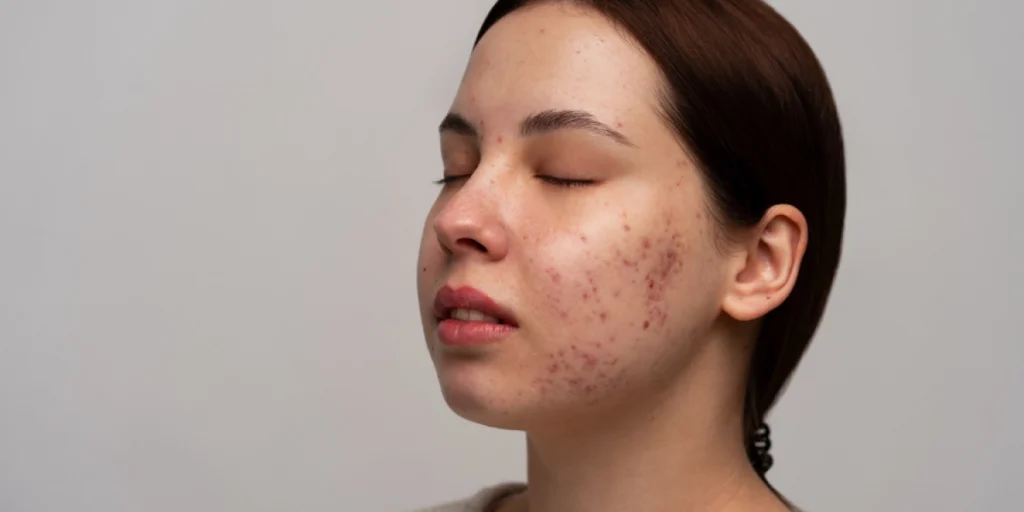
LED light treatments have been studied for acne. Blue light gets more attention there, since Cleveland Clinic says it “may destroy acne-causing bacteria.” Interest in red light therapy for acne and red light therapy for scars keeps growing too. But neither erases scars or clears every type of acne. If these are your main concerns, a dermatologist is the best place to start.
What Can You Expect Before and After Red Light Therapy?
Those dramatic red light therapy ‘before and after’ photos online? Take them with a grain of salt. Good treatment expectations start with knowing what can make photos misleading. AAD puts it simply: “It takes time to see the results and not everyone sees them.” Here’s what to keep in mind:
- Results vary
- Photos can mislead
- Setup changes the look
- Repeat sessions may be needed
- Some people see no change
Your skin is different from anyone else’s, so your results will be too. A single photo can’t prove that a treatment caused a change. Lighting, camera angle, makeup, a new skincare product and time between photos can all shift how skin looks.
Cleveland Clinic says this “isn’t a one-time treatment for most skin conditions,” so any change may take a series of visits. And some people won’t notice a difference at all. When you look at before-and-after red light therapy images, ask whether they’re real, unedited, and taken in the same conditions.
How Is Professional Red Light Therapy Different From At-Home Devices?
The biggest difference is power. AAD says in-office red light “is more powerful than that found in devices sold for at-home use.” Cleveland Clinic adds that with LED masks and other portable devices, “you likely won’t see dramatic” results.
Device specifications vary too, including output, wavelength, exposure time, and instructions. That’s why you can’t assume a mask at home will match an in-office session, or that two professional devices will act the same.
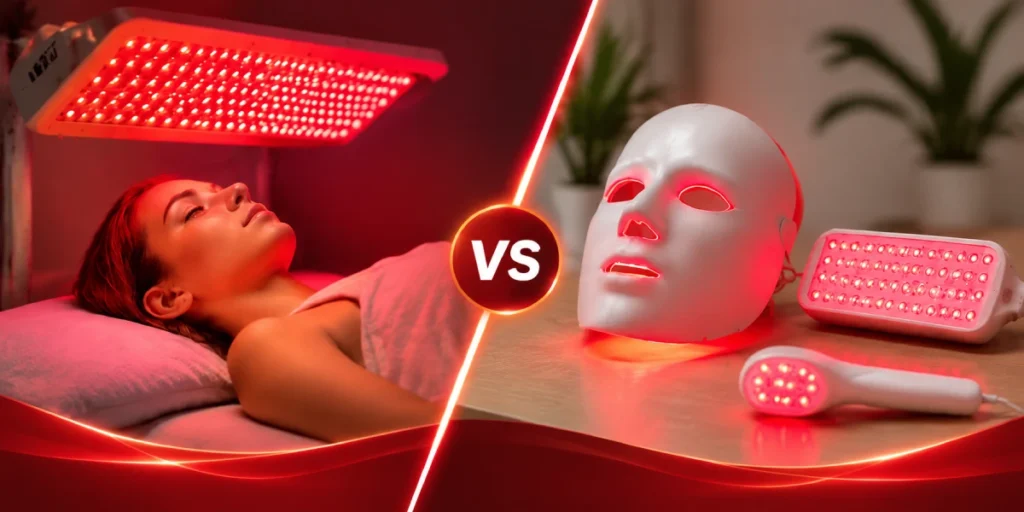
A professional LED facial also comes with someone who can check your skin and adjust the session. Want to see how that works in practice? Our light therapy facial page explains what’s included.
Is Red Light Therapy Safe?
For most people, short-term use appears to be well tolerated. Cleveland Clinic says it “appears to be safe” when used short-term and as directed. But that doesn’t mean it suits everyone. And as Cleveland Clinic points out, “the long-term safety of devices that use red light therapy isn’t yet known.” A few things to know:
- Side effects can happen
- Eye protection matters
- Some medicines raise light sensitivity
- Skin tone can play a role
Some people get temporary redness and irritation or mild pain, according to AAD. Wear goggles if the directions call for them, and AAD warns, “Don’t substitute sunglasses for protective goggles.” Eye protection is a big deal with bright light. Photosensitivity is another. If you take medicine that makes you more sensitive to light, or have a condition like lupus, talk to a doctor first.
The AMA also notes that people with darker skin face a higher risk of lasting discoloration. Our post on LED facial safety goes into more detail. And if you have a skin concern that won’t go away, see a professional instead of diagnosing it online.
How Often Should You Have Red Light Therapy?
There’s no single schedule that works for every device and every concern. Cleveland Clinic says people are usually seen “one to three times a week for weeks or even months.” Harvard Health adds that researchers still haven’t settled how long each session should last.
So the best schedule depends on the device and the provider’s protocol. Treatment consistency matters, since AAD calls it “not a one-and-done treatment.” Follow the device’s instructions or your provider’s plan, rather than making one up.
If you’re considering LED light therapy in Springfield, Serenity Head Spa offers a professional Light Therapy Facial to add to your skincare routine.
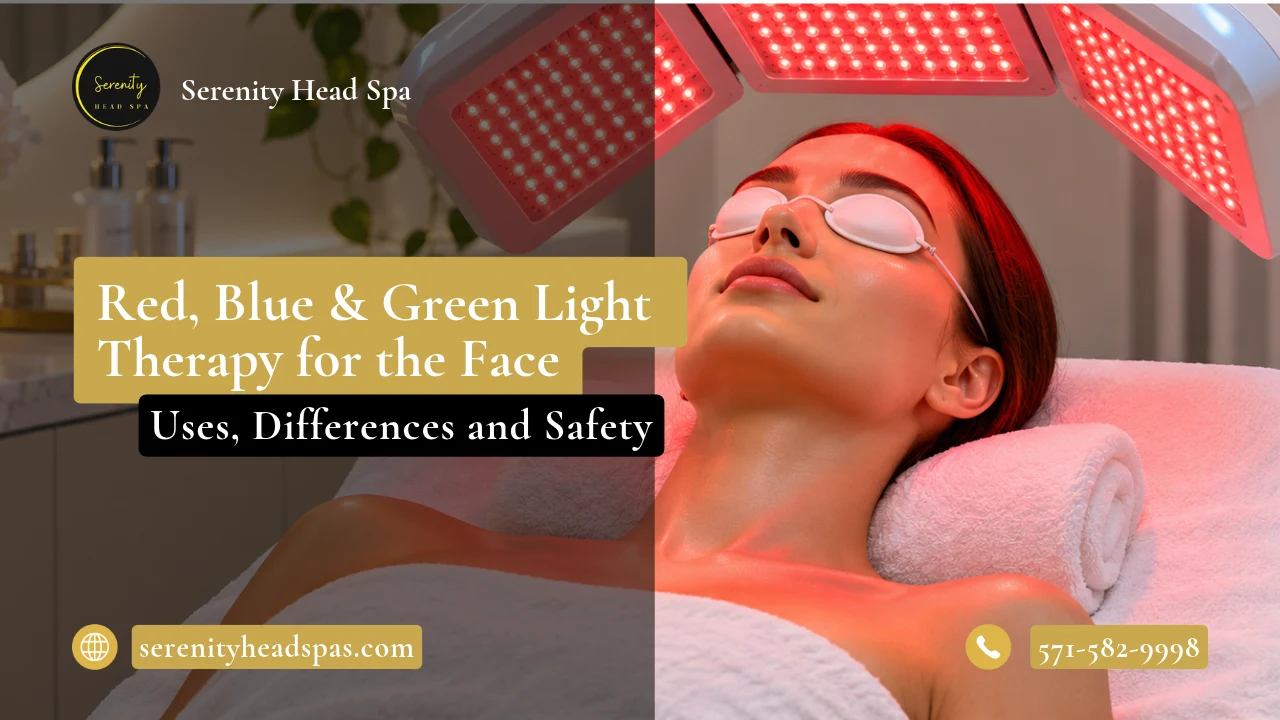
Red Light, Blue Light and Green Light: What Is the Difference?
Different colors of light have different wavelengths, and each one reaches a different depth in the skin. According to Cleveland Clinic, red light reaches deeper and may calm inflammation and support collagen. Blue light works near the surface and may target acne-causing bacteria.
Green light is talked about less, and the evidence is thinner. So the right color depends on what you’re hoping to improve, and a professional can help you sort that out.
If you want to learn more about the differences between red light and blue light therapy, read our latest blog.
Frequently Asked Questions
Still curious? That’s fair; there’s a lot of noise about red light online. Here are quick answers to the questions people ask most. We kept them short, so scroll up if you’d like the full story on any one of them.
What Is Red Light Therapy?
It’s a treatment that shines low levels of red light, and sometimes near-infrared light, on the skin. It doesn’t use UV light.
What Skin Concerns Is Red Light Therapy Used For?
Mostly signs of aging, like fine lines, plus skin texture. It’s also studied for acne, redness and other concerns, but evidence for most uses is still limited.
What Can Red Light Therapy Before and After Results Look Like?
Usually subtle, if anything. Changes, when they happen, tend to show up slowly over repeated sessions. Some people see no change.
How Does Red Light Therapy Work?
It’s thought to act on the mitochondria in your cells. That may help calm inflammation and support collagen, but researchers are still studying it.
Does Red Light Therapy Work for Everyone?
No. Results depend on your skin, your concern, and the device. AAD notes that not everyone sees results.
Is Red Light Therapy Safe for the Skin?
Short-term use appears safe for most people, but mild redness or irritation can happen. Check with a doctor if you’re sensitive to light or take light-sensitizing medicine.
How Often Should You Do Red Light Therapy?
It depends on the device and the provider’s plan. In-office treatment is usually one to three times a week for weeks or months, per Cleveland Clinic.
Can Red Light Therapy Help With Acne Scars?
It’s being studied, but it won’t erase scars. A dermatologist can help you weigh your options.
Can Red Light Therapy Help With Wrinkles?
It may soften the look of fine lines a little. AAD describes results as subtle to noticeable, and more research is needed.
How Is Professional Red Light Therapy Different From At-Home Devices?
In-office devices are usually more powerful, and a trained professional runs the session. Home devices tend to be weaker and give smaller results.
How Is Red Light Therapy Different From Blue and Green Light Therapy?
Each color uses a different wavelength. Red reaches deeper, while blue stays near the surface and is linked to acne. Green has less research behind it.
Final Thoughts on Red Light Therapy
Red light therapy uses low levels of red light to try to improve how skin looks. It’s being studied for fine lines, texture, and a handful of other concerns, and some people do see subtle changes. But it isn’t a miracle fix. Results vary; they take time and repeat visits, and not everyone sees them. So go in with realistic hopes, protect your eyes, and ask a professional if you have health concerns. Curious about trying it in a professional setting? See our Light Therapy Facial or browse all our facial treatments in Springfield and Rockville.
Have questions about light therapy facials? Contact Serenity Head Spa in Springfield, VA, or Rockville, MD.