You will often be asked to choose a massage type. Should you have a massage that helps you relax and sink into the table, or should your therapist concentrate on that tense area between your shoulder blades? This sums up the deep tissue vs. relaxation massage decision.
While relaxation massage is mainly about comfort and calm, deep tissue massage is more focused and uses firmer pressure. Neither needs to be painful, and both can be tailored to your preferences. Below, we explain how they differ and how they feel, so you can choose the right one.
Deep Tissue vs. Relaxation Massage: What’s the Difference?
Generally, when it comes to deep tissue vs. relaxation massage, the right choice depends largely on your aims. Whereas relaxation massage is designed to help you relax fully, deep tissue massage allows your therapist to target particular areas of tension. The speed, pressure, and focus of the massage will all follow from those aims.
The table below summarises the typical differences between the two, so you can quickly see which one matches the session you have in mind.
| Feature | Relaxation massage | Deep tissue massage |
|---|---|---|
| Focus | Relaxation | Concentrating on areas of tension |
| Pressure | Usually light to medium | Firmer |
| Speed and technique | Smooth, slow, and continuous | Slow and methodical |
| Coverage | Often the entire body | Potentially concentrating on limited areas |
| Feel | Generally relaxing | Stronger in areas of concentration |
| Typical reason for booking | To relax | To ease deep muscular tension |
| Can pressure be adapted? | Yes | Yes |
(These are general distinctions only. Although therapists may have slightly different methods, they will generally adapt their massage to your preferences.)
What Is a Relaxation Massage?
Relaxation massage aims to relax both your body and mind. Therapists perform a range of gliding and often rhythmic techniques, such as stroking and kneading. Pressure is applied as desired, often at a light to medium setting. When weighing relaxation massage vs deep tissue, this is the milder and wider-ranging option.
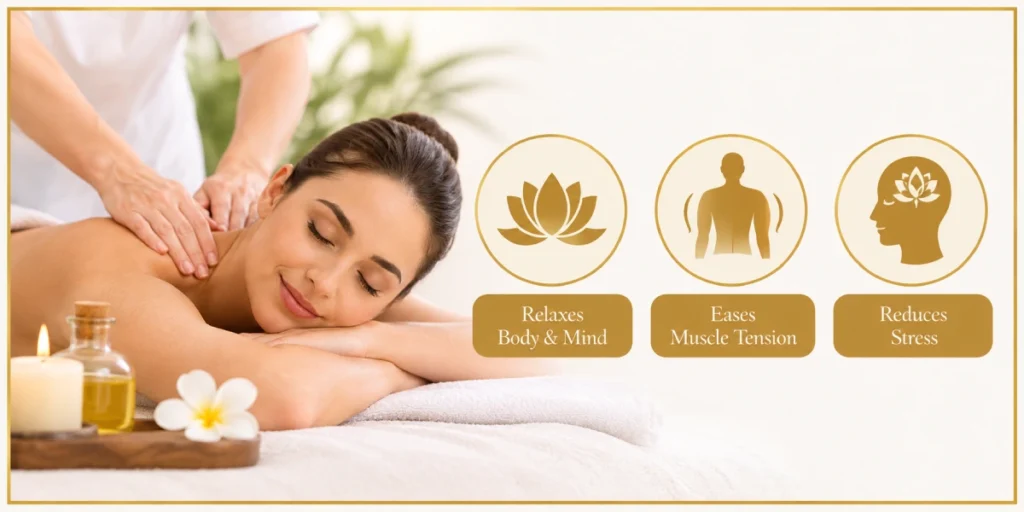
The majority of relaxation massages are based on Swedish massage. The National Centre for Complementary and Integrative Health states that in Western countries, Swedish massage is the most commonly used form of massage. Similarly, Cleveland Clinic describes it as the “gold standard” massage for relaxation and recommends it for novices.
Research by Cedars-Sinai has shown that a single 45-minute Swedish massage session can reduce levels of arginine vasopressin, a hormone associated with stress. It can also slightly reduce levels of cortisol. Despite being a small and initial study, these findings are promising. For further details, see our article on the benefits of receiving a relaxation massage.
What Is a Deep Tissue Massage?
Deep tissue massage involves the therapist applying deep and gliding pressure. As explained by a therapist quoted by Cleveland Clinic, this enables them to penetrate the muscles and tendons and so assist with relieving muscle tightness. Consequently, it is suitable for both general and long-term muscle tightness. When comparing deep tissue massage vs relaxation, this is the more intense and specialised option.
Usually, a deep tissue massage will:
- Involve gliding movements
- Apply progressively deeper pressure to more tightly bound areas
- Use the forearms, knuckles, and/or thumbs
- Concentrate on one or two areas for a greater period of time
- Regularly assess and modify pressure and comfort
While deep tissue massage is more intense than a number of other massage types, it is not merely an intensified version of them. Rather, it is a more specialised method. As explained by another therapist quoted by Cleveland Clinic, it can feel even deeper than a relaxation massage. It is also possible that it will result in a higher level of post-treatment aches. For further information, see our article on deep tissue massage.
Relaxation Massage vs. Deep Tissue Massage: Which Is Better for Your Goals?
As mentioned above, neither relaxation nor deep tissue massage is automatically superior. When deciding between relaxation vs deep tissue massage, consider your personal needs and which of the situations listed below is most applicable.
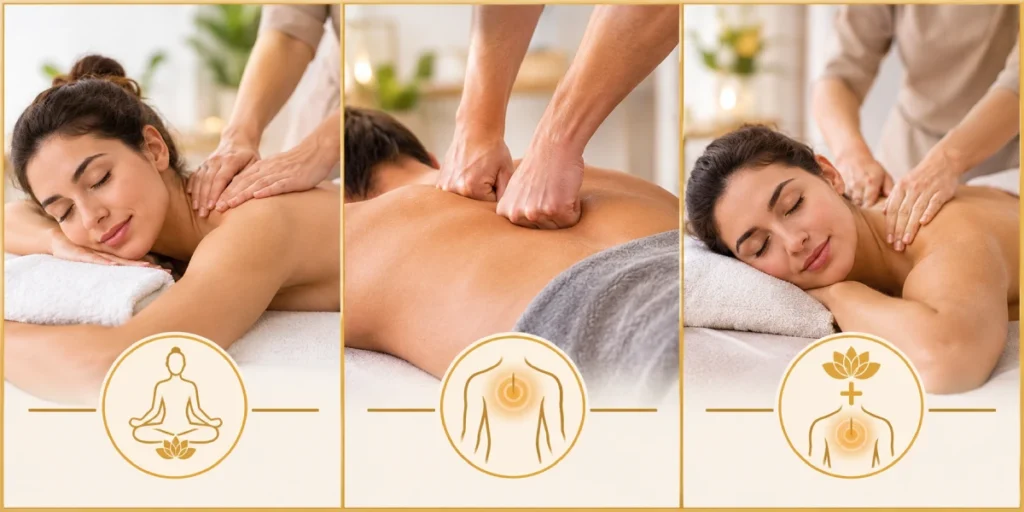
When Relaxation Massage May Be a Better Fit
If you wish mainly to relax, then this is a good option. It is particularly suitable after a stressful period or ahead of a major occasion. It is also a mild and good massage option for those who are massage novices and/or are pressure-sensitive.
When Deep Tissue Massage May Be a Better Fit
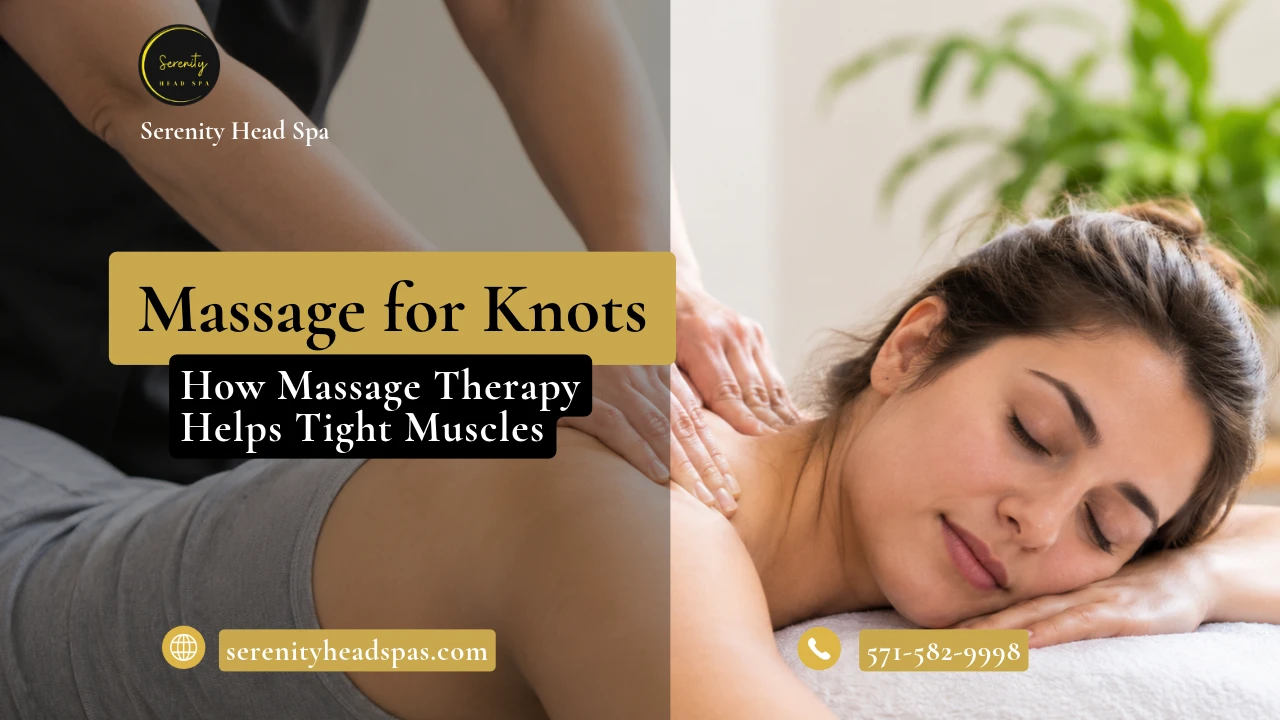
If you suffer from deep muscle tightness in particular regions (for example, your upper back if you frequently sit at a desk and/or your shoulders if you attend the gym), then deep tissue massage can be suitable. Moreover, if you desire a more intense massage and wish for particular areas to be concentrated upon, then this could also be an appropriate option. Nonetheless, deep tissue massage is not always the most appropriate massage for those suffering from muscle tightness and/or aches. Occasionally, a less intense massage can be of benefit.
What If You Want Both Relaxation and Focused Work?
Often, people receive a combination of relaxation and deep tissue massage. Usually, this involves the therapist employing mild relaxation massage alongside some deep tissue work targeting one or two areas of tightness. Clearly convey your requirements to your therapist so that they can then modify the pressure accordingly.
Is Relaxation Massage the Same as Swedish Massage?
Although there are similarities, they are not entirely the same. As well as gliding, Swedish massage can include kneading, rubbing, and tapping. Although most relaxation massages are based on Swedish massage, different spas may use different terminology. Occasionally, for instance, a massage will be described as either “therapeutic” or “Swedish”. Thus, it can be useful to consult a spa’s menu to clearly recognise the distinction between these massage types.
For more information on the distinctions between relaxation and Swedish massage, see our article on relaxation massage vs. Swedish massage. To compare Swedish massage with more intense massage types, refer to our article on Swedish versus deep tissue massage. Further information on the difference between therapeutic and relaxation massage can also be found in our dedicated article on therapeutic vs. relaxation massage.
Does Deep Tissue Massage Need to Feel Painful?
No. Even though deep tissue massage can be reasonably deep in certain areas, you should not experience excessive pain. Ideally, the pressure applied will be something you can easily breathe through. Should you ever feel that the pressure is too high, alert your therapist to this and ask them to change it.
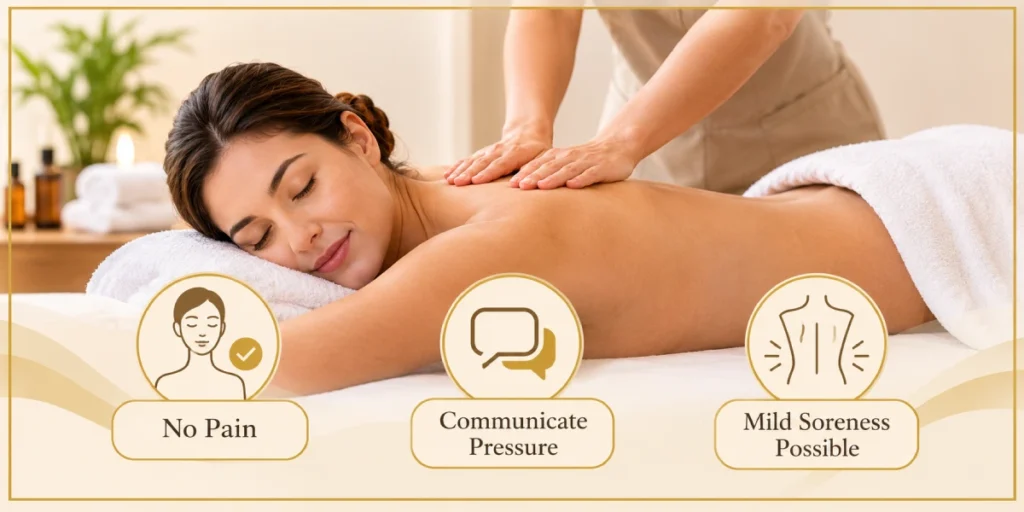
According to pain science writer Paul Ingraham in his in-depth analysis of massage pressure, there is usually no good reason for highly painful massage, unless it is in fact more efficacious than a milder massage. However, it is rarely known whether this is the case. Therefore, increased intensity does not necessarily lead to improved outcomes.
Post-treatment, some individuals can feel slightly achy. As Cleveland Clinic points out, because deep tissue massage centres on particular muscles, it can result in greater aching than a less intense massage. For further information and advice on typical post-treatment aches, see our article on whether it is normal to be sore after a massage.
What Should You Tell Your Massage Therapist Before a Session?
It is often beneficial to provide your therapist with the following information before your massage begins:
- Your main goals (for example, to relax or to alleviate muscle tightness)
- Areas that you would like to be massaged and those that you wish to avoid
- Your preferred pressure, and whether you have previously felt that massage pressure has been too light or too strong
- Previous massage experiences and how you have responded to them, for example whether you became achy or developed bruises
- Past or current injuries and/or health concerns, including recent operations and/or whether you are pregnant
- Medication that you are taking, especially blood thinners
This is an important aspect. Cleveland Clinic suggests that if you are currently taking blood-thinning medication, you should speak to your provider about this prior to having a massage, as it can heighten the chance of bruising.
How Do You Choose the Right Massage at Serenity Head Spa?
Our Full Body Massage can be provided at light, medium, and/or firm pressure, and your therapist will modify this as necessary. Initially, your therapist will conduct a short assessment so as to ascertain your objectives and areas of concern. Following this, a massage will be performed, beginning with some warming strokes and then proceeding with a full-body massage.
If your primary goal is to relax, then we provide a Relaxation Body Massage for 60, 90, or 120 minutes, and whichever duration works best for you can be selected. If you desire a more intense and specialised massage for specific areas, our Neck and Shoulder Massage contains deep tissue and knot-release aspects, and our Back Massage works a little more deeply on your back.
Should you continue to be unable to decide, simply inform us of your objectives, and we will assist you.
Frequently Asked Questions
Below are answers to some of the most common questions about choosing a relaxing massage vs. a deep tissue session. If your question isn’t covered here, our therapists will be happy to help before your session.
Which Massage Is Better If I Want to Relax?
Generally, relaxation massage is the more natural choice for reducing stress. Not only does it use soothing, comfortable pressure, but its smooth and continuous technique also encourages your body to relax. Preliminary research into Swedish massage suggests it may even help reduce levels of some stress hormones. However, if firmer pressure helps you relax, deep tissue massage can also be a relaxing option.
Is Deep Tissue Massage Different From a Regular Massage?
Yes. Typically, a regular massage will be a relaxation or Swedish-style massage. As described above, this involves smooth, continuous strokes and comfortable pressure. Compared to this, deep tissue massage is both slower and firmer, and it places greater emphasis on particular areas. When it comes to deep tissue massage vs regular massage, neither is superior. The difference lies in the focus and intensity of the treatment.
Can a Relaxing Massage Be Firm?
Yes. When choosing a relaxing vs. deep tissue massage, your aims matter more than the pressure level. If you would like a deep relaxing massage, let your therapist know. They can continue to use smooth, continuous techniques, but with slightly firmer pressure.
Will I Be Sore After a Deep Tissue Massage?
It is not uncommon to feel some soreness for a day or two, particularly if your muscles were very tense before your treatment. Drinking water, doing some light exercise, and taking a warm shower can all help. If your soreness gets worse or lasts more than a few days, it would be wise to consult your doctor.
Can Deep Tissue Massage Be Gentle?
To an extent, yes. Although deep tissue massage is defined by slow, focused work on deeper muscles, a skilled therapist can reach these muscle layers gradually and without undue force. Let your therapist know if you are sensitive to pressure so they can build up slowly.
How Long Should My First Massage Be?
Usually, 60 minutes is a suitable length for a first massage. This gives your therapist enough time to address your key areas of concern without rushing. If you already know you would benefit from extra time on problem areas or a longer period of relaxation, then 90 minutes may be more appropriate.
Final Thoughts
Whereas deep tissue and relaxation massage are distinct, they are both methods of looking after your body. Largely, your needs will determine which massage type you receive. Should you want to relax and let stress fade, then a relaxation massage can be a highly enjoyable treatment.
Alternatively, if you have specific regions of tightness and favour a more intense massage, deep tissue massage gives those areas extra attention. Pressure is generally kept at an acceptable level, and your therapist will customise your massage. Book a Full Body Massage at Serenity Head Spa and tell us how you would ideally feel afterwards.
Serenity Head Spa offers relaxation, full-body, neck and shoulder, and back massage in Springfield, VA, and Rockville, MD. Book your massage today.