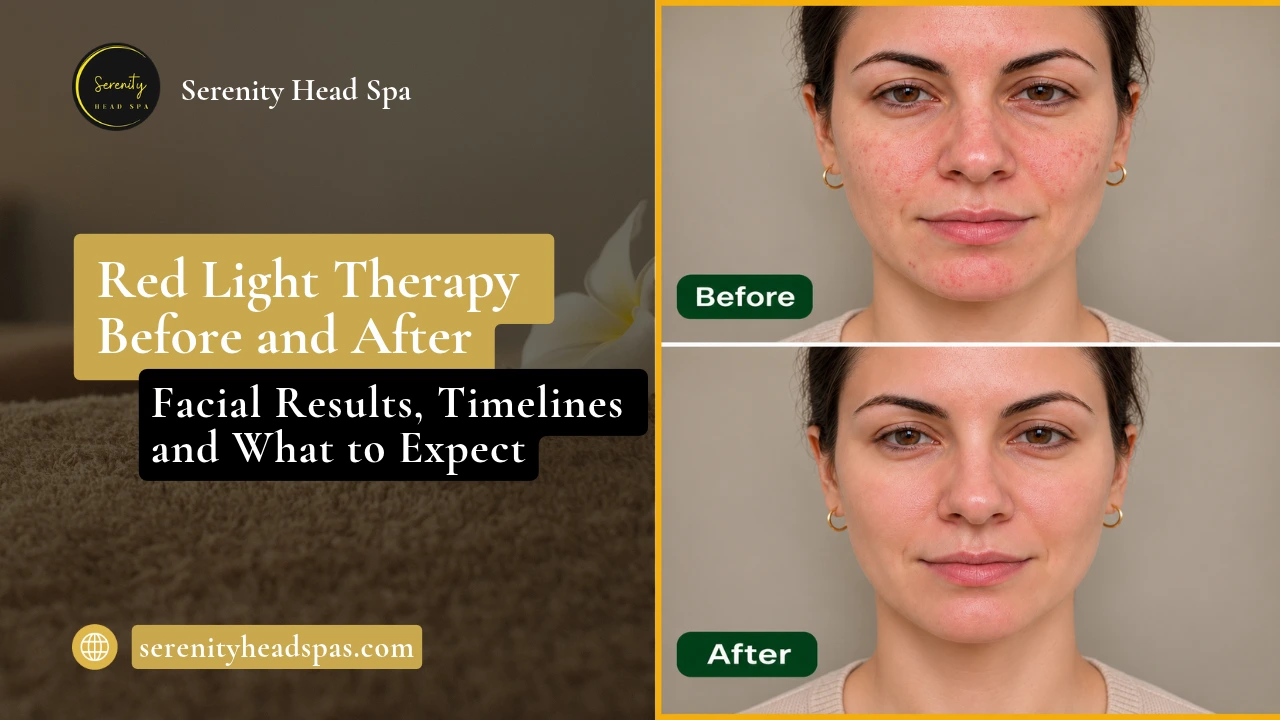
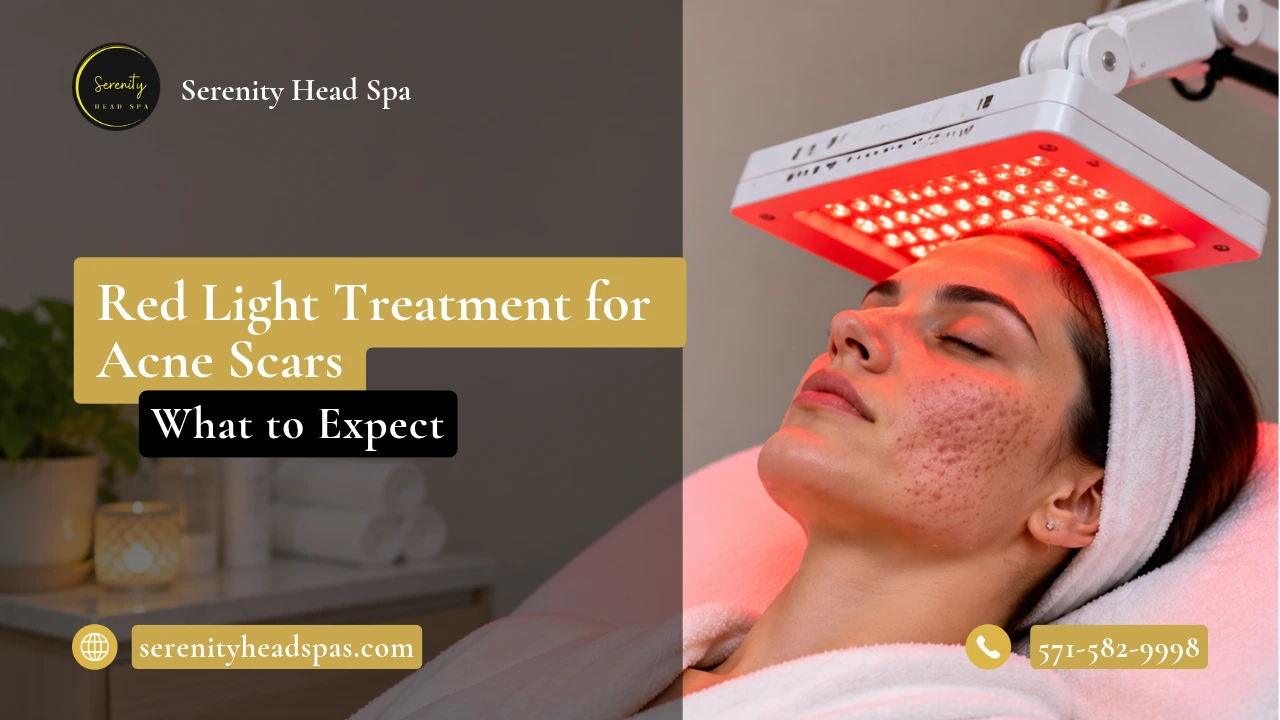
Can red light treatment for acne scars actually smooth things out? Here’s the short version. Researchers are testing red light and other LEDs on a bunch of skin issues. Still, a regular LED facial isn’t something to rely on for clearing old acne scars. A lot of the mix-up starts with how we use the word “scar.”
People use it for everything a breakout leaves behind, yet active pimples, flat marks, and textured scars are separate problems. In this article, we’ll look at where LED light may fit in and where its limits are. You’ll also find safety tips, plus signs it’s time to book a dermatologist.
What Is LED Light Therapy?
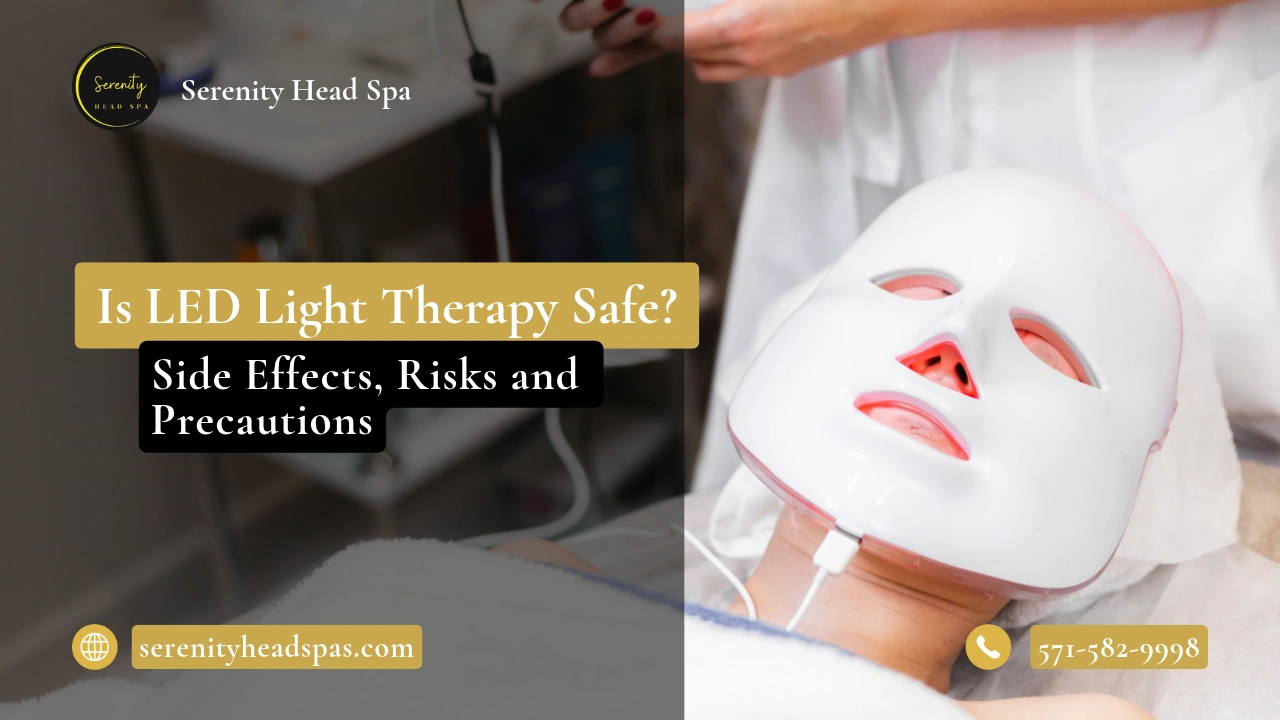
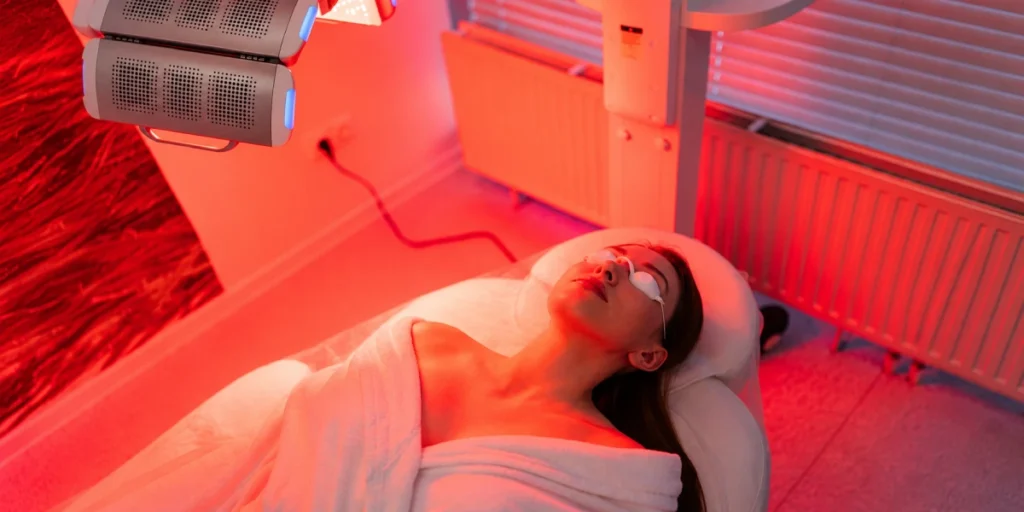
The letters stand for light-emitting diode. During an LED facial, a machine beams one color of visible light, red or blue, for example, onto your face as part of the treatment. No ultraviolet (UV) light is involved, according to Cleveland Clinic. That said, light therapies for acne and skin vary quite a bit.
One device might use a different wavelength, strength, or setting than the next, and session length and timing can change too. So results from one machine can’t be assumed for another. Curious about the basics? Our guide on what red light therapy is and how it works walks you through it.
Does Red Light Treatment Work for Acne Scars?
That really hinges on what kind of “acne scars” you have, so it’s not a clean yes. Searches for red light therapy for scars bring up research on all kinds of scars, including burns and surgical scars. But a study on one scar type doesn’t prove that a spa LED facial can fix pitted acne scars. Those are different injuries, in different settings, treated with different devices.
The American Academy of Dermatology (AAD) explains that “effectively treating scars requires knowing the types of acne scars on your skin and where they appear.” The options it describes are chosen by a dermatologist for the specific scar, like laser resurfacing, fillers, minor surgery, or injections for raised scars. None of those is a quick facial.
The AAD also says some treatments “can make scars look less noticeable,” which is a fair way to frame expectations for any approach.
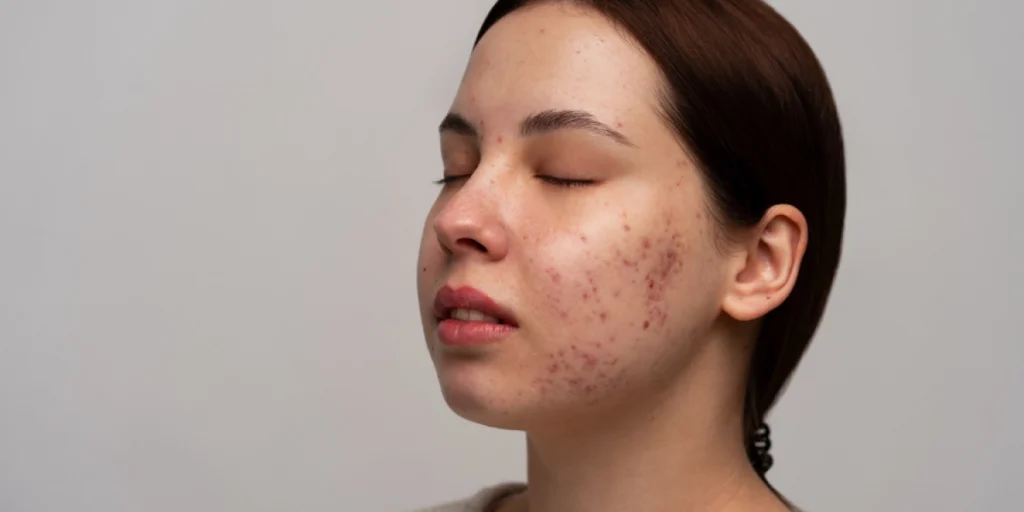
So could a light facial be part of your skincare? Sure. Could it remove established scars on its own? Not based on what we know so far. For a real answer on your scars, a dermatologist can check your skin and point you to options that fit, if there are any.
Red Light Therapy for Active Acne Versus Acne Scars
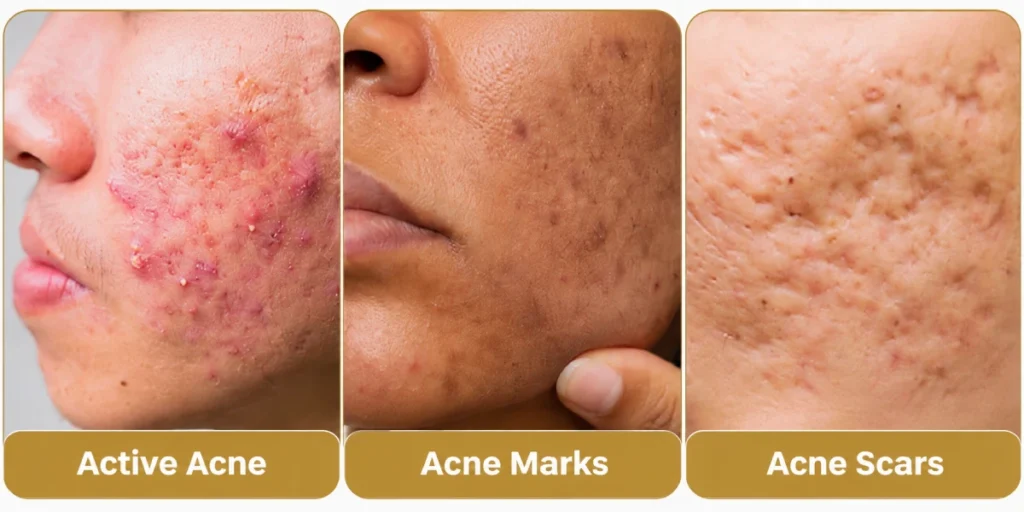
People mix these three up constantly. They’re not alike, though. Below, we break down where light treatment fits for each one, so you know what you’re paying for.
What LED Light May Do for Active Acne
Some visible-light treatments can help certain pimples. According to the AAD, devices using blue light, red light, or both “can treat pimples.” Visible light, though, “is not effective against blackheads, whiteheads, acne cysts, or nodules.” Some people respond, and others don’t. The AAD adds that light rarely clears acne without other treatment. Think of red light therapy for acne as something extra you might add to your usual care, never a swap for it.
What About Flat Red or Brown Acne Marks?
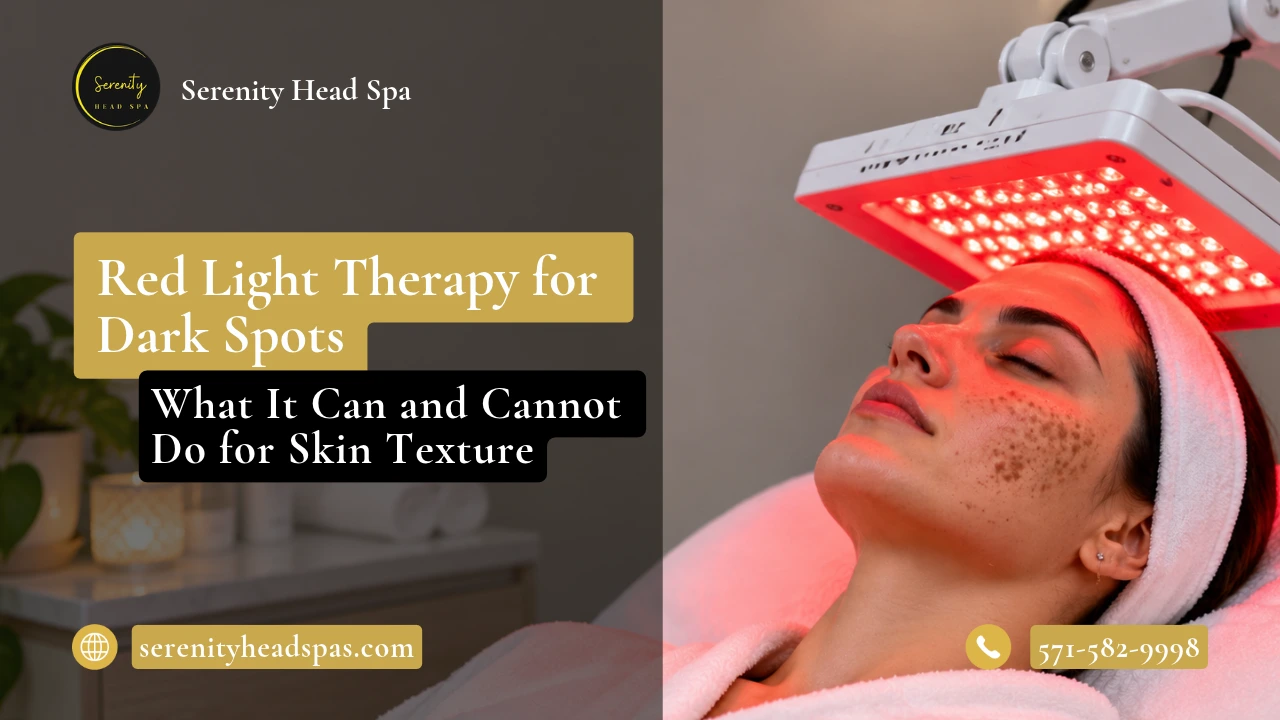
A flat red, pink, or brown spot left after a pimple isn’t always a true scar. Brown or darker marks are usually post-inflammatory hyperpigmentation, which is extra pigment left behind after inflammation. These marks can fade with time. Still, there’s no promise that red LED light will fade them within a certain number of sessions.
What About Indented or Raised Acne Scars?
Indented scars sit below the skin’s surface. Raised scars form when the body makes too much collagen, as the AAD explains. Either way, the skin itself has changed shape, not only color. A pimple is a whole other story. Bothered by scars like these? Ask a dermatologist what works for your type.
Red Light Versus Blue Light for Acne and Scars
Blue and red light both show up in LED phototherapy for acne, but their uses and evidence aren’t identical. According to the AAD, both colors are used for certain active pimples, either alone or together. Neither has been shown to remove established acne scars, though.
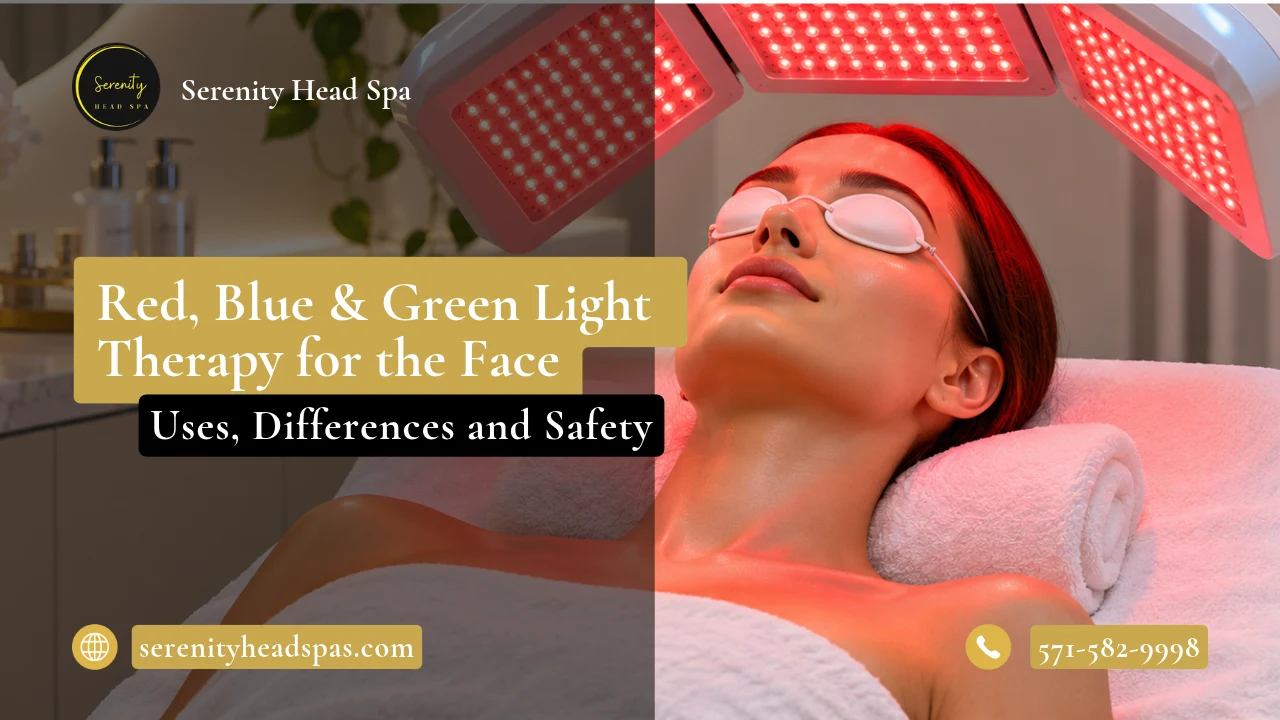
What matters most is the concern you’re treating, the device, and the protocol. For a closer look at red and blue light therapy, plus green, our article on red, blue, and green light therapy explains how the colors differ.
What Results Should You Realistically Expect?
Results vary, and that’s the honest truth. The device, the treatment plan, what you’re treating, and how your skin responds all matter. For active acne, the AAD says most people need a series of treatments, and that “there’s no way to know who will see clearer skin.” A large Cochrane review of light therapy for acne looked at 71 studies with 4,211 participants.
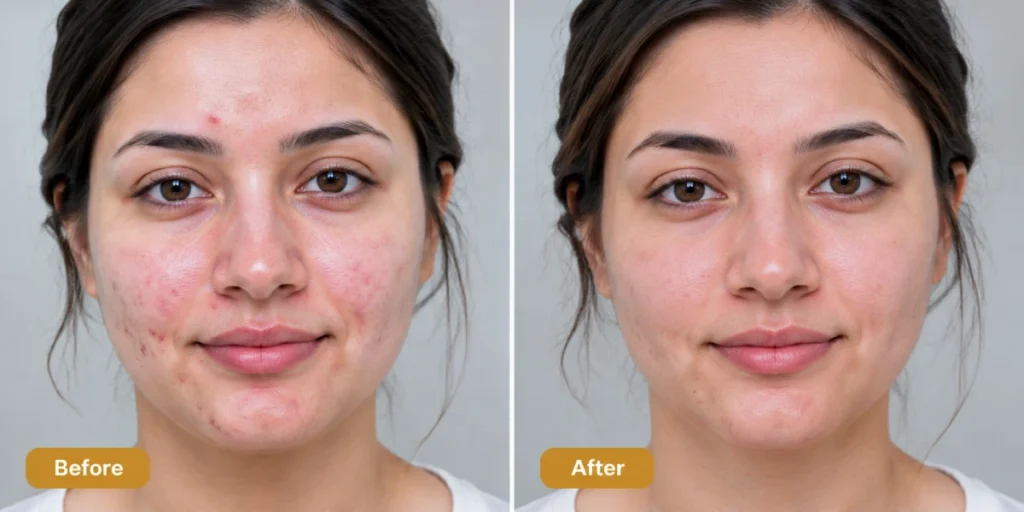
Its authors said they were “unable to draw firm conclusions.” So we won’t give you a timeline for scar improvement or a set number of sessions. Plus, what happened in a lab study may not happen after an acne LED light treatment at a spa. Go in hoping for a calming facial that helps your routine. Scar removal isn’t a fair expectation.
Is LED Light Therapy Safe for Acne-Prone Skin?
Acne-prone or not, LED isn’t a fit for every person. A few people end up with skin irritation, redness, or some other reaction. Redness and swelling show up a lot after laser and light treatments, says the AAD, and skin color can change too. So before your session, fill your provider in on your medicines, light sensitivity, old reactions, and current products. Strong acne treatments matter most here.
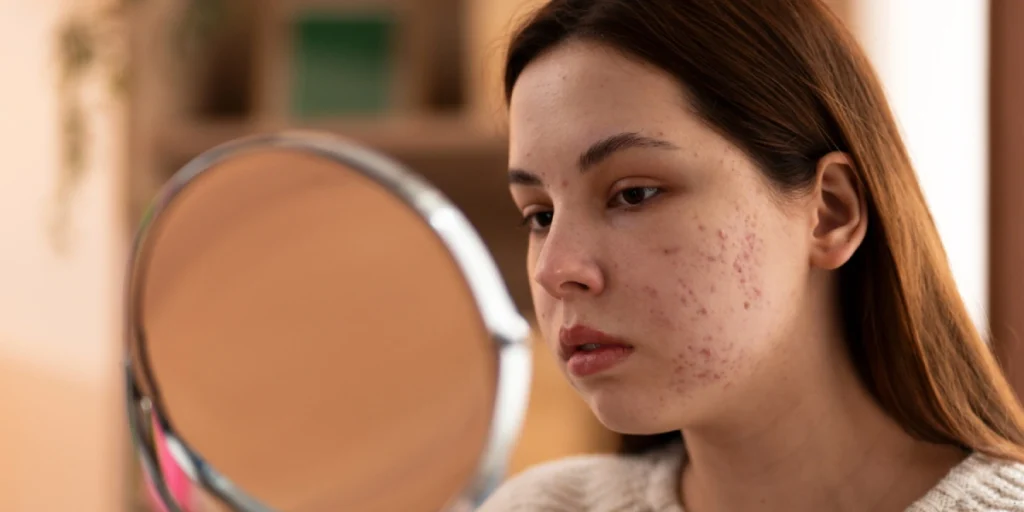
Then stick to what the device and your provider tell you, and wear eye protection if it’s needed. And if your acne is severe, painful, getting worse, or leaving scars, see a dermatologist rather than relying on a facial. For more detail, read our post on LED facial safety.
When Should You Consider Other Acne-Scar Treatments?
Acne scars don’t all respond to the same fix. According to the AAD, a dermatologist looks at things like the type of scar before building a plan. Your skin tone, any breakouts you still get, and what you’ve tried before can matter too. In fact, the AAD says scar treatment “typically begins after you have acne under control.”
What a professional does depends on the scar in front of them. Per the AAD, that might mean laser resurfacing, fillers for sunken scars, small surgical procedures, or injections when scars are raised. A dermatologist decides which, if any, suit you. Serenity Head Spa doesn’t offer these medical procedures. So if scars are your main concern, a dermatologist is the right first stop. Our facials can still be part of your regular skincare alongside that care.
Light Therapy at Serenity Head Spa
Want to try light therapy as part of a relaxing facial? Our Facial Light Therapy Lift Treatment is a 90-minute appointment that combines facial care, professional massage techniques, and light-based skincare. It’s listed at $219 at both our Springfield and Rockville spas. It isn’t a clinically proven acne-scar removal procedure, and we won’t promise the results discussed above. Check our facial treatment services in Springfield and Rockville for more details.
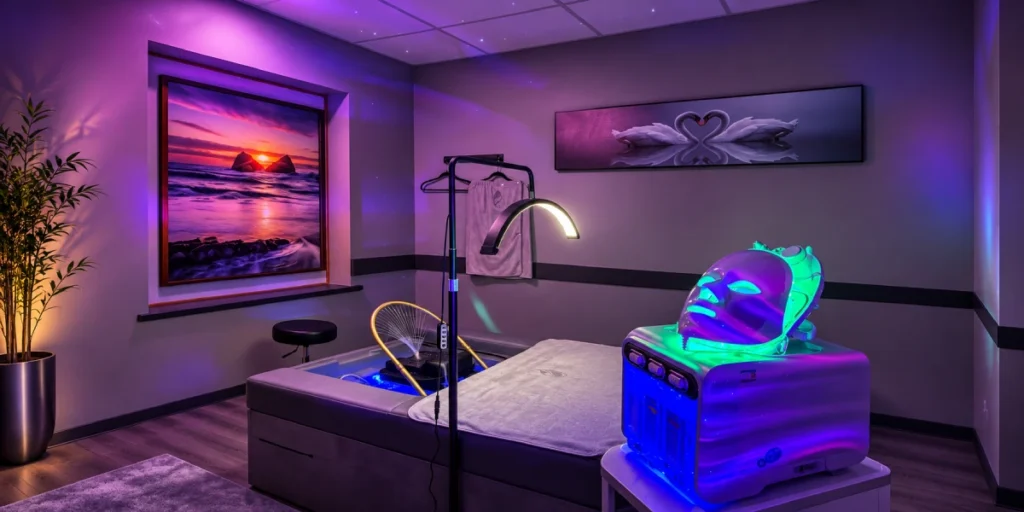
But it can be a calm, hands-on facial for clients who are curious about light treatment. Not sure it suits your skin? Read our guide on choosing a facial for your skin concerns, or browse our facial treatment services and ask us before you book.
Frequently Asked Questions
Still have a few questions? No surprise there. Marks and scars confuse plenty of people. We’ve kept these answers brief. Need guidance for your own skin? A dermatologist is your best bet.
Can Red Light Treatment Remove Acne Scars?
There’s no good evidence that a standard red light facial removes established acne scars. Pitted and raised scars reshape the skin. They tend to need care a dermatologist picks for that scar.
Does Red Light Therapy Help Acne?
It may help certain pimples. Per the AAD, visible light works on pimples but not on blackheads, whiteheads, cysts, or nodules. Results differ by person. On its own, it seldom clears acne.
Does Red Light Therapy Help All Types of Scars?
No. Research on burn or surgical scars can’t automatically be applied to acne scars. Each scar type is different, so evidence for one doesn’t prove results for another.
Is LED Light Therapy a Cure for Acne?
No. It isn’t a guaranteed or complete acne treatment. Researchers behind a Cochrane review called the evidence too shaky for firm conclusions. If you try it, pair it with regular acne care.
Is Blue Light or Red Light Better for Acne Scars?
No study has shown either one removing old acne scars. Both colors are mostly used on some active pimples, and results come down to the device and protocol.
How Many LED Sessions Are Needed for Acne Scars?
There’s no set number. Each device has its own protocol, and there’s little research on acne scars in particular. If someone guarantees results in a set number of visits, be careful.
Can LED Light Therapy Fade Dark Spots After Acne?
Flat dark marks aren’t the same as textured scars, and they can fade with time. LED light hasn’t been proven to fade them, so don’t count on a guaranteed change. You’re better off starting with sunscreen every day and a chat with a dermatologist.
What Are the Side Effects of LED Light Therapy?
A few people react with redness, irritation, or something else. Not everyone does. Mention your medicines and any light sensitivity before you start. And follow the rules on eye protection.
Final Thoughts on Red Light Treatment for Acne Scars
Breakouts, flat marks, and old scars aren’t one problem. They’re three, and LED light affects each differently. Adding a light facial to your routine might work for you. But don’t expect red light treatment for acne scars to erase them. If scarring is your main worry, start with a dermatologist. And if you’d like a relaxing facial with light-based skincare, explore our Facial Light Therapy Lift Treatment with our other facial treatment services.
Have questions about light therapy facials? Contact Serenity Head Spa in Springfield, VA, or Rockville, MD.