
Lymphatic drainage massage on the stomach is a light, slow, skin-stretching technique used to move fluid that has settled in the abdominal wall toward the lymph nodes that filter it. A session takes about ten minutes, and the pressure stays feather-light, closer to stretching the skin than kneading the muscle underneath.
The routine below runs through the full sequence: breathing first, then preparing the collarbone and groin areas, then the abdomen itself, working the lower half toward the groin and the upper half up and out toward the armpits. Direction, pressure, and sequence all matter, though technique can vary depending on the area being treated and the individual’s condition.
You’ll also find what the evidence does and doesn’t support, how often to do it, when to leave it alone, and the mistakes that are easy to make on a first attempt.
What Is Stomach Lymphatic Drainage?
Stomach lymphatic drainage is skin-stretching, essentially. Light, slow, rhythmic. You’re nudging fluid that’s settled in the tissue of your abdominal wall toward the lymph nodes that filter it out.
Why does it need a nudge at all? Because lymph doesn’t rely on a single central pump the way blood relies on the heart. It moves through a combination of mechanisms: contractions of the lymphatic vessels themselves, muscle activity, breathing, and pressure changes inside the body. Fine on a normal day. Less fine after a nine-hour flight, or a week where you barely left your chair, or the three days before your period. Fluid settles. Your midsection goes puffy and tight and oddly heavy.
Lymphatic drainage in the stomach area goes after that fluid directly. Cleveland Clinic puts it plainly enough: the technique moves waste toward the lymph nodes and helps with fluid retention, and it’s long been part of care for people living with ongoing swelling. No mystery to the mechanism. It’s drainage, in the most literal sense.
Two things worth being clear about from the start:
One. Lymph drainage stomach work moves fluid, not fat and not intestinal gas.
Two. The vessels you’re targeting sit just under the skin, so this is not deep-tissue work. Stomach drainage massage done firmly is less effective than the same routine done gently.
How Abdominal Lymphatic Massage Differs From a Regular Stomach Massage
People often use the two terms interchangeably, but they’re different techniques doing different jobs. The table below breaks down what separates abdominal lymphatic massage from a conventional stomach massage.
| Abdominal lymphatic massage | Conventional stomach massage | |
|---|---|---|
| Depth | Skin level only, about the weight of a coin | Reaches muscle and the digestive organs beneath |
| Pressure | Feather-light stretch and release | Moderate to firm, kneading |
| Target | Lymph vessels in the skin | Colon, abdominal muscles, fascia |
| Direction | Toward the nearest lymph nodes | Usually clockwise, following the colon |
| Best for | Fluid retention, puffiness, post-surgical swelling | Constipation, trapped gas, muscle tension |
| Pace | Slow, rhythmic, unhurried | Variable |
Both have their place, and a good session may blend them. But if you press hard enough to feel the muscle underneath, you’ve left lymphatic massage on stomach territory and moved into something else entirely.
Which Direction Should the Strokes Go?
Direction matters here, because superficial lymphatic vessels drain toward particular regional areas rather than equally in all directions.
An imaginary horizontal line runs through your navel. Anatomical research published via StatPearls describes the regions above and below the umbilicus draining into the axillary nodes and the superficial inguinal nodes, respectively, forming a watershed where superficial drainage divides toward different node groups.
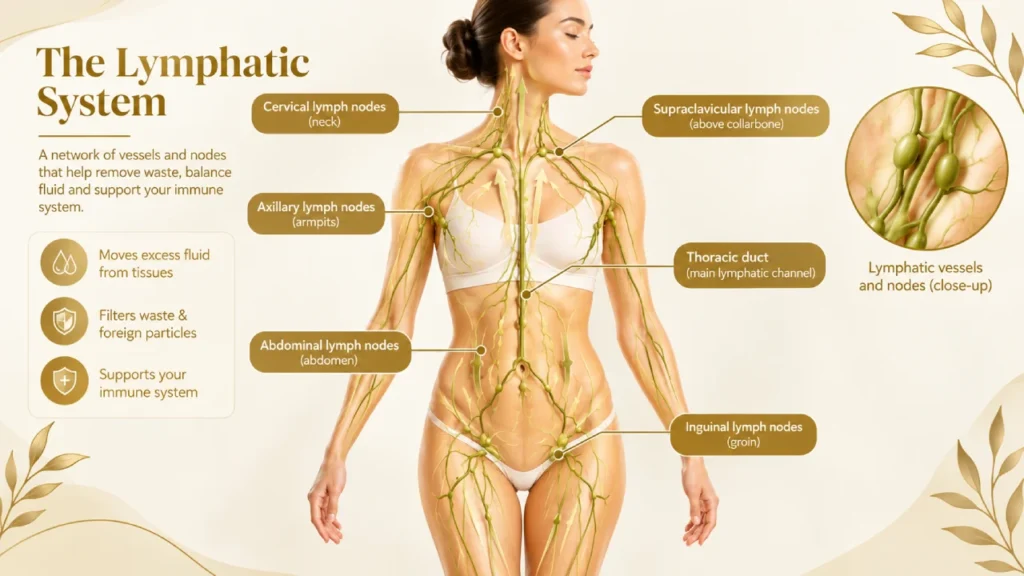
In practical terms, the navel sits roughly on that dividing line. For a general self-massage routine, practitioners commonly direct light skin-stretching movements above it toward the armpits and below it toward the groin. Superficial pathways vary between individuals, so anyone with diagnosed lymphedema or another medical condition should follow the technique taught by their own therapist rather than a general guide.
Above the Navel: Up and Out Toward the Armpits
The upper abdomen generally drains toward the armpits. Anatomical references describe vessels in this territory emptying into the pectoral axillary nodes, with a smaller share reaching the parasternal nodes near the breastbone.
So for everything between your navel and your ribs, strokes travel diagonally up and outward, heading for the armpit on the same side. Not straight up the midline. Out toward the side.
Below the Navel: Down Toward the Groin
Everything below the navel drains downward into the superficial inguinal nodes in the crease of the groin.
There are no lymph nodes in the lower abdominal wall itself, so the aim is to move fluid toward the groin crease, where the nodes sit.
Strokes here travel down and slightly inward, toward the hip crease on the same side.
Before You Begin: When to Skip a Belly Massage
This technique is gentle, but gentle isn’t the same as universally appropriate. Most of the risk comes from doing it at the wrong time rather than doing it too hard.
Don’t self-massage, and speak to a healthcare provider first, if you have:
- An active infection or fever
- A known or suspected blood clot, including DVT
- Unexplained abdominal pain, a new lump, or swelling you can’t account for. That needs a diagnosis before it needs a massage.
- A known or suspected abdominal aortic aneurysm
- An active inflammatory bowel disease or diverticulitis flare
- Decompensated heart failure
Get medical guidance before you start if you have:
- Controlled heart failure or kidney disease, where shifting fluid volume can place real strain on the system
- Recent abdominal surgery, where timing varies considerably by procedure and is your surgeon’s call
- Active or recent cancer treatment, which should be coordinated with your oncology team
- Pregnancy, where the technique may still be suitable but should be cleared, and if necessary modified, by your doctor or midwife
Stop if anything hurts. Lymphatic belly massage should feel like nothing much at all, which is exactly right. Pain is a signal that the pressure is wrong or that something else is going on.
Abdominal Lymphedema vs. Everyday Bloating
These two get confused constantly, and the distinction genuinely matters.
Lymphedema of the abdomen or trunk is a medical condition. It usually follows lymph node removal, radiation, or surgery, and it involves persistent swelling that doesn’t resolve on its own overnight. Cleveland Clinic notes that with ongoing swelling, the affected area can feel heavy and the skin tight or uncomfortable, and that worsening symptoms warrant a call to your provider.
Everyday puffiness is different. It comes and goes; it’s often worse in the evening or around your cycle, and it resolves with rest, hydration, and movement.
If your swelling is persistent, one-sided, painful, or new, this is not a self-care situation. Ask for a referral to a certified lymphedema therapist. The self-massage described below is designed for ordinary fluid retention, not for managing a diagnosed lymphatic condition.
Step-by-Step Self-Massage for Your Abdomen at Home
This is the full self lymphatic massage sequence for the abdomen. The order follows the sequence used in manual lymphatic drainage, which works from proximal areas outward. Patient guidance from Sanford Health describes it in two stages: prepare the vessels and nodes closer to the centre of the body first, then move fluid from the tissue afterwards.
Going straight to the belly is the most common shortcut, and the sequence is short enough to keep.
Before you try this: use only gentle pressure, and don’t self-massage over unexplained abdominal pain, recent surgical sites, a suspected blood clot, an active infection, or any condition that needs medical guidance. The full list is in the section above. What you’ll need for lymphatic drainage massage stomach at home:
- A bed, mat, or sofa where you can lie on your back with knees bent
- Ten quiet minutes
- Optionally, a little unscented oil or lotion, though bare skin works fine since you’re stretching skin rather than gliding over it
- Loose clothing, or nothing across the abdomen

Step 1: Start With Deep Breathing
Lie on your back, knees bent, feet flat. Rest one hand on your belly and one on your chest.
Breathe in slowly through your nose so your belly rises under your hand while your chest stays relatively still. Exhale through your mouth, letting the belly fall. Repeat five to ten times.
This isn’t a warm-up. Physiopedia notes that diaphragmatic breathing is used at the start and end of therapy sessions specifically to open the deep lymphatic pathways, and that the movement of the diaphragm helps drive fluid upward. The breathing is doing real work.
Step 2: Clear the Collarbone
Place your fingertips in the soft hollows just above your collarbones. Press in very gently and release. Repeat five to ten times.
This is the area where lymph re-enters the bloodstream, and manual lymphatic drainage sequences begin here, preparing the proximal drainage areas before anything else.
Step 3: Open the Groin Nodes
Place your flat hands in the creases where your thighs meet your torso. Gently pump inward and upward, without sliding, ten to fifteen times on each side.
This prepares the drainage area in the groin before you work the lower abdomen.
Step 4: Work the Lower Half, Downward
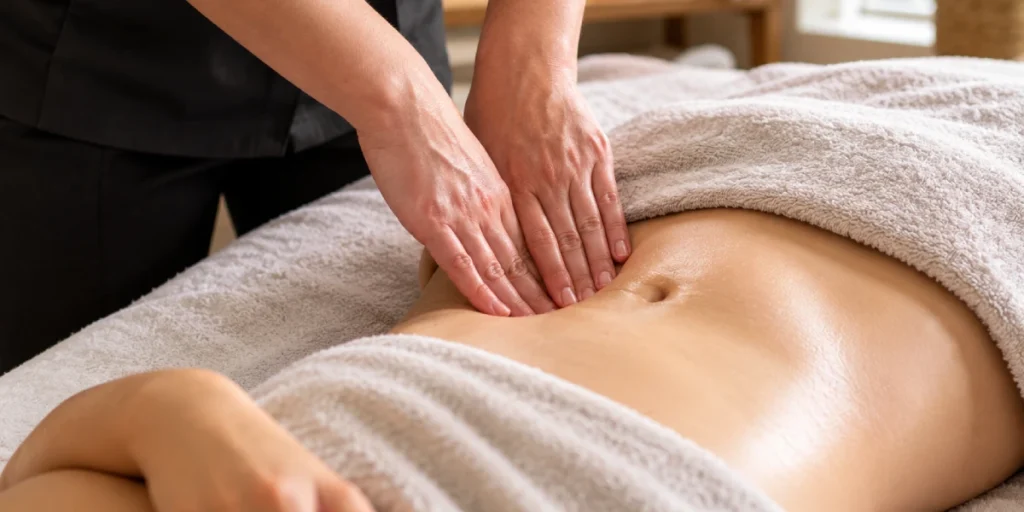
Place flat, relaxed hands just below your navel. Stretch the skin gently downward and slightly inward toward the groin crease, then release. Don’t slide across the skin. Move the skin itself and let it spring back.
Repeat ten times, then work outward across the lower abdomen, covering the whole area between navel and hip bones. This is the core of how to do lymphatic drainage on your stomach correctly, and it’s the half most people get wrong.
Step 5: Work the Upper Half, Upward and Out
Now move above the navel. Place flat hands on your upper abdomen and stretch the skin diagonally up and outward toward the armpit on the same side, then release.
Repeat ten times per side, covering the area from navel to ribcage. Keep the same feather-light contact throughout.
Step 6: Close With Breathing
Return to the diaphragmatic breathing from Step 1 for another five to ten breaths. This bookends the session and helps clear what you’ve just moved.
The whole routine takes eight to ten minutes. If you only have five, do the breathing, the groin nodes, and the lower abdomen.
How Much Pressure to Use for Lymphatic Drainage Massage on the Stomach
Almost nobody uses light enough pressure on their first attempt.
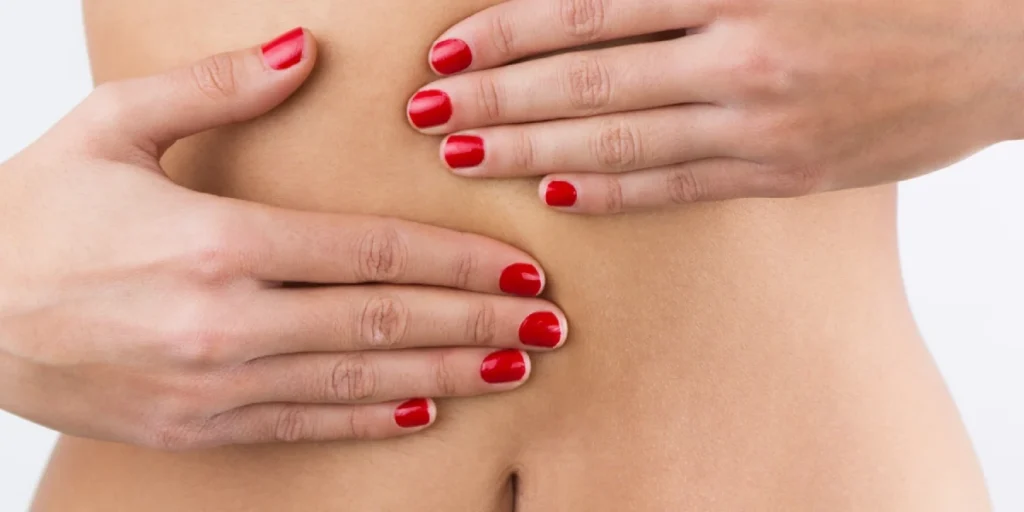
The lymphatic vessels this technique targets sit in the layer just beneath the skin’s surface. Practitioners commonly describe the target pressure as roughly the weight of a coin resting on the skin, and note that if you’re compressing muscle, you’ve already gone too deep.
A few ways to calibrate:
- You should see the skin stretch, not dimple. If your fingers sink in, ease off.
- It shouldn’t hurt at all. People often ask whether this is painful, and a correctly performed session isn’t. Discomfort means too much pressure.
- Slow beats strong. Aim for roughly one stroke per second. Rushing does more to undermine results than being too gentle ever will.
- Your skin shouldn’t turn red. Pink or irritated skin means you’ve been working the tissue, not the lymphatics.
If you’re used to firm massage, this will feel like you’re barely doing anything. That sensation is the technique working as intended.
Common Mistakes to Avoid
These are the errors that turn a useful ten minutes into a wasted one.
- Stroking everything upward. The most repeated piece of bad advice online. Below the navel, upward strokes work against the drainage pathway.
- Pressing too hard. Firm pressure compresses the very vessels you’re trying to stimulate.
- Skipping the clearing steps. Going straight to the belly means pushing fluid toward nodes that haven’t been opened.
- Rushing. Fast strokes don’t give the vessels time to respond.
- Working on a full stomach. Wait an hour or two after a large meal.
- Expecting it to relieve trapped gas. Different problem, different technique.
- Doing it through thick clothing. You need to stretch skin, which requires contact with skin.
Tools That Help, and Ones to Skip
Your hands are the right tool for this job. Nothing else stretches skin with the precision and sensitivity that lymphatic work requires, and none of the popular lymphatic drainage tools for stomach use are necessary.
That said, some have a supporting role:
- Dry brushing before a shower is a reasonable way to stimulate circulation and prepare the skin. Keep strokes light and follow the same directional rules. Evidence for it as a standalone lymphatic treatment is thin.
- Gua sha or a smooth stone can be used on the abdomen with oil and light pressure. It doesn’t outperform hands, and it makes over-pressuring easier.
- Compression garments have a genuine evidence base for post-surgical and lymphedema care, though they should be used under professional guidance.
One tool to leave out: percussion massagers and massage guns are not appropriate for abdominal lymphatic work. Percussion is designed to reach deep muscle tissue, and the vessels here sit millimetres below the surface. The abdomen also has no bony protection for the organs underneath. If you’re curious about where percussion devices do and don’t fit, our guide to using percussion for lymphatic drainage covers it in more detail.
Lymphatic Drainage Exercises for the Stomach
Massage is only one input. Since lymph moves largely through muscle activity and breathing, these lymphatic drainage exercises for stomach support do a share of the work between sessions.
- Diaphragmatic breathing, five minutes, once or twice daily. The single most useful habit on this list, and the one with the clearest mechanism.
- Walking. Unglamorous and genuinely effective. The calf and abdominal muscles act as pumps.
- Gentle twists and side bends, which compress and release the trunk.
- Legs up the wall for five to ten minutes, using gravity to assist return flow from the lower body.
- Knee-to-chest rocking while lying down, which gently mobilises the lower abdomen.
None of these are dramatic. Consistency is what makes them count.
What Does the Evidence Say?
Manual lymphatic drainage has established clinical applications, particularly in managing certain types of lymphatic swelling, where it’s used alongside compression and other elements of care under professional supervision.
For general wellness use, the evidence is thinner. So does lymphatic drainage work on the stomach? Light self-massage may temporarily ease fluid-related puffiness, but it hasn’t been well tested as a standalone treatment for everyday bloating, and the lymphatic drainage massage benefits for the stomach are modest rather than dramatic.
Abdominal massage, the firmer clockwise technique that follows the colon, has some supporting evidence for constipation-related outcomes. Those findings belong to that technique, which is why lymphatic drainage massage for constipation is a misnomer.
There’s no good basis for the claims that lymphatic massage removes toxins, burns stomach fat, or produces meaningful weight loss. Nothing in the mechanism supports them. For a more balanced look at supporting the lymphatic system through everyday habits, see how to detox your lymphatic system naturally.
How Often Should You Do It?
For most people asking ‘how often should you do lymphatic drainage massage on stomach’ tissue, three to four sessions a week is a sensible starting point, and daily is generally fine if the routine is short and light.
A rough guide by goal:
| Goal | Suggested frequency | Session length |
|---|---|---|
| General puffiness and fluid retention | 3 to 4 times weekly | 8 to 10 minutes |
| Cyclical or premenstrual bloating | Daily during the affected days | 5 to 10 minutes |
| Ongoing wellness maintenance | 1 to 2 times weekly | 10 minutes |
| Post-surgical recovery | As directed by your surgeon or therapist | Varies |
The caveat: daily is fine for a light self-massage, but if you feel you need daily sessions to stay comfortable, that’s worth mentioning to a healthcare provider. Persistent fluid retention has causes worth identifying.
What to Do Afterward
Aftercare is straightforward, and the first hour matters most.
- Drink water. Not because it flushes toxins, but because hydration supports normal fluid movement.
- Move gently. A short walk beats sitting straight back down.
- Skip intense exercise for a few hours if you can.
- Eat lightly rather than heavily right afterward.
Mild tiredness afterward is common. So is feeling a little light-headed if you were already under-hydrated. What isn’t normal is fever, rapidly worsening swelling, or chest symptoms, and none of those should be dismissed as detox. They’re reasons to contact a doctor.
What It Helps With, and What It Doesn’t
The honest lymphatic drainage massage benefits for stomach work are narrower than the internet suggests, and clearer than the sceptics allow. Lymphatic drainage for stomach concerns has a real mechanism for some problems and no mechanism at all for others.
Here’s where lymphatic drainage massage for stomach discomfort genuinely applies.
Belly Massage for Bloating and Water Retention
This is the strongest everyday use case. Belly massage for bloating helps most when the bloating is fluid-based rather than gas-based.
The distinction is easy to feel:
- Soft, puffy, worse by evening, often with puffy ankles or fingers. This is fluid, and this is where lymphatic drainage massage for bloating has a plausible mechanism.
- Tight, distended, crampy, relieved by passing gas. This is gas or digestive in origin, and lymphatic technique won’t shift it.
So, will lymphatic drainage help with bloating? For the first kind, often yes, at least temporarily. Any reduction in size comes from moving retained fluid, not from losing weight, and it isn’t permanent. Many people find a session leaves the abdomen feeling looser and lighter within an hour or so.
If you’re looking specifically at how to massage the stomach for bloating of the digestive kind, a firmer clockwise abdominal massage following the colon is the better-matched technique.
Constipation and Digestion
This is where the terminology needs care. The research on massage and constipation looks at abdominal massage, a firmer clockwise technique that follows the colon, rather than at superficial lymphatic work.
That research is reasonably encouraging. A randomised controlled trial published in 2009 found abdominal massage significantly reduced gastrointestinal symptom severity and increased bowel movements compared with laxatives alone, though it didn’t reduce laxative use, positioning massage as a complement rather than a replacement.
So lymphatic drainage massage for constipation is a slight misnomer. The lymphatic technique isn’t what the studies tested. A session that combines both approaches may help, and it’s reasonable to ask for that. But claims that lymphatic work alone regulates bowel movements or improves nutrient absorption aren’t supported.
Can Lymphatic Drainage Help You Lose Weight or Reduce Belly Fat?
Short answer: no, and it’s worth being direct about it.
Lymphatic drainage massage for belly fat cannot break down or remove fat cells. No massage technique can. Searches for stomach massage for weight loss turn up a great deal of content implying otherwise, and it doesn’t hold up.
What actually happens:
- Fluid retention decreases, so the abdomen can look and feel flatter for a day or two.
- The scale may move slightly, in either direction, from fluid shifts alone.
- Feeling less bloated is a real and worthwhile outcome. It just isn’t fat loss.
So can lymphatic drainage help with weight loss as part of a broader routine? Only indirectly, by making you more comfortable and more inclined to stay active. It’s a supportive habit, not a weight-loss method.
Will It Give You a Flat Tummy?
Partly, and temporarily. A lymphatic drainage massage tummy routine can reduce visible puffiness, which reads as a flatter profile in the mirror. People often notice it most in the morning after a session.
But self-massage for flat tummy results reflects fluid, not fat or muscle tone. The effect fades over a few days without repetition, and no amount of lymphatic tummy massage will change body composition. Treat it as you’d treat a good night’s sleep for your face: real, visible, and not permanent.
When to See a Professional Instead
Self-massage is well suited to ordinary puffiness. Several situations call for trained hands instead.
- After abdominal surgery. Post-operative work stays entirely superficial, avoids incision and drain sites, and requires surgical clearance on timing, which varies considerably by procedure. This isn’t a DIY situation.
- Diagnosed lymphedema or lipedema, which needs a certified lymphedema therapist.
- Swelling that’s persistent, one-sided, or painful. Get it assessed before treating it.
- When you want to know your technique is right. One professional session teaches you more about pressure and direction than any written guide, this one included.
Frequently Asked Questions
Does lymphatic drainage work on the stomach?
For fluid retention and puffiness, yes, with a clear mechanism behind it: the technique moves fluid toward nodes that filter it. The effect is temporary and modest rather than dramatic. Where ‘does lymphatic drainage work on stomach’ claims fall apart is around fat loss, detoxification, and digestion, none of which the technique meaningfully affects.
Can you do it every day?
Yes, provided sessions stay short and light, and you have no contraindications. Daily five to ten minute sessions are reasonable. There’s no advantage to going longer or harder, and needing daily relief is worth raising with a doctor.
Does it hurt?
It shouldn’t. Correctly performed, it barely registers as pressure. Any pain means you’re pressing too hard, working over a tender area, or dealing with something that needs assessment rather than massage.
Why do I feel tired afterward?
Mild tiredness is common and usually settles with water and rest. It isn’t toxins being released, which is a popular explanation with no real basis. Feeling genuinely unwell afterward, with fever or worsening swelling, is a different matter and warrants medical advice.
Can you do lymphatic massage for weight loss at home?
You can do the massage at home easily. What it won’t do is cause weight loss. Lymphatic massage for weight loss at home routines can reduce fluid retention and help you feel less bloated, and that’s a genuine benefit. It isn’t a substitute for the things that actually change body composition.
Is a lymphatic stomach massage the same thing as lymphatic drainage?
Same technique, different labels. Stomach lymphatic massage, lymphatic massage stomach, abdominal drainage: people use whichever phrase they picked up first. What matters is the technique. If a lymphatic massage for stomach puffiness uses firm pressure or clockwise colon strokes, that’s abdominal massage wearing the wrong name.
Does this affect the lymphatic drainage of the stomach organ itself?
No. The lymphatic drainage of stomach tissue as an organ happens deep in the abdominal cavity, and no massage reaches that. You’re working the abdominal wall instead. The lymph drainage of the stomach wall is superficial and responds to gentle skin stretching, which is why the technique looks so undramatic.
How quickly does a lymphatic massage for stomach bloating work?
Often within an hour, with the clearest difference the next morning. But lymphatic drainage massage for stomach bloating only moves fluid, so results last as long as the cause stays away. A session after a long flight might hold a couple of days. If bloating keeps returning without a trigger, see a doctor.
Is a self lymphatic massage stomach routine as good as a professional session?
For everyday puffiness, close enough. A self lymphatic massage stomach routine hits the same vessels, and doing it three times a week counts. A professional stomach lymphatic drainage massage wins on precision and reach. The real value of one session is learning what correct pressure feels like.
Can you combine a lymphatic drainage stomach massage with other treatments?
Usually. A lymphatic drainage stomach massage pairs well with gentle movement, breathwork, and warmth. Two cautions: deep-tissue work on the abdomen immediately before or after cancels out the light touch, and any vibrating or suction device warrants a professional conversation first.
Final Thoughts
The technique comes down to direction, pressure, and order. Below the navel, strokes travel down toward the groin. Above it, up and out toward the armpits. Keep the pressure light enough to stretch the skin without reaching muscle, and clear the collarbone and groin nodes before you start. Ten minutes, three or four times a week, eases the puffy, heavy feeling that fluid retention causes. It won’t burn fat or detoxify you, and it doesn’t need to.
At Serenity Head Spa, lymphatic drainage massage is available at both our Springfield, VA, and Rockville, MD locations. Sessions are tailored to what you’re actually dealing with, and it’s worth flagging any medical history when you book.