Spa menus can be a little overwhelming. One lists a “glow” facial, the next a “detox” facial, and the names don’t always tell you much. Picking well comes down to a handful of things. What bugs you most about your skin? Does it react easily? Do you want a calm hour or a hands-on clean? And what will actually be done to your face?
Below, you’ll find the common types of facials, a plain-English take on what each one does, and the questions we’d ask if we were in your shoes. Want to skip ahead? Our facial treatment services are all on one page.
What Are the Main Types of Facials?
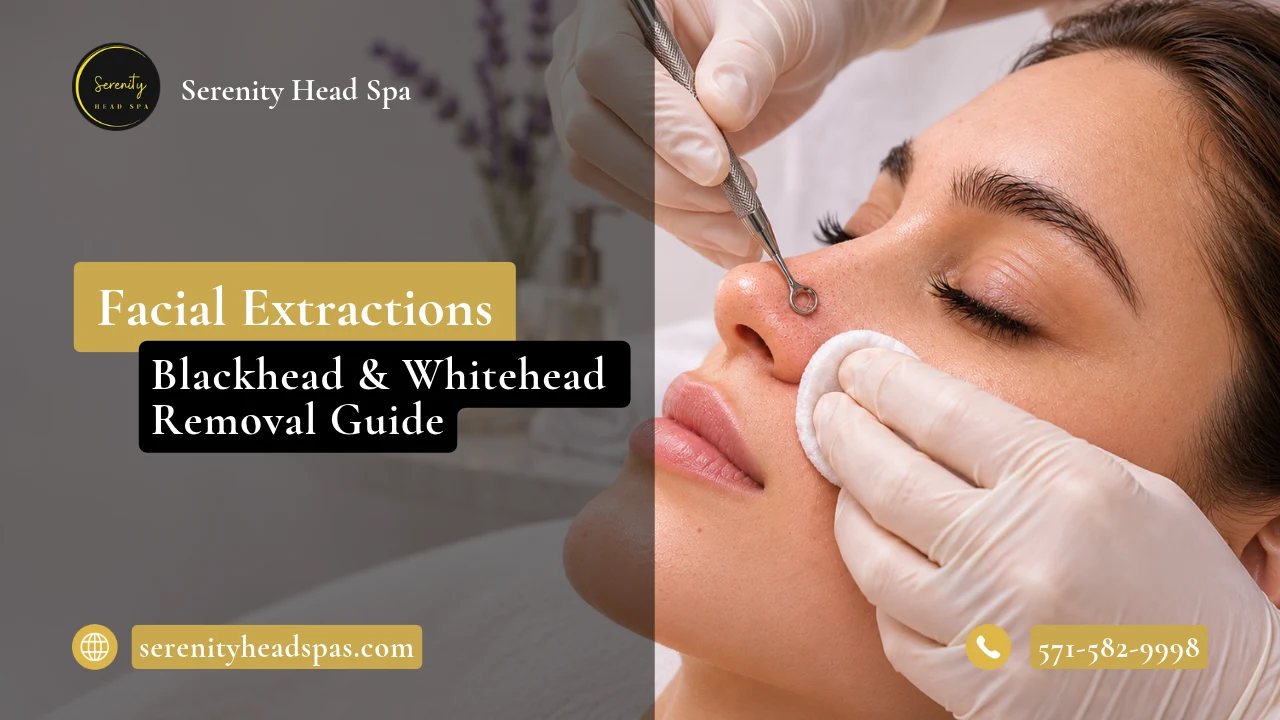
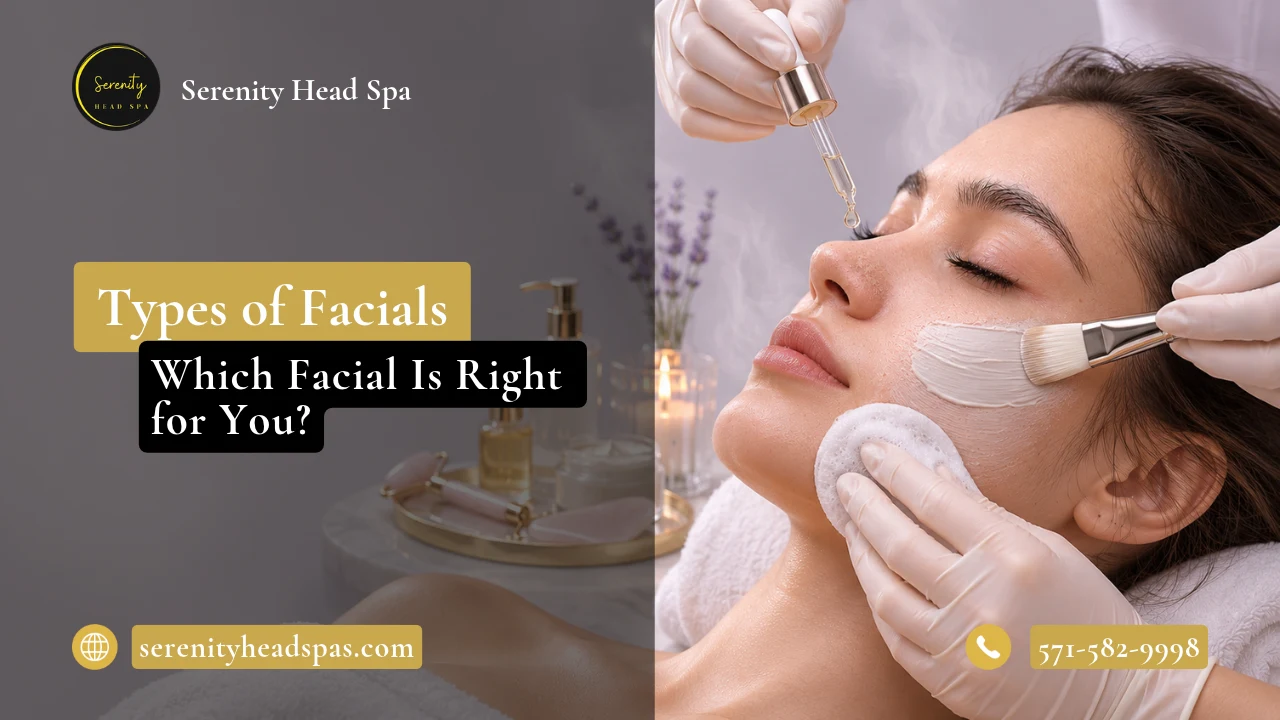
A facial isn’t one fixed thing. In Cleveland Clinic‘s words, it’s “a noninvasive skin treatment that includes cleansing, moisturizing, exfoliating,” all adjusted to your skin. Extras vary. One place adds a mask and a bit of neck massage. Another uses steam or does extractions.
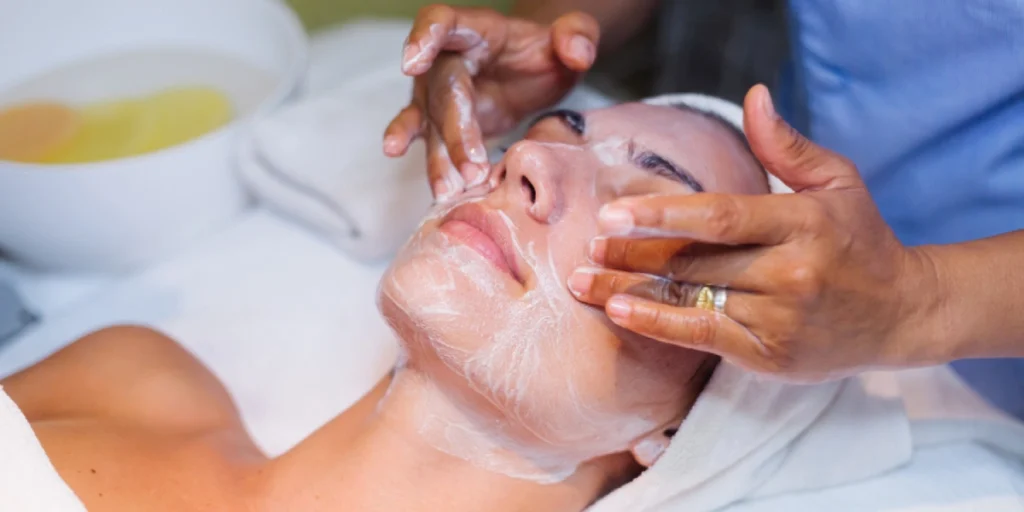
That’s the base, and the different types of facials build on it in their own way. Some lean on cleansing. Hydration is the star in others, while some focus on exfoliating, add light-based care, or spend extra time on massage. Many mix a few of these. Here’s how the usual types of facial treatments stack up side by side:
| Facial category | Main focus | Who might consider it? | Important qualification |
|---|---|---|---|
| Classic or maintenance facial | Basic cleansing and skincare | Someone wanting routine facial care | Exact steps differ by provider |
| Deep cleansing facial | Removing surface buildup and cleansing the skin | Someone concerned about oil or clogged pores | It isn’t a stand-alone cure for acne |
| Hydrating facial | Skin comfort and less of that dry feeling | Someone with dry or tight-feeling skin | Results depend on the products and your skin |
| Exfoliating facial | Removing some surface buildup or dead skin cells | Someone bothered by rough-feeling texture | Strength and irritation risk vary by method |
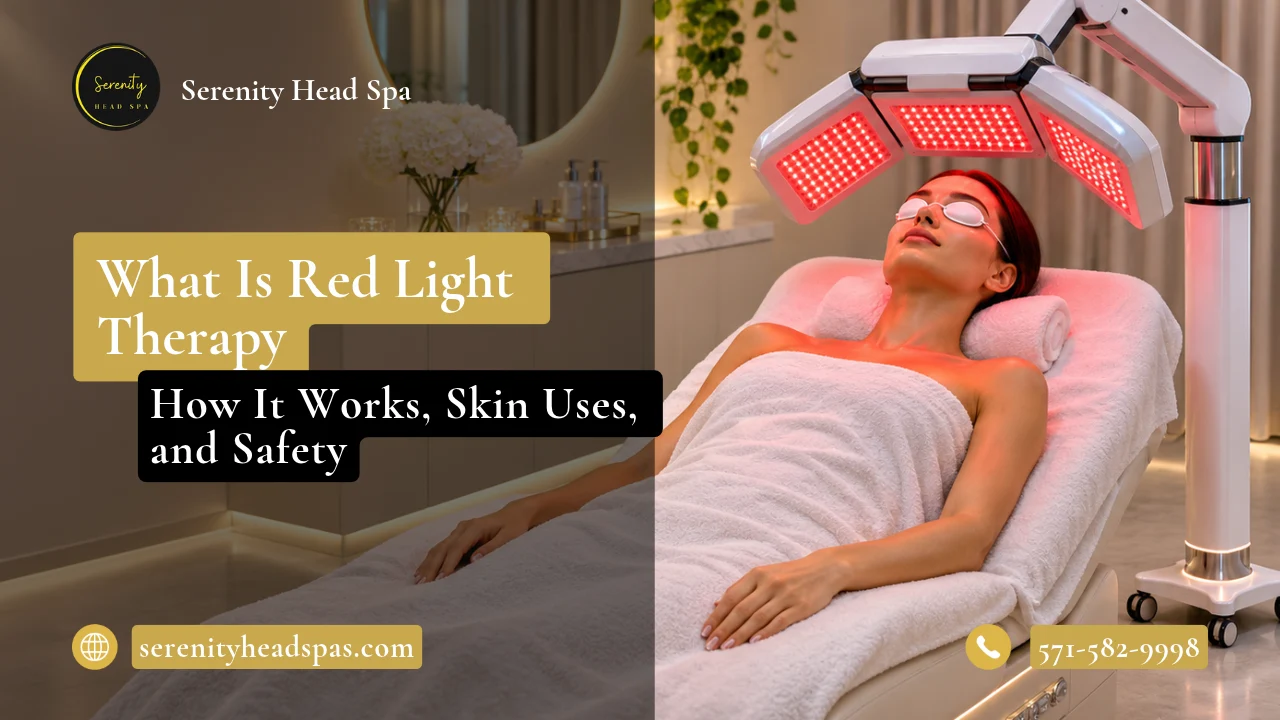
| Light therapy facial | Adding a specific light-based treatment | Someone interested in a light-based option | The type of light and protocol matter |
| Massage-focused facial | Relaxation and gentle facial massage | Someone wanting a soothing treatment | It won’t permanently lift skin or reduce fat |
| Acne-focused facial | Skincare chosen around congestion or blemishes | Someone concerned about breakouts | See a dermatologist for acne that’s severe, sore, or won’t quit |
(This table describes general categories only. Not every type listed here is offered at Spa Restoration Center.)
Which Facial Should You Choose for Your Skin Goals?
Skip the menu names for now. Ask yourself one thing: what do I want help with? Understanding the different types of facials for different skin types is way less confusing when you answer that first. We’ve grouped the usual goals below, with the type of care that tends to suit each. Your provider can tailor it from there.
If Your Main Concern Is Oily Skin or Clogged Pores
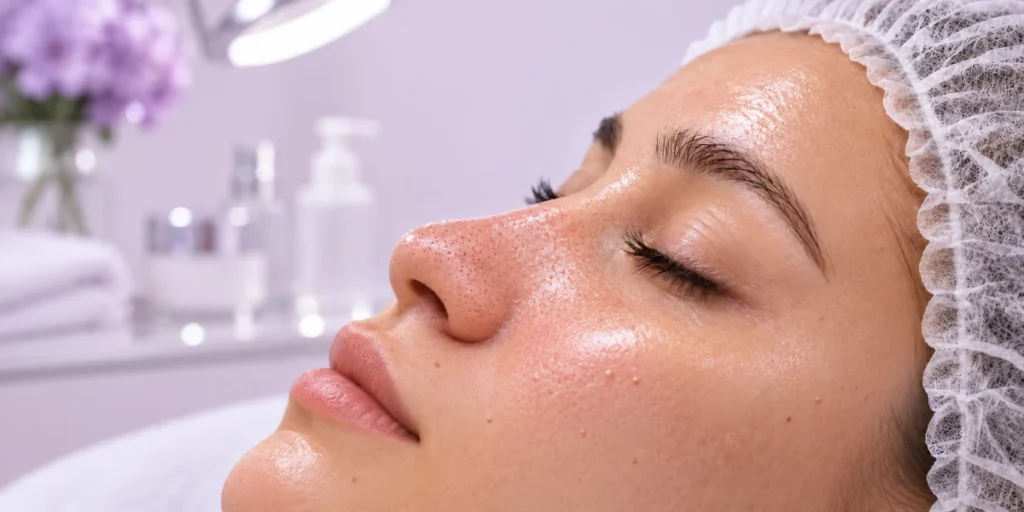
Shiny by noon? Pores that clog easily? A cleansing facial is the usual first pick for oily skin. The goal is to lift off surface oil gently, so your face doesn’t end up red and stripped. Rough scrubbing can backfire. For acne-prone skin, the American Academy of Dermatology (AAD) warns against “scrubbing with washcloths, sponges, and other tools.
” A deep cleansing facial is one option on our menu. We cover this more in our posts on deep cleansing facial benefits and facials for oily skin.
If Your Skin Feels Dry or Dehydrated
If your face feels tight after washing, a hydrating facial is probably the better fit. Its focus is moisture. Cleansing and exfoliating facials, by comparison, put more effort into pores and buildup, and too much scrubbing can make dry skin feel worse.
Why is your skin dry in the first place? Winter air, a harsh face wash, or a health issue could all be behind it. So mention it to your provider. Dryness that hangs around is worth showing a dermatologist.
If Your Main Concern Is Dull-Looking or Uneven-Textured Skin
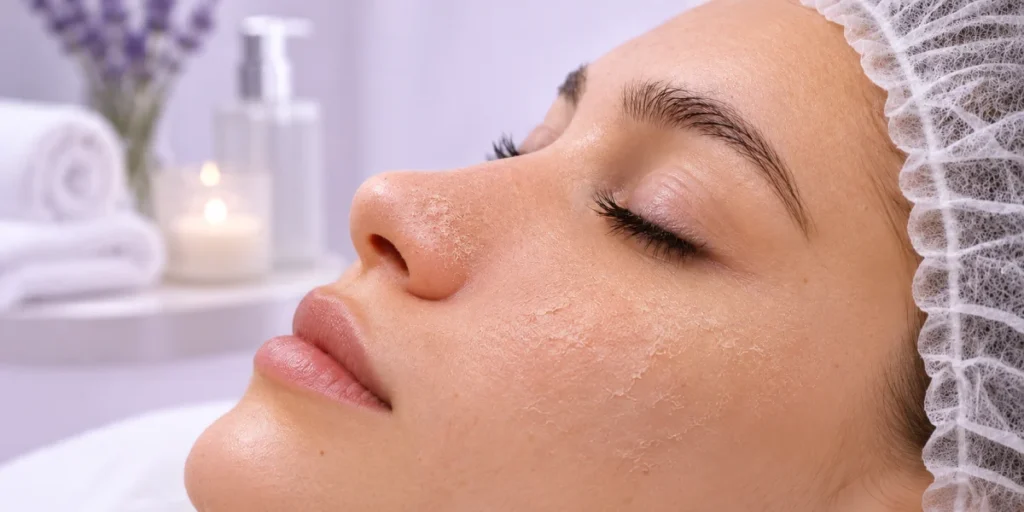
You’ve got two main routes. Exfoliation buffs off old cells sitting on the surface, so skin can look brighter and feel smoother. A light therapy facial goes a different way, with a light-based step. One isn’t a stand-in for the other. Your skin, and the details of each treatment, decide which makes sense.
For a closer look at light-based care, read our post on LED light therapy for acne and scars.
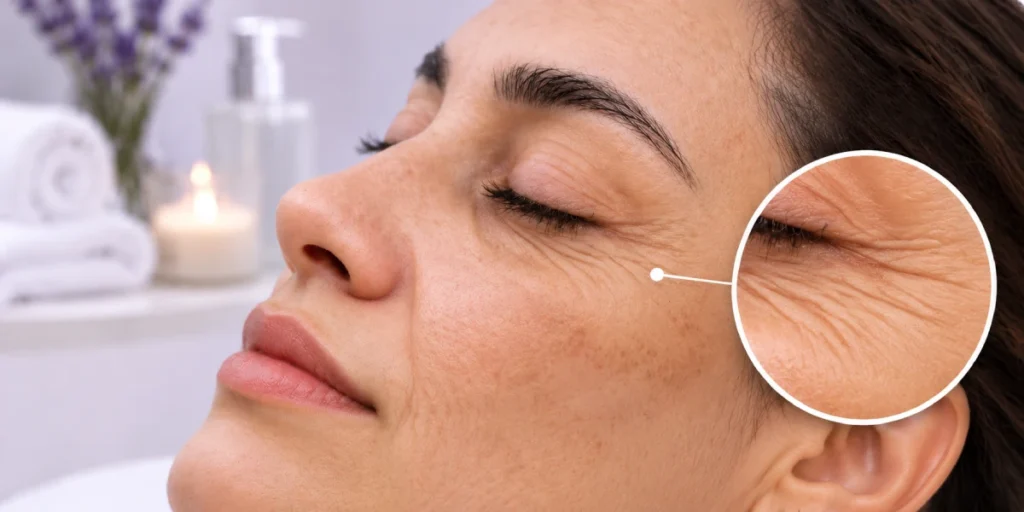
If You Are Concerned About Visible Signs of Aging
For mature or aging skin, some people stick with hydrating facials that help texture look smoother. Others look at more specialized treatments. Keep your expectations grounded. What we do at a spa is not the same as a medical procedure, and no facial stops aging. Want more detail? Check out our guides on facials for aging skin and face-lifting treatment options.
If Your Skin Is Sensitive or Prone to Redness
Got sensitive skin? Then talk before you lie down. Tell us about allergies, the products you use, and what’s caused a flare in the past. Some ingredients and techniques just don’t sit well with reactive skin. The AAD’s rosacea tips, for one, say to avoid “rubbing or scrubbing your face, or using washcloths, facial sponges, or exfoliators.
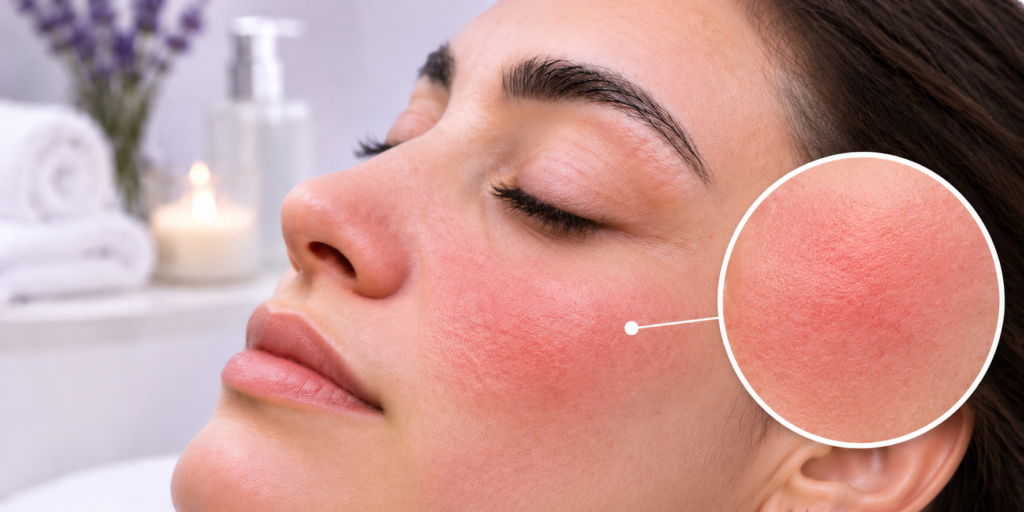
And to be clear, no facial can treat rosacea. More tips are in our posts on facials for sensitive skin and facials for rosacea.
If You Mainly Want Relaxation or a Quick Refresh
Not every visit has to target a concern. Have only a lunch break? A mini facial is a quick, basic refresh. Facial massage and facial lymphatic massage are mainly for relaxing and feeling good in the moment. A few of our clients notice a little less puffiness afterward, for a short while. Any change like that is temporary, and massage doesn’t lift your face.
What Is the Difference Between a Facial and a Specialized Skin Treatment?
A lot of facials are simple: cleanse, moisturize, a few skincare steps. Specialized treatments may add a device or a stronger exfoliant. You’ll hear both described as non invasive facial treatments, because there’s no surgery and no needles involved. Before booking either kind, remember:
- Names vary between spas
- Details change the experience
- Irritation can still happen
- Confirm everything first
Two spas can use the same name for two pretty different treatments. What’s in the products, how the device is set, how strong it is, and how the provider works all change the result. Non-invasive doesn’t mean zero risk, either. Non-invasive facial care can still cause redness or irritation, and it isn’t right for every person.
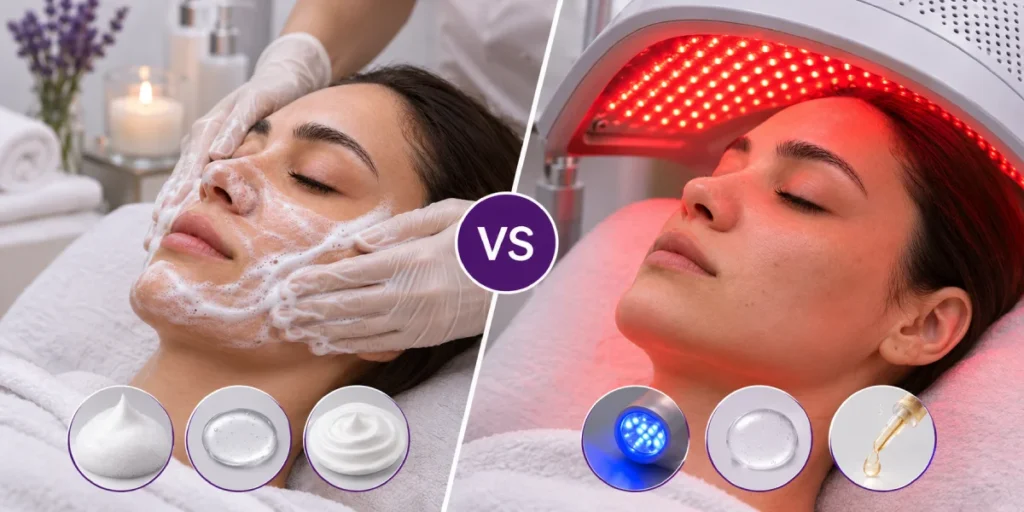
Get the steps, the likely results, possible reactions, and aftercare spelled out before you agree. Looking at something with a device? Read our post on LED light facial safety first. Weighing up specialized options? Our HydraFacial guide is worth a read too.
How to Choose the Right Facial Before Booking
Figuring out how to choose a facial is easier than it sounds. Understanding the types of facials and asking a few good questions can help you avoid a treatment that’s wrong for your skin. Here’s a short checklist to run through before your appointment:
- Name your main concern
- Share your skin history
- Ask what’s included
- Ask if it may cause redness
- Get the details in writing
Pick your top priority. Is it clearer pores, less dryness, smoother texture, brighter skin, or a chance to relax? Tell your provider how sensitive your skin is, what you’re allergic to, what’s in your bathroom cabinet, and about any recent reactions. Ask for a rundown of the treatment: exfoliation, extractions, a mask, massage, light therapy, or some mix.
Will any part of it make you red, irritated, or need downtime? Ask. And before you hang up, confirm the service name, the length, the price, and the aftercare.
One more thing. Painful, inflamed, worsening, or unexplained skin changes are a job for a dermatologist. A spa facial isn’t a substitute for medical care.
Which Facial Options Are Available at Spa Restoration Center?
Here’s how our current facial treatment options line up with the categories above. Each one is a non-invasive spa service, and we’ll adjust the details to your skin on the day.
| Service | What it focuses on |
|---|---|
| Deep Cleansing Facial | A cleansing-focused facial for surface buildup and a fresher-feeling complexion |
| Glow & Lift Mini Facial | A shorter facial that pairs a quick cleanse with a lymphatic face massage |
| Light Therapy Facial | A longer treatment that combines facial light therapy with deep cleansing |
| Face Lymphatic Drainage | A soothing lymphatic massage for the face, mainly for relaxing |
(Services sometimes change. Check our current menu, or call us, before booking.)
Not sure which one fits? Take a look at our facial treatment services. You’ll also find local pages for facial treatments in Springfield and facial treatments in Rockville. Or just call, and we’ll talk it through with you.
Frequently Asked Questions About Types of Facials
Got a few more questions? That’s normal. Below are short answers to the ones clients bring up when they’re deciding. If yours isn’t here, just ask us before your visit.
What Are the Different Types of Facials?
The main ones are cleansing, hydrating, exfoliating, light-based, and massage-focused. Lots of facials combine a couple.
How Do I Choose the Right Facial for My Skin Type?
Figure out your biggest skin concern, and how reactive your skin is. Then look at what each treatment actually involves. If you’re searching for the best facial for my skin type, the honest answer is that it depends, and your provider can help you work it out.
What Is a Non-Invasive Facial Treatment?
It’s a treatment without surgery or needles. Even so, redness or irritation can happen.
Which Facial Is Suitable for Oily or Acne-Prone Skin?
A gentle cleansing facial is a popular pick. No facial cures acne. For breakouts that keep returning, the AAD suggests a board-certified dermatologist.
Which Facial Is Suitable for Dry Skin?
Try a hydrating facial for more comfort. If the dryness won’t go away, see a professional.
Can I Get a Facial If I Have Sensitive Skin?
Usually, yes. Share your sensitivities up front, and your provider can avoid products or steps that tend to cause trouble.
How Often Should I Get a Facial?
There’s no set rule. It depends on the treatment, your skin’s response, and your provider’s advice.
What Should I Ask Before Booking a Facial?
Ask about the steps, products, possible reactions, downtime, aftercare, timing, and cost. No surprises that way.
Final Thoughts on Types of Facials
So why so many types of facials? Because everyone’s skin goals are different. Cleansing, hydrating, exfoliating, light-based care, and massage each do their own job. Go with the one that fits your goal and your skin, and that you feel comfortable with. When you’ve made up your mind, browse our facial treatments and book.
Ready to find your facial? Book with Spa Restoration Center today.