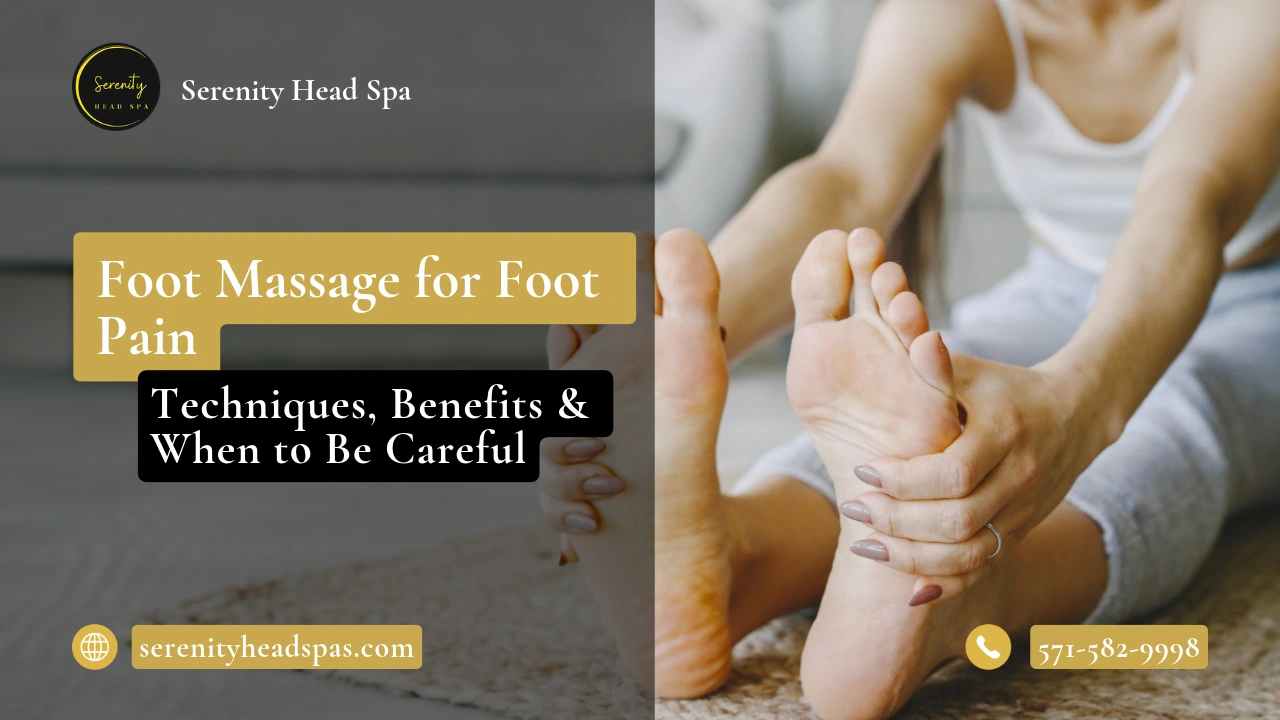
Long day on your feet, shoes finally off, and now they won’t stop aching. A foot massage for foot pain can feel great in that moment, and for plenty of everyday soreness, a gentle rub may bring some short-lived comfort. That’s the honest answer. It won’t fix whatever is causing the pain, though, and it isn’t right for every kind of foot pain. Some aches come from tired feet.
Others come from a sprain, an injury you barely noticed, or a health problem, and a doctor should check those out. So figure out what kind of ache you’ve got before reaching for the lotion. Keep reading for what a rub can and can’t do, a simple routine to follow, and the red flags that mean you should leave your feet alone and call someone.
Does Foot Massage Help Foot Pain?
Sometimes, a little, for a while. That’s the realistic version. Feeling more comfortable for an evening is one thing. Treating the cause of the pain is another, and massage only really offers the first.
There isn’t a lot of research on massage for foot pain specifically. Most of what we know comes from studies on other areas. Take neck and shoulder pain. The National Center for Complementary and Integrative Health (NCCIH) says massage may help there, “but the benefits may only last for a short time.” It’s reasonable to expect something similar for sore feet. A little relief, maybe. A permanent fix, no.
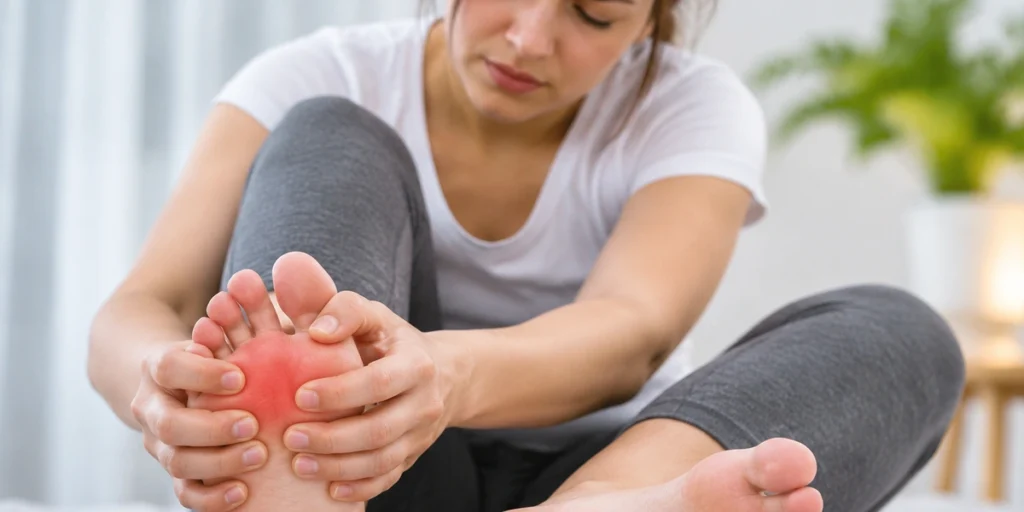
When feet are just tired, lots of people say a soft rub feels lovely. But there’s pain you shouldn’t rub. If it started for no reason, sticks around, or keeps getting worse, a healthcare professional needs to see it.
What Can Cause Sore or Painful Feet?
Lots of things. Hours of standing, shoes that are too snug or worn flat, and jumping into more walking or running than your feet are used to can all do it. The NHS says pain under the foot can come from exercise like running and from wearing shoes that are too tight. Mayo Clinic names many more possibilities, including stress fractures and other injuries, soft-tissue problems, joint conditions such as arthritis and gout, and nerve issues.
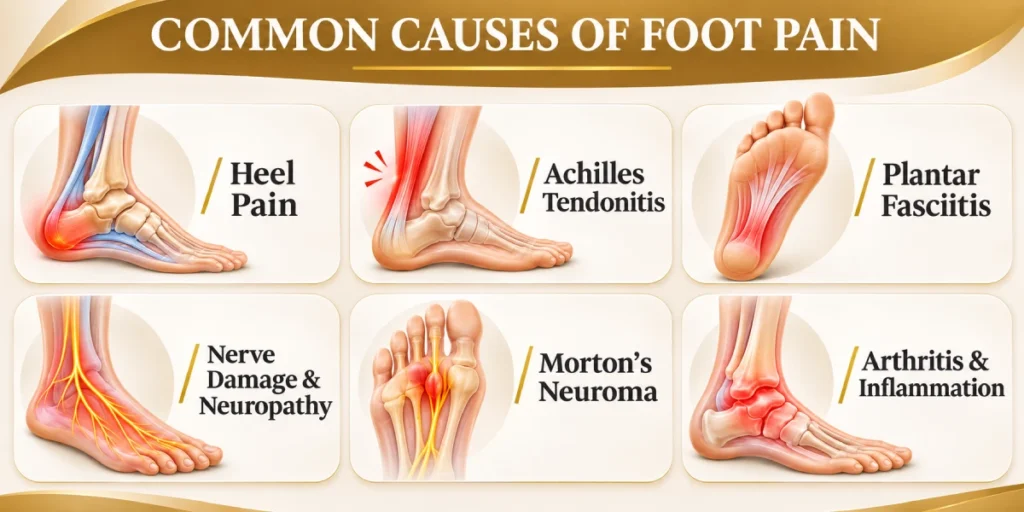
The spot that hurts is a hint, nothing more. Pain in your arch, your heel, or the ball of your foot could come from any number of things. The NHS is clear on this: “Do not self-diagnose the cause of the pain yourself.” This article covers general foot discomfort only. Already have a diagnosis? Our posts on foot massage for plantar fasciitis and foot massage for neuropathy cover those conditions in more detail.
Potential Benefits of Foot Massage for Pain Relief
Feet that are simply tired, with nothing else going on, may get a couple of small perks from a light rub. None of them are cures. For the wider picture, see our guide to the benefits of foot massage.
Temporary Comfort for Tired Feet
Think cashiers, nurses, teachers, and anyone who spent the afternoon keeping up with a toddler. Your feet feel it by dinnertime. A slow, light rub can feel soothing after that kind of routine activity, and some people say their feet feel lighter afterward. Honestly, a bit of comfort for a few hours is about all a foot massage for pain relief can offer.
A Relaxing Way to Unwind
Ten slow minutes with your feet and no screen in your hand can be surprisingly calming. Feeling relaxed is nice. It’s just not the same as less pain, so don’t expect massage to deliver that part.
Supporting a Broader Foot-Care Routine
Think of massage as one part of looking after your feet, along with decent shoes, rest, and whatever your doctor suggests. If something specific is wrong, you still need it diagnosed and treated. A foot rub doesn’t change that.
How to Massage Sore Feet Gently
Go slow, stay gentle, and stop when something doesn’t feel right. For general self-massage tips, our foot massage at home guide has more. The steps below are for feet that already hurt.
Get Into a Comfortable Position
Sit somewhere comfy, like the couch or your bed. Rest your foot across your other knee or on a pillow so it can relax.

Start With Light Strokes
Lotion is optional. Glide your palms slowly over the sole, only where it feels fine. Tender spot? Go around it. This part is about easing in, so don’t go looking for knots.
Massage the Arch Only if Comfortable
Should you massage the arch of your foot if it hurts? Lightly, and only if that feels okay. Run your thumbs slowly along the arch with very little pressure. Avoid pushing into the sore spot itself. Arch pain doesn’t always have the same cause, either. Hurting more? Stop and leave your arch alone.
Give the Toes Gentle Attention
Rub each toe gently in small circles. No tugging or bending it sideways. Nothing should crack or pop.
Stop if the Pain Increases
A massage that sends a sharp jolt through your foot has gone too far. More pain, swelling, bruising, or numbness or tingling you didn’t have before? Stop there and get your doctor’s advice.
Which Foot Massage Technique Is Best for Pain?
Foot pain has too many causes for one foot massage for painful feet to beat the rest. Something that feels good on tired soles might bother a heel that’s already sore. Two gentle options make a sensible start.
Gentle hand strokes. Run your flat palms from your toes back to your heel, nice and slow. It’s the gentlest way to start, since the pressure is spread across the whole sole.
Light circular movements. Use your thumb or fingertips in tiny circles. That lets you focus on one area, like the ball of the foot or around the heel, while keeping the touch light.
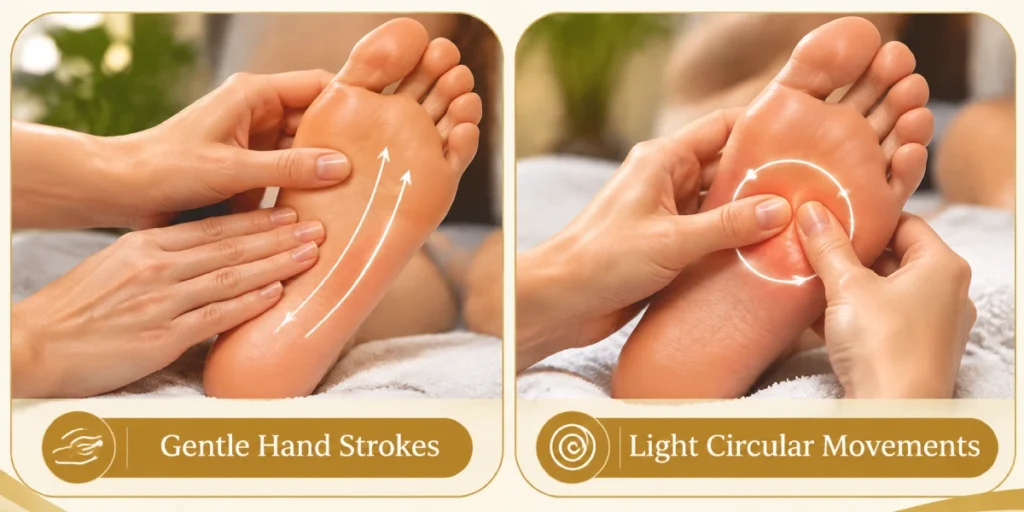
How much pressure should you use? Only enough that it feels good, and back off the moment it hurts. Serious side effects from massage are rare. When they’ve happened, NCCIH says many involved “vigorous types of massage, such as deep tissue massage.” Light pressure is the safer choice. Our foot massage techniques guide walks through more moves if you want them.
When Should You Avoid Massaging a Painful Foot?
A painful foot doesn’t always want a massage. Keep your hands off the area and talk to a doctor if you notice:
- Bad pain, or pain with no clear cause
- Significant swelling
- Redness or warmth
- A recent injury
- An open wound
- Signs of infection
Mayo Clinic says to get help right away for serious pain or swelling (especially after an injury), an open wound or one that’s oozing, signs of infection such as warmth and tenderness, or if you can’t put weight on the foot.
Things are different if you have numbness, tingling, poor circulation, or foot problems linked to diabetes. When feeling is reduced, you may not notice if pressure is too much. Talk to your doctor before massaging, and read our article on foot massage for neuropathy if nerve symptoms are part of the picture. And please don’t try to massage through any of these symptoms for relief.
What Else May Help With Sore Feet?
Massage is one small tool. A few general habits can matter more:
- Supportive footwear
- Rest when your feet need it
- Activity adjustments
- Comfortable foot mobility
- A checkup if the pain won’t quit
For shoes, the NHS recommends a roomy pair with a low heel and soft sole, and it suggests resting and raising your foot when you get the chance. According to Mayo Clinic, rest and cold therapy may help when overuse or a minor injury is behind the pain, and it’s best to skip anything that makes it hurt more.
Some easy foot and ankle movement can feel good too, as long as nothing hurts. If the pain lasts, worsens, or starts affecting your daily life, book a visit with a healthcare professional. Don’t just guess.
FAQs About Foot Massage for Foot Pain
Still wondering about something? We’ve answered a few more questions people ask about sore feet below.
Can Foot Massage Relieve Pain After Standing All Day?
Yes, for some people, though the relief may not last long. Keep the rub gentle, rest your feet afterward, and stick with supportive shoes. Pain hanging around for days? Have it looked at.
Can Foot Massage Help Heel Pain?
It may feel nice to some people. But heel pain can have many causes, and a gentle foot massage for heel pain won’t tell you which one you have. Don’t press hard on the painful spot. Pain that lasts or feels severe is worth a doctor’s visit for a proper diagnosis.
Can Foot Massage Make Foot Pain Worse?
Yes. Too much pressure, or massaging a spot that’s injured, can make the pain worse. Stop if you get sharp pain, more swelling, bruising, or new numbness.
Should You Massage a Swollen Foot?
Not if the swelling is large, followed an injury, or showed up for no clear reason. And if it hasn’t gone down after 2 to 5 days of home care, Mayo Clinic recommends seeing a doctor.
When Should Foot Pain Be Checked by a Healthcare Professional?
According to the NHS, it’s time to see a GP if foot pain stops you from doing normal things, worsens, comes back again and again, or still hasn’t improved after 2 weeks of home care. Go sooner if the pain is severe or you have tingling, loss of feeling, or diabetes.
Is Foot Massage Worth Trying for Foot Pain?
For everyday soreness, it can be. A soft foot massage for foot pain may take the edge off and give you some quiet time at the end of the day. Just know its limits. It can’t heal injuries, it doesn’t treat medical conditions, and it won’t help every kind of foot pain. Use light pressure and stop if things start to hurt more. If your pain is long-lasting, severe, or has no clear cause, or you see swelling or redness or feel numbness or tingling, get it checked. Want someone else to handle the foot rub? Our Foot Massage Spa service in Springfield, VA, and Rockville, MD, is all about comfort and relaxation. It’s not medical treatment.
Feet need a rest? Come see us at Serenity Head Spa and book a session.