Washing your face in the mirror, and suddenly you notice IT! The Scalp! It’s visible. There is nothing more traumatizing than having your scalp showing through the hairs, quite widely.
Hair thinning occurs when follicles (where hair grows) shrink and hair density drops. This is usually due to a mix of genetics, hormones, and a scalp environment that isn’t doing its job. The strand itself gets narrower, and fewer follicles stay active, so more scalp shows through over time. While a professional hair spa can help improve scalp health and support healthier hair growth, it works best when the underlying cause of thinning is identified.
So, if you’re wondering, “Why is my hair thinning and falling out?” or whether it’s possible to do self-checks, you’re in the right place. This guide is a complete checklist to help you understand the causes of hair thinning, perform simple self-checks, and learn how a hair spa and other treatments can support healthier, fuller-looking hair.
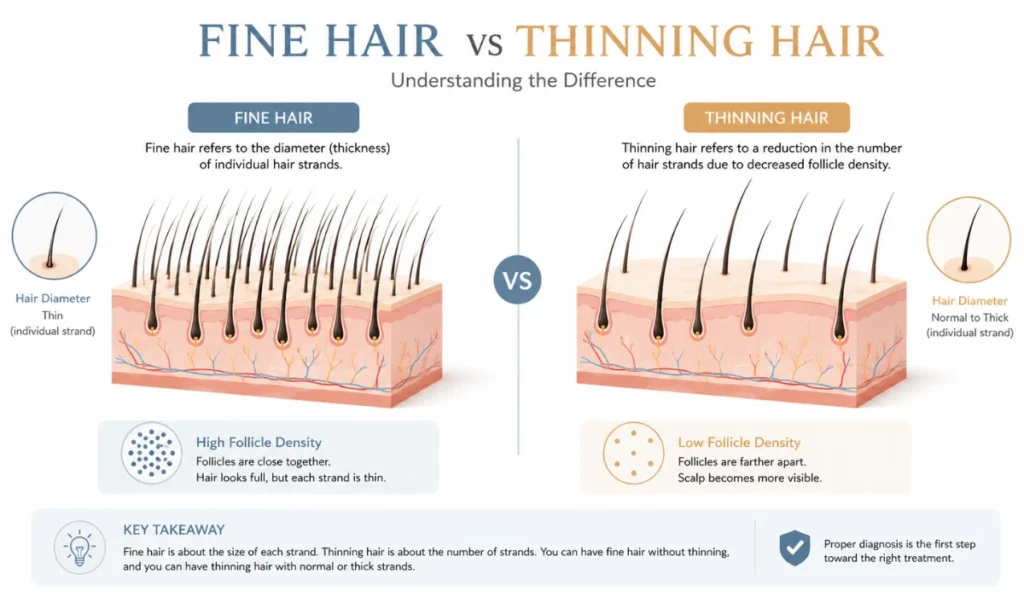
Is Your Hair Really Thinning?
Before you build a plan around it, figure out whether you’re actually thinning or just noticing your hair differently. People confuse “fine hair” with “thinning hair” constantly. Fine hair is about the width of each strand. Thinning is about how many strands you have per square inch. Not the same problem.
The Wet-Hair Illusion vs. Real Thinning
A lot of people search for why is my hair thin after washing?, because their hair looks sparse right out of the shower. That’s usually the wet-hair illusion. Water pulls strands into clumps, and clumped hair has none of the fluff that normally hides the scalp underneath. If your hair looks full and covers your scalp once it dries, you’re probably fine. If the scalp still shows through under bright light when your hair is completely dry, that’s a different story.
Quick Self-Checks
Three checks, no appointment required.
- Stand under strong overhead light and look at your part. Compare the width at the front to the width at the back. A part that’s visibly wider up front is a classic early sign of female pattern thinning.
- Photograph your crown every eight weeks, not every day. Hair grows about half an inch a month, so daily photos just feed anxiety without giving you real data. And stress itself can make thinning worse, so that habit backfires twice.
- Then there’s the pull test, the one dermatologists actually use. Grab about 50 hairs and tug gently from root to tip. More than six coming away in your hand suggests you’re in an active shedding phase called telogen effluvium.
Match Your Symptom to the Likely Cause
Now that you’ve identified your hair is actually thinning, it’s time to find that nasty cause. Take a glance at this chart for a quick cause-finding
| Symptom Pattern | Likely Cause | Primary Characteristic |
| Thinning all over (diffuse) | Telogen effluvium or nutrition | General loss of volume, ponytail feels thinner |
| Thinning at the front or hairline | Androgenetic alopecia | The “M” shape or receding temples |
| Thinning on one side only | Traction or friction | Often tied to sleep position or a habitual side part |
| Sudden shedding after an event | Acute telogen effluvium | Starts two to three months after a fever, surgery, or major stress |
| Thinning in specific patches | Traction alopecia | Right where extensions or clips were attached |
Why Is My Hair Thin After Extensions?
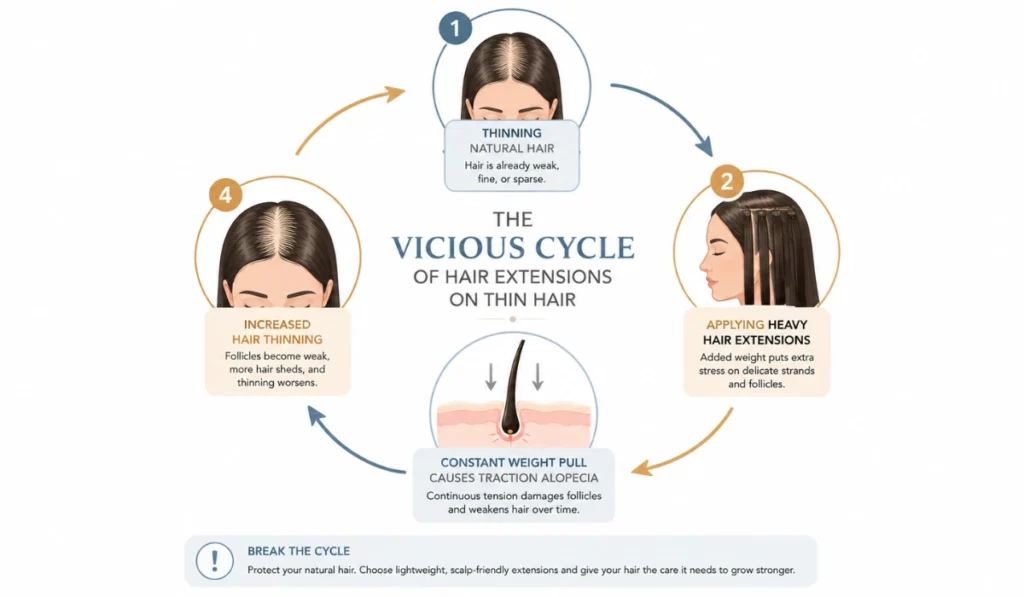
Most hair-loss articles barely mention this, which is strange, because extensions are one of the more common causes we see walk through the door. People wear them to hide thinning, and the extensions end up causing more of it.
Tape-ins, sew-in wefts, keratin bonds- all of them add weight the follicle wasn’t built to carry. That constant pull is traction alopecia in its purest form. Left alone long enough, the follicle inflames, then scars, and scarred follicles don’t grow hair back. Ever.
There’s a trap built into this. Someone gets extensions to cover thinning. The extensions thin the hair further. So they get heavier extensions to cover the new damage. Round and round. A vicious trap.
Your natural hair can generally support somewhere between half and its own full weight, no more. To give an example- a 22-inch hair extension installed on fine, already-thinning hair is stressful. The glues and removers are also included. It can cause dermatitis on top of the mechanical stress.
If you’ve just taken extensions out and you’re noticing thinning, give your scalp a break. At least three months with no added weight is the bare minimum you can do for your hair. You’ll also need professional exfoliation too, since leftover adhesive residue and dead skin cells sitting under old bonds can physically block new growth from reaching the surface.
The Core Causes of Hair Thinning, Explained
Determining the core cause is essential when it comes to hair thinning. It’s because we don’t exactly see what’s going on inside our body. Pinpointing the major cause is the first step to battling hair thinning.
Genetics( Androgenic Alopecia)
Genetics is the biggest one worldwide. Androgenetic alopecia comes down to a sensitivity to DHT, which binds to follicle receptors and shrinks them. Smaller follicles, finer hair, and eventually no hair at all once the follicle closes for good.
Telogen Effluvium: The Post-COVID and Stress Factor
Telogen effluvium is temporary, which is the good news. Normally about 10% of your hair sits in a resting phase at any given moment. A real shock to the system, a high fever from something like COVID-19, a car accident, or a death in the family, can push as much as 30% of your hair into that resting phase all at once. This is the reason your hair is thinning after COVID. The American Academy of Dermatology puts the typical onset at two to three months after the stressor hits.
Pregnancy/ Postpartum Hair loss
Postpartum shedding follows a similar logic. Pregnancy hormones, mainly elevated estrogen, put the brakes on your normal daily shedding of 50 to 100 hairs. That’s the thick, glossy “pregnancy hair” people talk about. Then, why does hair thinning occur after having a baby? When the baby arrives, estrogen crashes, and your body tries to catch up on everything it skipped. Shedding usually peaks around four months postpartum, and it can genuinely feel like losing hair by the handful.
Hormonal Changes and Thinning After 60/Menopause
Women in their 60s deal with a slower, hormonal version of the same story. As estrogen and progesterone decline through menopause, androgens get relatively louder. Estrogen keeps hair in its growth phase longer, so when it drops, that phase shortens and strands come in finer. It usually shows up first as a widening midline part or a bit more visible scalp at the crown. Complete baldness is rare in women. Losing real density is not.
Traction Alopecia: Tight Styles and Hair Extensions
Traction alopecia deserves its own mention outside the extensions discussion, because tight ponytails and braids cause the exact same mechanism. Hair thins out in the front due to regularly wearing tight hairstyles that stress the front side hairs. ( like a high pony, high sleek bun) Constant tension inflames the follicle, then it starts to atrophy.
Similarly, hair thins out on the sides when you are a constant side sleeper, or love to do side hairstyles. If you catch it early and give the area three to six months without tension, most follicles recover. We built our “extension rehab” service specifically around that recovery window, clearing adhesive residue and calming the inflamed scalp underneath.
Nutrient Deficiencies and Lifestyle Factors
And then there’s the everyday stuff. Low iron and ferritin are among the most common causes of diffuse thinning in women, full stop. Vitamin D and B12 run the signaling pathways that kick off new growth. Chronic stress floods your system with cortisol, which pushes follicles into their resting phase early. Smoking and heavy drinking restrict blood flow to your extremities, including your scalp, which starves hair of the oxygen it needs to grow.
How Scalp Circulation and Follicle Health Affect Hair Thinning?
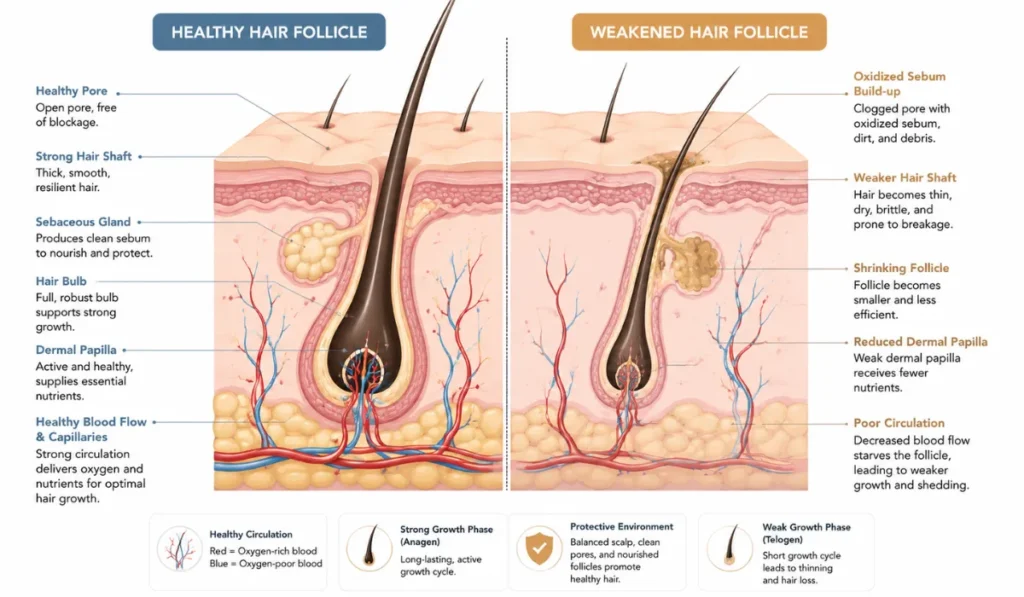
Here’s what almost nobody talks about. Every follicle connects to a tiny blood vessel called the dermal papilla, and that vessel is the follicle’s only supply line for oxygen and nutrients
When circulation to the scalp is poor, the dermal papilla can’t deliver biotin, zinc, or iron to the hair bulb no matter how much of it you’re eating. The hair cycle shortens. Strands come in brittle and thin.
What hurts scalp circulation: Chronic stress can tighten blood vessels throughout the body, including the scalp. In scientific terms, it is called vasoconstriction.
Ongoing tension in the fibrous sheet across the top of your skull physically compresses the vessels underneath it. Even just sitting still all day reduces circulation everywhere, scalp included.
This is where scalp massage earns its keep, and not the thirty-second version you get during a regular haircut.
The technique used in Hair spas drives vasodilation, deep rhythmic pressure that pulls blood back into the dermal papilla. A study published in Eplasty found that standardized scalp massage changed gene expression in hair follicles and increased shaft thickness by mechanically stretching the follicle cells. The stretching itself signals the cells to build thicker, stronger hair.
Hair exfoliation
Circulation only solves half the problem. Hair still has to find a way out, and a lot of scalps are clogged. Dry shampoo, heavy conditioner, styling wax,-none of it stays where you put it. It migrates down to the scalp, mixes with sebum and sweat, and hardens into a plug sitting right over the follicle opening. New hair has to fight its way through that plug, and what usually comes out the other side is thinner, or ingrown, or both.
We use a microscope camera during consultations so clients can actually see this on their own scalp, usually a ring of yellowish, oxidized sebum wrapped around each follicle. Clearing it takes a few steps working together: steam to soften the plug, salicylic or glycolic acid to break down the bonds holding dead skin in place, and ultrasonic scrubbing to lift the debris without tearing up the skin underneath.
What Actually Helps in Hair Thinning ( The Treatments)
Split this into two buckets: what changes your hormones, and what improves the environment your follicles are growing in.
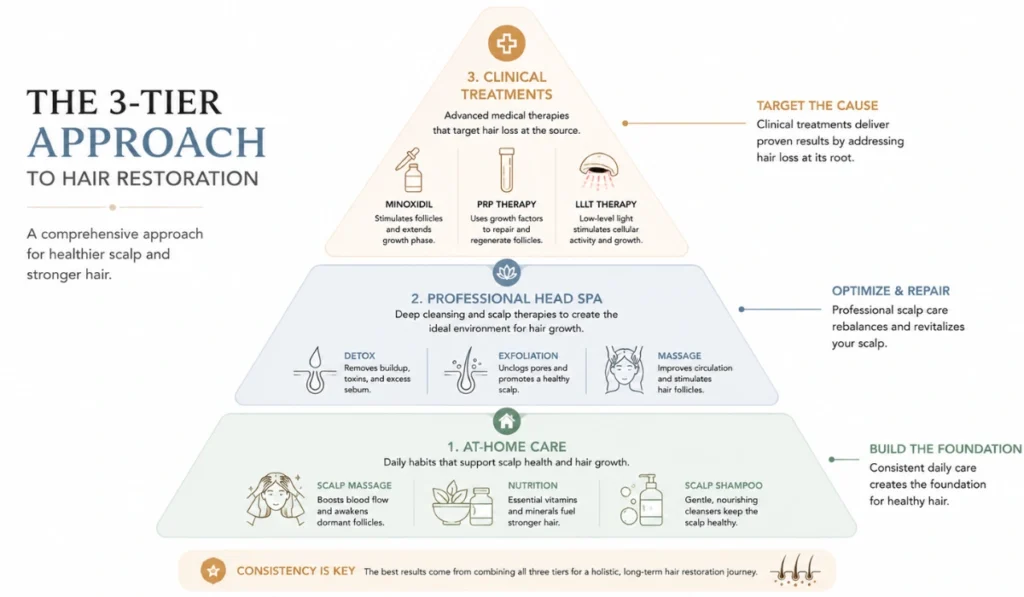
At home treatments
At home, five minutes of daily scalp massage with your fingertips, not your nails, moving in small circles wherever the skin feels tightest against the skull, makes a real difference over weeks.
Switch to a sulfate-free shampoo built for scalp health rather than shine. And eat enough protein and iron, since those are the raw materials hair is actually made from.
Head massage/ hair spa treatment
Professional treatment sits between home care and a prescription. At a professional hair spa solution, that means lymphatic drainage to cut the toxic load around follicles, herbal infusions for hydration and inflammation, and genuine stress reduction, which matters more than people expect given how directly cortisol drives shedding.
Clinical treatment
For androgenetic alopecia specifically, spa work alone won’t reverse the genetics, but it pairs well with clinical treatment.
Minoxidil is a topical vasodilator that keeps follicles in their growth phase longer. Finasteride blocks the conversion of testosterone into DHT. PRP involves a doctor concentrating your own platelets and injecting them into the scalp to trigger regeneration.
| Treatment | Primary Benefit | Cost Range |
| Head spa treatment | Circulation and detox | $150 to $300 |
| Minoxidil | Extends growth phase | $20 to $40 per month |
| PRP therapy | Cellular regeneration | $500 to $1,500 |
| Laser caps (LLLT) | Mitochondrial stimulation | $300 to $1,000 |
The Psychological Impact of Thinning
We’d be leaving something out if we didn’t mention this. Hair is tangled up with identity for most people, and the stress of losing it can feed straight back into more of it, a genuinely cruel feedback loop.
The relaxation piece of what we do isn’t an afterthought. A calmer sympathetic nervous system means your body stops treating everything as an emergency and starts putting resources back into “non-essential” functions like growing hair.
When to See a Doctor or Specialist
We’re a spa, not a clinic, and we’ll say that plainly. Go see a doctor if you notice smooth, round bald patches appearing suddenly (that’s alopecia areata, a disease only a doctor can solve). Any oozing, crusting, or bleeding from the scalp is a warning sign. If you’ve lost more than half your hair volume in under three months, or if you have a personal history of thyroid disease or an autoimmune disorder.
Final Thoughts
Lush, voluminous hair gives us not just beauty, but also boosts confidence. This is why it matters to identify the hair thinning cause. The primary and most important step is to self-check where and why the hair thinning is occurring. It could be due to your constant tight hairstyle, or some hidden nutritional deficiency, or something else altogether, like genetics issue. We always recommend consulting with a dermatologist or hair specialist when things get complicated.
FAQ
What’s the difference between hair thinning and hair loss?
Thinning is strands getting finer and density dropping gradually. Loss, or balding, means a spot goes bare. Genetic cases usually thin first and bald later.
Can I wear extensions again after my hair has thinned?
Once your scalp has recovered, yes. Halo extensions, which rest on the head instead of attaching to individual strands, or very light tape-ins are the safer route. Skip heavy sew-ins while you’re still actively thinning.
How long before hair grows back after stress?
Because the hair cycle moves slowly, expect three to six months minimum before you see new growth. Telogen effluvium rewards patience more than any product.
Does washing every day cause thinning?
No. If anything, washing too rarely lets sebum build up and inflame the scalp, which contributes to thinning. That hair in the drain was already detached from its follicle. Washing didn’t cause the loss; it just released hair that was already gone.
How often should I get a professional scalp treatment?
Every four weeks fits the natural turnover cycle of scalp skin, so buildup never gets the chance to accumulate.
Can a head spa treatment help genetic thinning?
It can’t touch your DNA. What it can do is make sure the follicles you do have are producing the thickest hair possible by maximizing blood flow and clearing DHT-laden sebum off the scalp surface.
Is hair thinning permanent?
Depends entirely on the cause. Thinning from stress, pregnancy, or nutrition tends to reverse on its own. Thinning from genetics or scarring alopecia is usually permanent, though it can be slowed and managed.
What are the best oils for scalp circulation?
Peppermint and rosemary come up most often in research. Peppermint delivers a cooling sensation that triggers blood flow on contact. Rosemary has actually performed comparably to 2% minoxidil in some six-month studies, which is a higher bar than most essential oils clear.
Why is my hair thinning on just one side?
Usually friction. Sleep on your right side every night, and the pillow rubs that side more. A bag strap worn on the same shoulder for years does the same thing, just slower.
Can hard water cause hair thinning?
Hard water leaves calcium and magnesium film on hair and scalp. It doesn’t typically stop a follicle from growing, but it makes the hair brittle enough to snap off near the root, which looks a lot like thinning even when the follicle itself is fine.
Why is my hair thinning and falling out?
Your hair might be falling out and thinning due to a deficiency in Zinc, vitamin B12, or low Ferritin levels. Apart from the nutritional imbalance, your lifestyle and daily habits, such as drinking, smoking, tight hairstyles, and heavy hair extensions for a long time, can cause the hair to fall out.
Why is my hair thin after shampooing?
Hair thinning after shampooing can mean tw different things- one is wet hair illusion. Your hair is clumped together, which shows the scalp, mimicking the balding effect. Another reason is using high-sulphate shampoo. It can make your hair very dry and brittle, ultimately thinning the hair.