At a hair spa, a heavy conditioning mask stays on your hair under steam. Salons stretch the name in every direction. One place’s hair spa treatment is a single mask and twenty minutes under a steamer. Down the street, the same name might buy you a full hour with a neck and shoulder rub thrown in. Menus also sort hair spa treatments by goal, including options such as an herbal hair spa for a more ingredient-focused treatment.. Besides, moisturizing and smoothing are the two you’ll spot first.
What Exactly Is a Hair Spa?
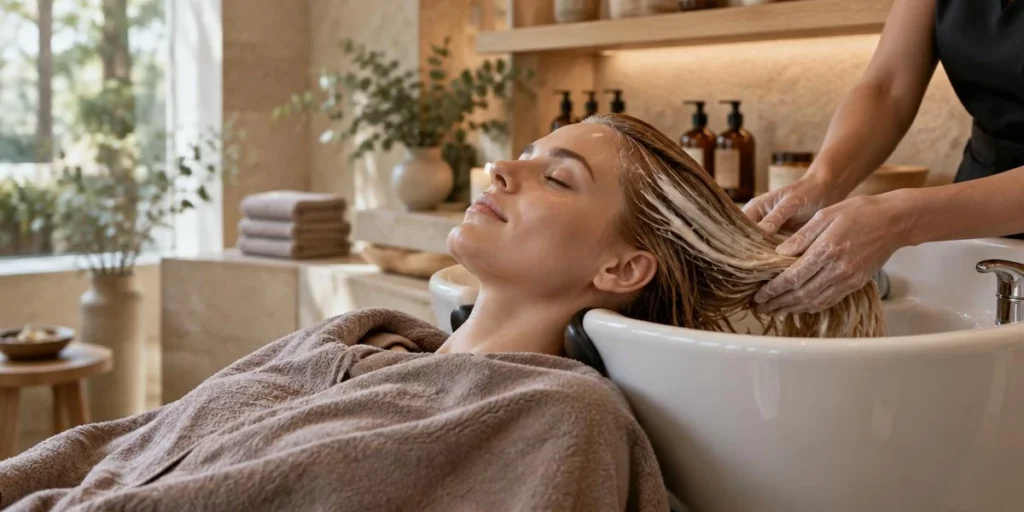
What you’re paying for is a deep conditioning treatment done properly. At home, conditioner gets sixty seconds and half your attention. In the chair, it gets steam and a therapist’s hands on your scalp until the timer goes off.
Indonesian salons have long sold the same routine as a creambath. L’Oréal Professionnel even names its salon spa masks “creambaths.” Either way, a good hair care treatment begins with someone holding a section of your hair up to the light. What they find, whether that’s dry ends or a patch still brittle from last summer’s highlights, decides which jars come off the shelf. That close look is what a professional hair treatment has over anything sold in a drugstore aisle.
What Does a Hair Spa Treatment Do?
Most of what a hair spa does, you can feel the same afternoon. By dinner, a brush moves through your hair with fewer snags. That change lives mostly on the outside of the strand. Dermatologists keep it on the cosmetic side of the line. A scalp disorder needs a different appointment.
Adds Moisture and Conditioning
Hair isn’t smooth tubes. Their surface is a thin coat of overlapping scales. That coat is the cuticle. An article in the National Library of Medicine archive describes its job as protecting everything underneath. Hot tools and hair color both pry the scales up. So does rough brushing. Once they lift, moisture leaks out.
A thick mask under steam puts hair hydration back. With warmth helping the formula in, conditioning ingredients smooth the scales flat again. You can feel the change in a damp section of hair before the blow-dryer even comes out.
Improves Softness and Manageability
The comb notices first. Tangles that usually stop it halfway down give way. Fewer broken strands end up wound around the bristles of your brush. Styling takes less time and less heat. Over the coming weeks, that means less wear on your ends.
Helps Improve the Appearance of Frizz
Humidity is the usual trigger. Dry hair takes on water from the air, but not evenly. Up goes the halo. A sealed cuticle gives the hair less reason to go looking for water. The effect is temporary. A muggy August afternoon will still turn up a few flyaways.
Enhances Shine and Smoothness
Shine comes down to light. A flat cuticle reflects it cleanly. A rough one scatters it, and the hair looks dull even when it’s clean. Dermatology Times draws the same link in its piece on preventing breakage. You’ll see the gloss in the mirror at the front desk. Over the next few washes, it softens.
Provides a Relaxing Scalp Massage
Most of the relaxing happens during the scalp massage. A therapist moves in slow circles, easing the tightness that builds up around the temples and the base of the skull. The massage also works product through the hair.
One caveat. AdventHealth notes there’s limited evidence that scalp massage and hair growth are directly connected.. Enjoy it for the comfort. Serenity also offers it as a standalone scalp massage spa session.
What Happens During a Hair Spa?
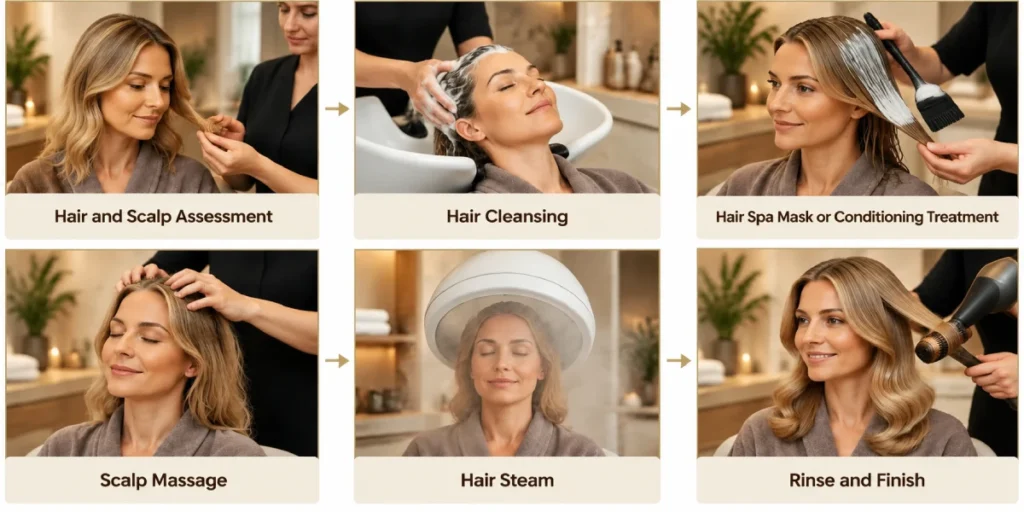
Every salon runs its own hair spa process. One steams your hair before the shampoo. Another skips the steamer and wraps a hot towel around the mask instead. L’Oréal Professional lays out its hair spa procedure as assessment, cleanse, treatment, massage, finish. Most of the hair spa steps below follow that order.
Hair and Scalp Assessment
Before any product comes out, a stylist starts with a hair and scalp assessment, lifting a few sections of your hair and rubbing the ends between two fingers. A quick look at the scalp follows. Then the questions start. When did you last color it? How many mornings a week does the flat iron come out?
Your hair texture steers the choice from there. Fine hair goes limp under a mask that coarse hair would drink up in minutes. Mention the frizz that won’t settle, or the blonde that’s gone brassy. That short conversation decides which products get used.
Hair Cleansing
Next comes the basin. Shampoo started out as the Hindi chāmpo, a word for pressing and kneading. English borrowed it in the 1700s to mean a massage. The soap came later.
Most stylists shampoo twice. Round one breaks up oil and last week’s dry shampoo. The second gets the hair properly clean. Thorough scalp cleansing is the groundwork for everything after it, since a mask can’t sink into hair that’s still coated. No detox involved.
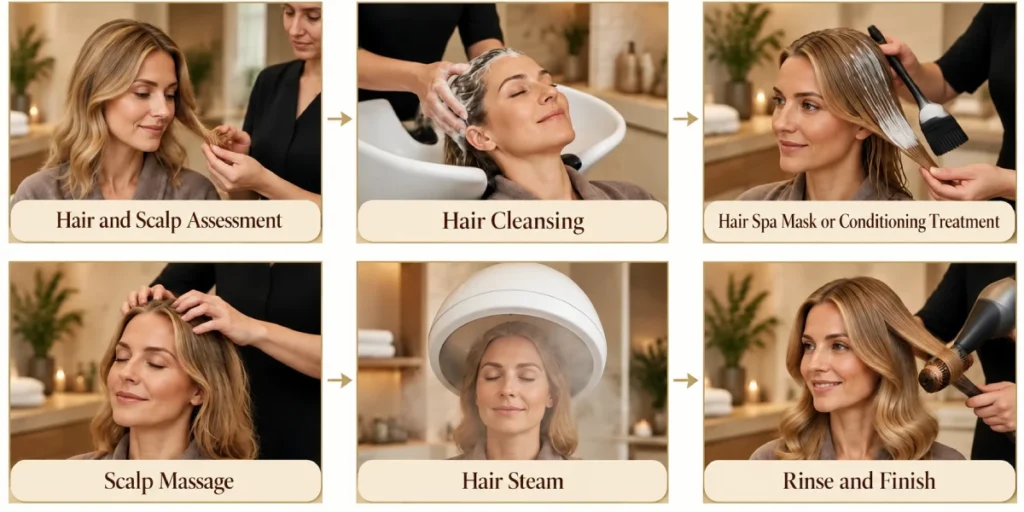
Hair Spa Mask or Conditioning Treatment
On goes the hair mask. A stylist works it through in sections, starting at the ends, where hair is oldest and driest, and stopping short of the roots so fine hair isn’t weighed down.
Dry hair gets a moisturizing formula. If frizz was the complaint, expect something smoothing. Bleached lengths get a protein-heavy repair mask. Then the mask sits. Some need only a few minutes. Richer ones stay on longer, usually with heat.
Scalp Massage
Now for the hair spa massage. Starting at the hairline, a therapist presses the pads of their fingers in slow circles back toward the crown. Nails stay out of it. The pressure is firm enough to feel and gentle enough to doze through.
It’s the quietest part of the appointment. Don’t be surprised if it’s the part you remember.
Hair Steam
Many salons add hair steaming at this point. A steamer rolls up behind your chair, or you move under a hood. Warm mist settles over the mask while you wait. That damp heat helps the treatment get further in.
Not every salon owns a steamer, though. Some use a warm towel instead, and a few skip heat entirely. Ask when you book. If steam is the part you want, a dedicated professional hair steam service is built around it.
Rinse and Finish
Back at the basin, the mask comes out under lukewarm water. Some stylists follow with a light conditioner. Wet hair is at its most fragile here. A good stylist detangles with a wide-tooth comb, working up from the ends in short strokes. A blow-dry or a quick style closes out the appointment.
You walk out with the full result on show.
What Are the Benefits of a Hair Spa?
One session feels good. Most of the hair spa benefits below build up over several visits. None of them are medical. The first appointment sets a baseline. Each one after it adds a little more. Three months is a fair trial before you judge the results.
Helps Improve Hair Moisture
Papery ends by day two? Regular visits can push that feeling toward the weekend. That steady hair nourishment feeds everything else on this list.
Makes Hair Feel Softer
Each visit leaves the lengths a little softer. Soft strands glide over a cotton pillowcase. Fewer of them snap while you sleep.
Improves Manageability
One pass with the comb. Less time with the blow-dryer. Less heat on your ends, too. Small, yes. You’ll notice it anyway.
Helps Reduce the Appearance of Dryness and Frizz
Topped up every few weeks, moisture stays at a steadier level. Between appointments, dry patches and frizz show up later than they used to.
Adds Smoothness and Shine
Regularly conditioned cuticles stay flatter. The salon gloss holds for a few washes. Skip the flat iron for a day, and it lasts longer.
Provides a Relaxing Treatment Experience
Part of the appeal is the hair spa experience itself, an hour or so with your phone out of reach and nobody asking anything of you.
Supports a Consistent Hair-Care Routine
A booked appointment is harder to skip than a jar on the bathroom shelf. It gives your hair care routine a fixed date on the calendar.
Who Can Benefit From a Hair Spa?
Most hair can use one. Plenty of women book a hair spa for upkeep. Men leave with the same soft finish. What changes from head to head is the mask. Fine hair needs something light. Coily hair can take a rich, heavy formula.
Hair Spa for Dry Hair
Does conditioner vanish into your hair while the ends stay rough by dinner? Start here. The ends are where you’ll feel the change first. Swimming laps make it worse. Pool chlorine strips the hair’s natural oil.
Hair Spa for Damaged Hair
Bleach roughs up the cuticle. So does a hot flat iron. Rough towel-drying adds to it. Conditioning smooths what’s still there. Broken strands don’t grow back together. For split ends, the fix is a trim.
Hair Spa for Frizzy Hair
Frizz comes from hair that’s short on moisture. Sealed with a conditioning mask, the flyaways settle for a while. A July afternoon will test the result.
Hair Spa for Dull Hair
Dullness has two usual causes: buildup sitting on the hair and a cuticle that’s gone rough. A thorough cleanse lifts the first. A mask smooths the second. Of everything on this list, shine is usually the quickest to come back.
Hair Spa for Color-Treated Hair
Do your ends turn coarse in the weeks following a color appointment? The lengths can stay porous afterward. That makes them dry out between washes. A mask between color visits helps them stay soft. Book it for the following week, once the pigment has settled.
Hair Spa for Chemically Treated Hair
A relaxer breaks bonds inside each strand to straighten curls. A perm breaks the same bonds to add curl. Keratin smoothing adds its own stress. All three can leave hair dry. Too soon after a perm, a hair spa can loosen the new curl.
Hair Spa for Heat-Styled Hair
Hear a hiss when the flat iron meets slightly damp hair? That’s water boiling off the strand. Daily blow-drying does the same thing at a gentler pace. A standing moisture top-up puts some of it back. It won’t undo years of heat. It does slow the slide.
Coily hair tends to run dry, partly because scalp oil has a hard time traveling down a spiral. A good Black hair spa leans on rich moisture and patient detangling. Experience with that texture counts for more than any product on the shelf.
A tight, flaky scalp may calm down after a hair spa for dry scalp. Flaking that keeps coming back is a question for a dermatologist. Japanese hair spa and Korean styles of Asian hair spa lean harder on the scalp than the strand.
Those get their own guides. Get the match right, and you’ll get long-term hair health benefits, whatever the texture. Serenity’s guide to head spa treatments for different hair types goes further.
How Often Should You Get a Hair Spa?
Any schedule you read online is a guess until someone has seen your hair. Two heads with the same haircut can need very different timing. A few things speed it up: color, bleach, daily heat, and a scalp that turns oily by day two. Hair that air-dries and almost never meets a flat iron can wait much longer.
Oily scalps change the menu. A heavy mask can leave fine hair limp by lunchtime. A lighter treatment suits it better. Product buildup counts as well. Heavy stylers and dry shampoo coat the hair. A clarifying cleanse may need to come first. Seasons play a part, too. Radiators dry hair out in January. Summer humidity frizzes it.
Start with a regular hair spa every few weeks and watch what happens between visits. If the dryness is back by week two, book sooner. If it holds, stretch the gap. A stylist who sees your hair every visit will fine-tune the timing better than any chart.
Hair Spa vs Regular Conditioner: What’s the Difference?
Both put moisture back. That’s where the confusion starts. They do different jobs. Conditioner is the thirty-second stop between shampoo and towel. A hair spa stretches deep conditioning into a full appointment, with steam and a scalp massage built in. The table lines them up:
| Factor | Hair Spa | Regular Conditioner |
|---|---|---|
| Purpose | Intensive conditioning and care | Routine conditioning |
| Process | Usually multi-step | Usually one step |
| Massage | May be included | Usually not |
| Steam | May be included | Usually not |
| Professional service | Usually yes | Usually no |
| Duration | Longer | Shorter |
| Customization | Matched to your hair | Mostly product-based |
These are typical patterns. Your salon may run things a little differently.
Keep the bottle in your shower for the days in between. Every few weeks, the salon session does the deeper work a bottle can’t.
Hair Spa vs Hair Treatment: What’s the Difference?
Ask a salon for a “hair treatment,” and you could get anything from a protein fix to keratin smoothing. The label says very little on its own. A hair spa is the all-round option. A targeted treatment chases one named problem. The table shows where they split.
| Hair Spa | Targeted Hair Treatment | |
|---|---|---|
| Main focus | Conditioning and appearance | A specific hair or scalp concern |
| Typical goal | Moisture, softness, manageability | Depends on the treatment |
| Approach | General hair care | More targeted |
| Frequency | Based on hair needs | Based on the treatment |
| Best starting point | Dry, dull, rough-feeling hair | A specific, persistent concern |
Pick by goal. For general upkeep on hair that’s dry or tired, a hair spa fits well. For one stubborn issue, a salon hair treatment built for that problem will do more. Many menus let you add a targeted step to the spa itself.
Hair Spa vs Head Spa: What’s the Difference?
Mixing these two up is easy. The names are nearly twins. Watch where the hands go. At a hair spa, they spend most of the appointment working a mask through your lengths. Head spa therapists stay up on the scalp instead, cleansing and massaging for scalp health until your shoulders drop. Compared directly:
| Hair Spa | Head Spa |
|---|---|
| Hair-fiber focused | More scalp-focused |
| Conditioning is central | Scalp cleansing and massage central |
| Prioritizes hair feel and look | Prioritizes scalp care and calm |
| May include mask and steam | May use several scalp techniques |
| Strand care is the goal | Scalp experience is the goal |
Start with your complaint. Dry, dull lengths point toward a hair spa. An oily or tense scalp points toward a head spa.
Want both in one visit? Some salons offer a combined hair spa and scalp treatment, sometimes billed as a hair spa and scalp massage.
How Much Does a Hair Spa Cost?
The hair spa price at any salon depends on too many moving parts for one honest number. An average pulled from thin air would only mislead you. Five things move it most:
- How long and thick your hair is
- Which treatment you pick, and what’s in the jar
- Time in the chair
- The salon’s zip code and the stylist’s experience
- Add-ons, like extra steam or a longer massage
That’s why the hair spa cost in the USA can look so different between a strip-mall salon and a downtown spa.
For current pricing on Serenity’s hair spa services, check the hair spa service page and your nearest location.
Is a Hair Spa Right for You?
Ends that snag on a sweater and shine that fades by midweek both point to a hair spa. Colored or relaxed hair points the same way. So does hair that meets a flat iron most mornings. If you’re mostly after an hour of quiet, the softer hair is a bonus. The service is built for hair that’s healthy underneath and tired on top.
When a Hair Spa May Not Be Enough
Some problems need a doctor. Ongoing shedding or thinning, breakage that seems to come out of nowhere, a scalp that stays itchy or sore, dandruff that won’t clear, any change you can’t explain: a conditioning treatment won’t fix any of them.
The American Academy of Dermatology advises seeing a board-certified dermatologist when better hair habits don’t turn things around, especially with thinning or hair damage.
Keep the hair spa for the hair you have. For anything that looks medical, book a dermatologist first. It’s the safer call.
Can You Do a Hair Spa at Home?
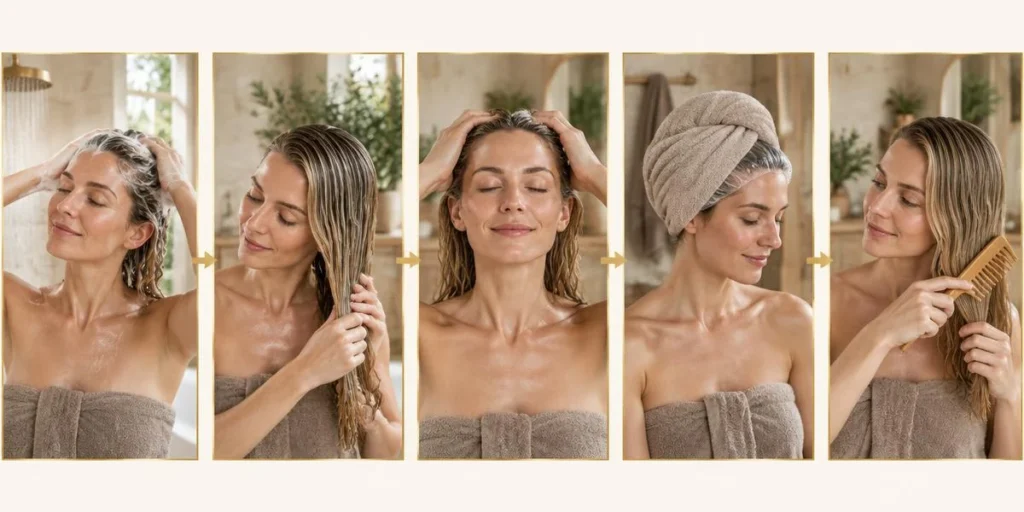
A Sunday-morning version at home gets you part of the way there. It won’t match a salon session. It does keep the progress going between visits. You’ll need a good mask and a shower cap. A towel warmed in the dryer helps, too. The routine:
- Wash with a gentle shampoo
- Work the mask through the mid-lengths and ends
- Massage your scalp with your fingertips for a few minutes
- Cover up with the shower cap and warm towel, if the product calls for heat
- Rinse with lukewarm water and detangle with a wide-tooth comb
What a bathroom can’t give you is a trained pair of hands, or a mask picked after someone has studied your hair up close. Use both. Each one makes the other go further.
Frequently Asked Questions About Hair Spa
What is a hair spa?
A salon conditioning session. Your hair gets a thick mask under steam while a therapist massages your scalp. It’s cosmetic care, aimed at hair that’s softer and simpler to style.
Is a hair spa good for dry and damaged hair?
Yes. Dry and damaged hair usually shows the biggest change of any type. Ends that have already split still need scissors.
How long does a hair spa treatment take?
About an hour at most salons. Quick versions run closer to 45 minutes. The longest rituals stretch to two hours.
How often should I get a hair spa?
Every few weeks is a fair starting point. Bleached or heat-styled hair may want it sooner. Your stylist can adjust after a couple of visits.
Is a hair spa the same as deep conditioning?
Not quite. Deep conditioning is one step inside a hair spa. The full service wraps a cleanse and a scalp massage around it, usually with steam.
What is the difference between a hair spa and a head spa?
A hair spa works on the strands. A head spa works on the scalp underneath, with deeper cleansing and a longer massage.
Can I get a hair spa if I color my hair?
Yes, and colored hair tends to benefit. Mention any recent color or bleach so your stylist can choose the right products and timing.
Does a hair spa help with frizzy hair?
It can. A sealed cuticle keeps flyaways down for a while, especially in sticky weather. Each wash undoes a little of the effect.
How much does a hair spa cost?
It depends on your hair’s length, the treatment, the products, and the salon. Check the service and location pages for current pricing.
Can I do a hair spa at home?
A simple version, yes. Shampoo, apply a mask, massage your scalp, and add a warm towel before you rinse. It won’t match a salon’s products or trained hands. It does help between visits.
Final Thoughts
A good hair spa leaves you with softer hair and an hour you didn’t spend answering email. Expect shine and moisture. Regrowth isn’t on the menu. The results build with each visit. Match the treatment to your hair and keep a weekly mask going at home.
Anything that looks medical goes to a dermatologist. When you’re ready for a session built around your own hair, start with Serenity’s hair spa service. There’s a Serenity hair spa salon in Springfield and another in Rockville. Book a hair spa near you at serenityheadspas.com.