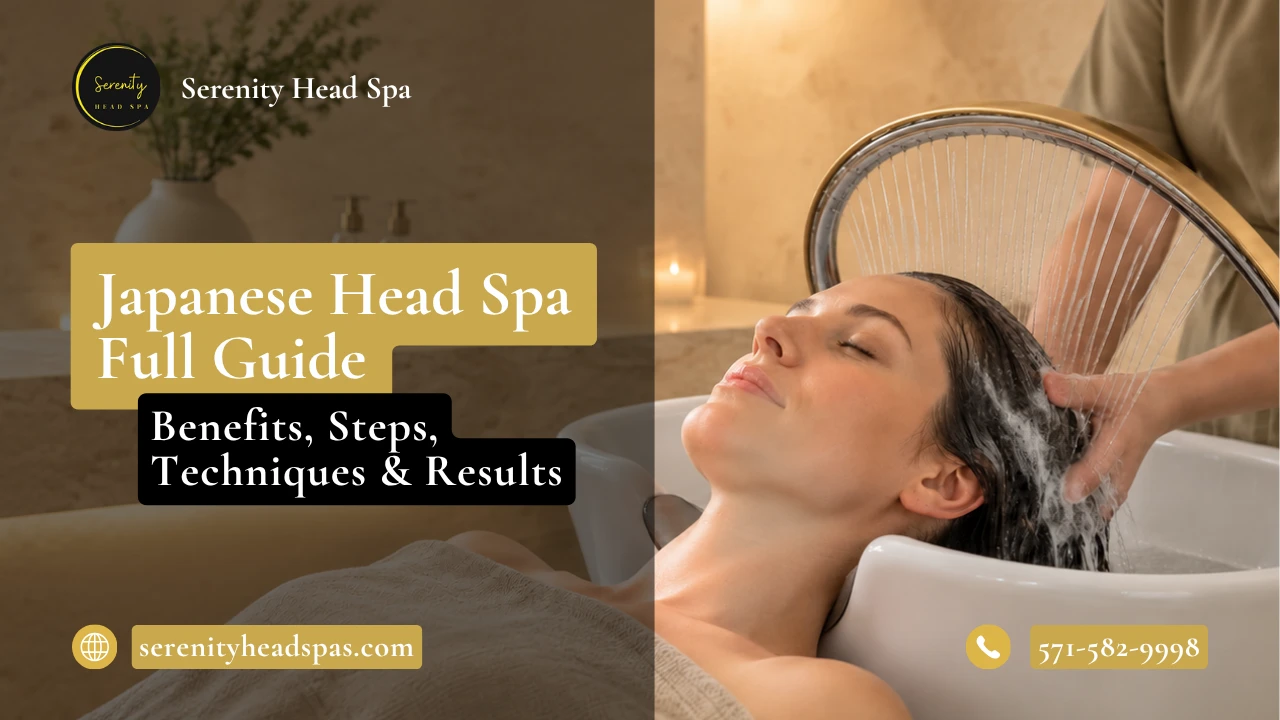
A Japanese head spa is more than a relaxing scalp massage. It combines deep scalp cleansing, Japanese hair washing techniques, massage, warm water, and hair treatments into one calming experience. If stress, scalp buildup, or tired-looking hair has you searching for a better self-care treatment, a Japanese head spa may be worth trying.
But what does a Japanese head spa actually involve? What happens during the treatment, and what can you expect when you book one?
In this guide, we’ll walk through the Japanese head spa treatment step by step. You’ll learn about Japanese head spa benefits, common head spa massage techniques, scalp care, hair-washing methods, and how often you may want a treatment.
If you’re considering head spa services in Rockville at Serenity Head Spa, this guide will give you a clear idea of what the experience can be like before you book.
What Is a Japanese Head Spa?
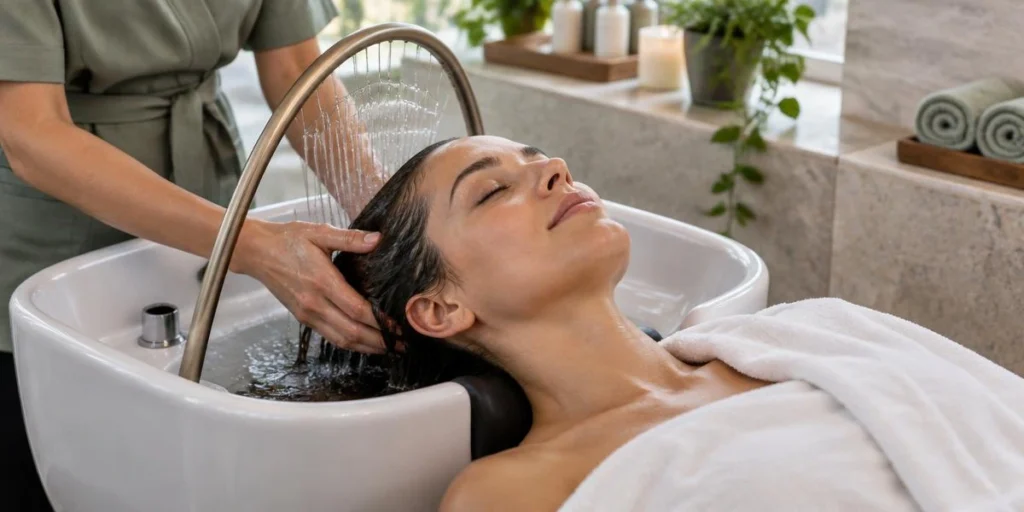
A Japanese head spa is a scalp-focused treatment that combines cleansing, massage, warm water, and hair care into one relaxing service. The treatment is often performed with you reclined comfortably while a therapist works through the scalp, hair, neck, and sometimes the shoulders.
A Japanese head spa treatment can start with a close look at the scalp. Your therapist may check for scalp buildup, excess oil, dryness, or other visible scalp concerns. From there, the treatment can include scalp exfoliation, shampooing, massage, warm-water rinsing, steam, and a conditioning or hair treatment mask.
So, what does a Japanese head spa consist of? The exact steps vary by spa, but the main focus stays on scalp cleansing, relaxation, and hair care. Some treatments put more attention on massage, while others spend more time on cleansing and conditioning.
You may hear terms such as Japanese scalp treatment, Japanese head treatment, or Japanese hair and scalp spa used to describe similar services. The name can vary, but the goal is usually the same: give your scalp and hair focused care while helping you relax.
What makes a Japanese head spa different?
A regular scalp massage may focus mainly on muscle tension and relaxation. A Japanese head and scalp spa takes a wider approach by bringing scalp cleansing and hair care into the treatment.
Massage is still a big part of it. Fingertip pressure, kneading, circular movements, and work around the temples, neck, and shoulders can make the session feel deeply calming. The cleansing side matters too. A therapist may use a scalp cleansing shampoo, exfoliation, warm water, or other Japanese hair care products based on your scalp condition.
This is one reason people look for an authentic Japanese head spa rather than booking a basic head massage. The experience is built around several connected steps rather than one massage technique.
So, what does a Japanese head spa involve? Think of it as a treatment that brings scalp care, hair washing, massage, and relaxation together. The exact process of a Japanese head spa depends on the spa and the treatment you choose, but the experience should feel calm, clean, and personalized to your needs.
What Are the Benefits of a Japanese Head Spa?
A Japanese head spa brings scalp cleansing, massage, warm water, and hair care into one treatment. That combination can make the experience feel very different from a standard shampoo or scalp massage.
The benefits of Japanese head spa treatments can vary from person to person. Some people book one for relaxation and stress relief. Others want help with scalp buildup, excess oil, dryness, or hair that feels dull after weeks of product use. The treatment can give you a clean, refreshed feeling from scalp to ends.
Deep Scalp Cleansing
One of the main Japanese head spa benefits is focused scalp cleansing.
Your scalp collects oil, sweat, dead skin cells, styling products, and other residue. Regular shampoo can remove much of it, but a professional Japanese scalp treatment may spend more time working around the scalp and hair roots.
A treatment can include exfoliation, cleansing shampoo, massage, and thorough rinsing. This can help remove scalp buildup and leave the scalp feeling cleaner.
For people with an oily scalp or frequent product use, deep scalp cleansing can be especially satisfying. Your hair may feel lighter at the roots after the treatment.
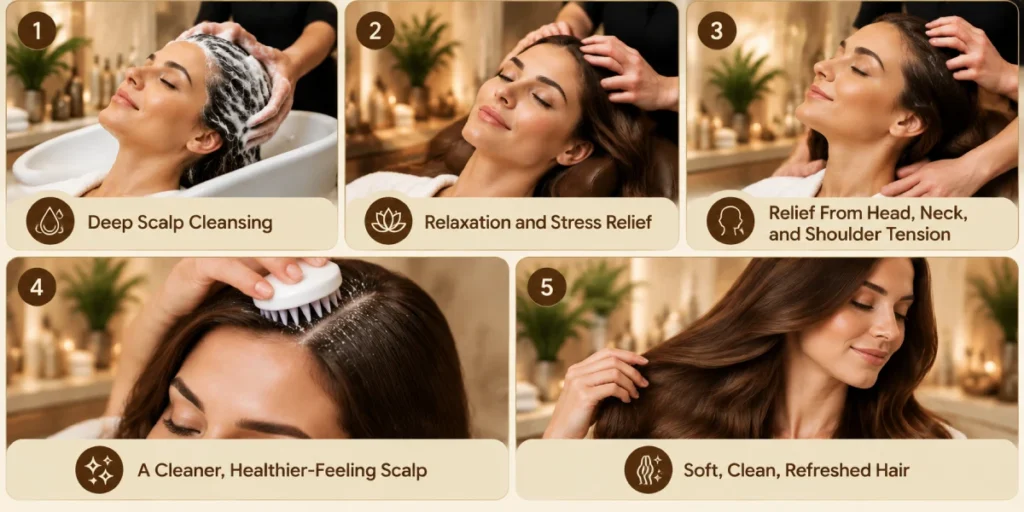
Relaxation and Stress Relief
Relaxation is another reason people seek a Japanese head spa for stress relief.
The scalp contains many sensory nerve endings, so gentle massage can feel soothing. Slow fingertip movements, kneading, pressure around the temples, and massage around the neck can help you settle into a calmer state.
A quiet room, warm water, steam, and steady massage can turn a regular appointment into dedicated self-care time. Some guests may feel sleepy during the treatment. That is hardly a bad thing when your schedule rarely gives you permission to switch off.
A scalp massage can feel especially good after long hours at a desk, screen time, or a busy day.
Relief From Head, Neck, and Shoulder Tension
A Japanese head spa does not stop at the scalp. Many treatments include massage around the temples, hairline, behind the ears, neck, and shoulders.
These areas can hold tension throughout the day. Gentle pressure-point massage and kneading can make the head and upper body feel more relaxed.
The treatment should feel comfortable rather than painful. Strong pressure is not automatically better. Your therapist can adjust the massage based on your comfort level and scalp condition.
A Cleaner, Healthier-Feeling Scalp
Good Japanese scalp care starts with keeping the scalp clean and comfortable.
Regular cleansing can help manage oil and residue. A treatment may include scalp exfoliation or other cleansing steps that leave the skin feeling fresh. People with dry or sensitive scalps may need a gentler approach, so the products and massage pressure should match their needs.
It is worth separating a clean, well-cared-for scalp from medical treatment. A Japanese scalp treatment can support a good personal care routine, but it does not diagnose or treat scalp diseases.
Soft, Clean, Refreshed Hair
The benefits can extend beyond the scalp.
Many Japanese head spa treatment sessions finish with conditioning, a hair mask, or another form of scalp hydration and hair care. This can leave the hair feeling soft, smooth, and easier to manage.
A hair treatment mask can give dry or tired-looking hair a more conditioned feel. Warm water and thorough rinsing can leave less residue behind, too.
So, what does a Japanese head spa do? It gives your scalp focused cleansing and massage, supports a comfortable scalp-care routine, and gives your hair a fresh, conditioned finish.
Are Japanese Head Spas Good for You?
For many people, the main benefits of head spa treatments are simple: relaxation, scalp cleansing, massage, and a pleasant hair-care experience.
The results are not the same for everyone. Your scalp type, hair condition, products, massage pressure, and treatment method all matter.
If you are looking for relaxation plus focused scalp and hair care, a Japanese head spa can be a worthwhile addition to your self-care routine. It should be viewed as a wellness and beauty treatment, not as a cure for hair loss or a medical scalp condition.
Japanese Head Spa Steps: What Happens During the Treatment?
Knowing the Japanese head spa steps can make your first appointment feel much more comfortable. The exact routine varies from one spa to another, but most treatments follow a similar flow.
You can expect some combination of consultation, scalp assessment, cleansing, exfoliation, shampooing, massage, warm water, steam, conditioning, and a final rinse. Some appointments are massage-focused. Others spend more time on scalp cleansing or hair care.
Here is what a typical Japanese head spa treatment step by step can look like.
1. Consultation and Scalp Analysis
The appointment usually starts with a short consultation.
Your therapist may ask about your hair-washing routine, scalp concerns, recent chemical treatments, sensitivities, or products you currently use. A visual scalp analysis or scalp assessment may follow.
This gives the therapist a better idea of your scalp condition before treatment begins. They may notice oiliness, dryness, visible buildup, or areas that need gentler handling.
If you have extensions, recent color, a scalp condition, or product sensitivities, mention them before the treatment starts.
2. Japanese Head Spa Set Up
Once the consultation is finished, you are positioned for the treatment.
A Japanese head spa set up often includes a reclining or shampoo-style station where your head and neck can remain supported. The room may be quiet and dimly lit, with soft lighting or calming sounds.
Your therapist prepares the products and equipment based on the treatment you booked.
Comfort matters here. Your neck should feel supported, and you should be able to tell the therapist if the water temperature or position needs adjusting.
3. Scalp Preparation and Exfoliation
The scalp is prepared before deeper cleansing begins.
Depending on your treatment, this may include a gentle scalp exfoliation to loosen dead skin cells, oil, and product residue. Some treatments use a scalp brush or another tool to help work through buildup.
This stage supports the cleansing process without requiring aggressive scrubbing.
If your scalp is sensitive, tell your therapist before exfoliation. A gentler approach may be more suitable.
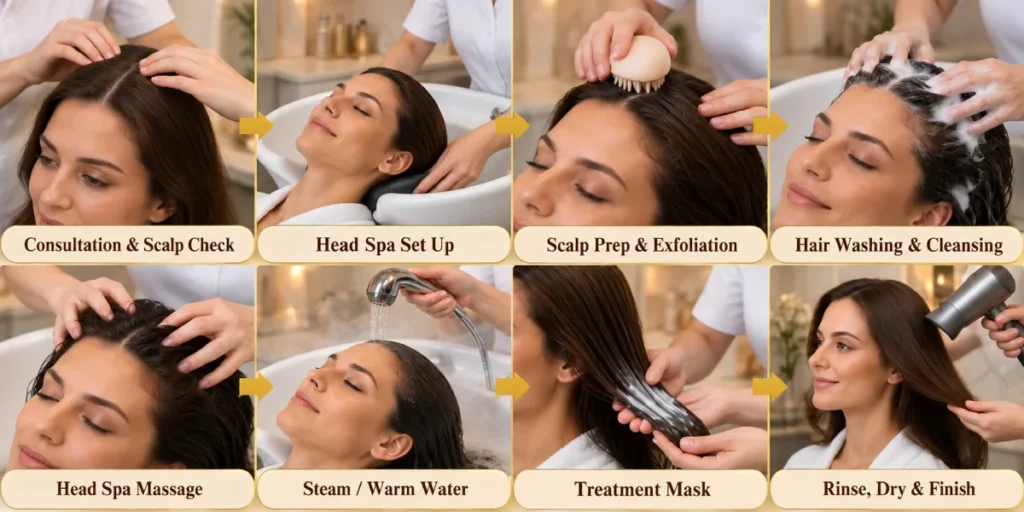
4. Japanese Hair Washing and Scalp Cleansing
This is one of the most recognizable parts of the experience.
The therapist wets the hair and scalp with warm water before applying cleanser. Rather than rushing through the shampoo, they work carefully across the scalp and roots.
A Japanese hair washing technique may involve controlled water flow, thorough product distribution, and massage through different areas of the scalp.
You may hear this described as a Japanese hair wash, Japanese head wash, or Japanese hair washing. The names vary, but the focus is careful cleansing paired with a relaxing experience.
The therapist may spend extra time around the crown, temples, hairline, and behind the ears. These areas can collect oil and product residue.
A second cleanse may be used when needed. The goal is a clean scalp without leaving the skin feeling stripped or uncomfortable.
What is the Japanese hair washing technique?
There is no single universal method used by every spa. In general, the technique combines thorough wetting, cleanser application, scalp massage, controlled rinsing, and careful handling of the hair.
Water temperature, pressure, product choice, and massage style can all vary.
5. Japanese Head Spa Massage
Now comes the part many guests look forward to most.
The therapist uses their fingertips to massage the scalp with different movements. Common head spa massage techniques include circular movements, gentle kneading, fingertip pressure, and focused work around the temples and crown.
The hairline, area behind the ears, and base of the skull may receive attention too.
Some therapists incorporate pressure-point massage or techniques inspired by traditional Japanese massage styles. The aim is relaxation and comfortable stimulation rather than painful pressure.
A good massage changes pace throughout the treatment. Some movements are slow and gentle. Others use slightly firmer pressure across areas that feel tense.
6. Steam and Warm-Water Treatment
Warm water can make the cleansing stage feel especially relaxing.
Some treatments include a hair steam treatment to create warmth around the scalp and hair. Others use flowing warm water or a waterfall-style rinse.
This stage may help loosen residue and prepare the hair for conditioning or another treatment product.
The sensation should be soothing, not uncomfortably hot. Tell your therapist if the temperature feels too warm.
7. Hair Treatment Mask or Scalp Treatment
After cleansing and massage, the focus can shift to conditioning the hair and scalp.
A hair treatment mask may be applied to the lengths and ends, while a separate scalp product may be used when appropriate. Some services include a moisturizing treatment for dry-feeling hair.
The products used can vary based on hair texture, scalp needs, and the package you select. Japanese hair treatments may include conditioning products, masks, serums, or other hair-care formulas.
This part can leave the hair feeling softer and smoother after rinsing.
8. Final Rinse, Drying and Finishing
The treatment finishes with a thorough rinse to remove cleanser and treatment products.
Your therapist may gently towel-dry the hair before using a hair dryer on an appropriate setting. Some services include basic styling, though this depends on the spa and package.
The final stage of Japanese hair care is about leaving the hair clean, comfortable, and manageable.
By the time the head spa treatment steps are complete, you have moved through several stages: scalp preparation, cleansing, massage, warm water, conditioning, and drying.
That is what makes the experience different from simply washing your hair at home. You are giving the scalp and hair focused attention from start to finish.
Japanese Head Spa Techniques Explained
The massage side of a head spa is often what makes the treatment feel so relaxing. Different movements can be used across the scalp, temples, neck, and shoulders.
The exact Japanese head spa techniques used will depend on the therapist and treatment package. Some sessions use very gentle movements. Others include firmer kneading and pressure-point work.
Here are some of the most common head spa massage techniques you may experience.
Scalp Kneading
Kneading uses the fingertips to gently move and work the scalp.
The therapist may move through the crown, sides, and back of the head in a slow rhythm. The pressure can vary depending on your comfort level and scalp condition.
This technique can feel particularly soothing when your scalp feels tight after a long day.
Pressure-Point Massage
A therapist may apply controlled pressure to selected areas of the scalp and around the temples.
This is sometimes described as a pressure-point massage. The pressure should feel purposeful but comfortable. It should never leave you wincing or trying to pull your head away.
The temples, hairline, crown, and base of the skull may receive focused attention during this part of the treatment.
Circular Scalp Massage
Small circular movements are another common head spa technique.
The therapist moves the fingertips across sections of the scalp instead of rubbing the hair itself. The movement can be slow and repetitive, which helps create the calm rhythm many people associate with a head spa.
A fingertip massage can be used around the hairline, crown, sides of the head, and behind the ears.
Neck and Shoulder Massage
Scalp tension does not always feel limited to the scalp.
That is why some treatments include neck massage and shoulder massage. Gentle kneading can be used around the upper neck and shoulders, particularly if you spend much of your day sitting at a desk or looking down at a screen.
The pressure should remain within your comfort level. If you have an injury, chronic pain, or another health concern, tell the therapist before the massage begins.
Steam, Water, and Hydrotherapy
Massage is only part of the experience. Warm water and steam can create another calming sensation.
Some spas use flowing water over the scalp as part of the rinse or cleansing process. Others include steam before conditioning or hair treatment.
This type of hydrotherapy can make the cleansing stage feel more relaxing and help create a clear transition between washing and the treatment stage.
How Do These Techniques Work Together?
A good session does not need every technique listed above. The therapist may combine several movements based on the treatment you booked and how your scalp feels that day.
The result is a treatment that moves between cleansing, massage, warmth, and hair care rather than relying on one single head spa technique.
That variety is part of what makes the experience feel different from a quick shampoo or a standard scalp massage.
Japanese Hair Washing Technique: How Does It Work?
A Japanese hair washing technique gives more attention to the scalp, water flow, massage, and rinsing than a rushed shampoo at home. The exact method can vary by spa, but the basic sequence is fairly simple.
Japanese Hair Washing Technique Step by Step
The Japanese hair washing technique step by step approach focuses on gentle cleansing, scalp massage, thorough rinsing, and careful conditioning. Each stage is performed with attention to the scalp and hair, creating a clean, comfortable, and relaxing wash.
1. Wet the scalp and hair
The therapist thoroughly wets the hair and scalp with comfortably warm water. This helps prepare the hair for cleansing and allows the shampoo to spread more evenly.
2. Apply cleanser
A suitable cleanser or shampoo is applied to the scalp. Product choice may depend on oiliness, dryness, sensitivity, and the condition of the hair.
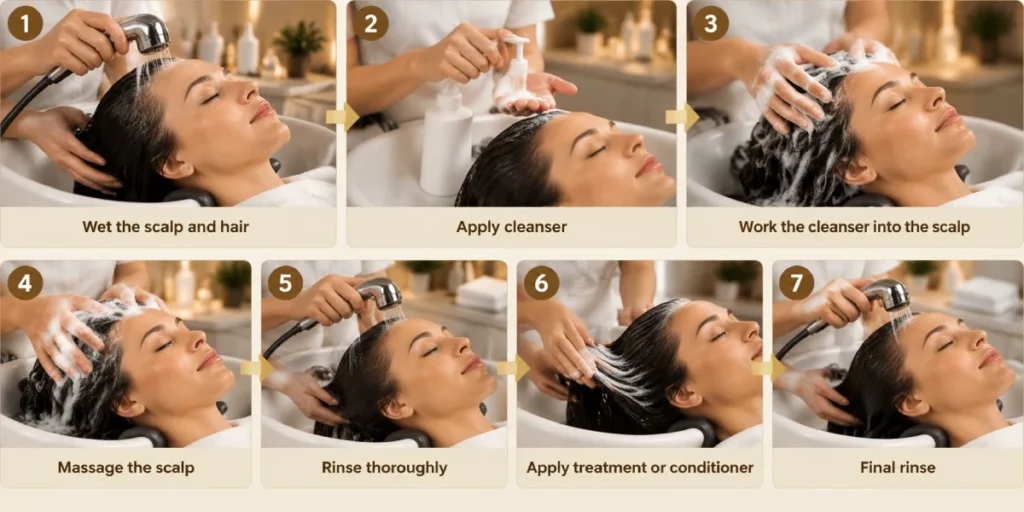
3. Work the cleanser into the scalp
Rather than aggressively rubbing the hair, the therapist works the product across the scalp with the fingertips. The crown, sides, hairline, and area behind the ears may receive extra attention.
4. Massage the scalp
This is where Japanese hair washing can feel especially relaxing. Gentle circular movements, kneading, and fingertip pressure can be combined with the cleansing process.
5. Rinse thoroughly
The scalp and hair are rinsed carefully with warm water. Thorough rinsing helps remove cleanser and loosened residue from the hair and scalp.
6. Apply treatment or conditioner
A conditioner or hair treatment may be applied to the lengths and ends. Some services include a deeper conditioning product or mask.
7. Final rinse
The hair is rinsed again before being gently dried and finished.
Does Japanese Hair Washing Help Hair Growth?
You may see searches for Japanese hair washing technique for hair growth, but it is important to keep expectations realistic.
Good scalp hygiene can support a clean and comfortable scalp. Massage can feel relaxing, and regular cleansing can help remove excess oil and product residue. None of this makes the washing method a proven hair-growth treatment.
Hair growth and hair loss can have many causes, including genetics, hormones, nutrition, medication, illness, and scalp conditions. A head spa should be viewed as part of Japanese hair care and scalp maintenance, not as a treatment that guarantees new hair growth.
The same applies to claims that a particular Japanese hair washing method will automatically make hair grow faster or thicker. A careful washing routine can support healthy-looking hair, but it cannot replace professional care for persistent hair-loss concerns.
What to Expect During Your First Japanese Head Spa
Your first Japanese head spa treatment is usually calm and straightforward. Most of the session takes place while you recline comfortably.
Before the Treatment
Your therapist may ask about your hair routine, scalp concerns, sensitivities, recent chemical treatments, or extensions. A quick scalp assessment can help determine which products and techniques suit you.
During the Treatment
So, what happens at a head spa?
You can expect scalp cleansing, shampooing, massage, warm water, and conditioning. Some treatments include steam, neck massage, or shoulder massage too.
The therapist may work around the crown, temples, hairline, and base of the skull. Water temperature and massage pressure can usually be adjusted for comfort.
What Does a Japanese Head Spa Feel Like?
The treatment can feel warm, soothing, and refreshing. Gentle massage may help you relax, and many people become sleepy during the session.
Afterward, your scalp should feel clean and refreshed, and your hair may feel softer and easier to manage.
Japanese Head Spa vs. Other Scalp Treatments
A Japanese head spa can look similar to a scalp massage or other hair treatments, but the focus is different. The table below gives you a quick comparison.
| Treatment | Main Focus | What You May Experience |
| Japanese head spa vs scalp massage | Scalp care + relaxation | Cleansing, massage, warm water, conditioning |
| Head spa vs scalp massage | Relaxation and tension | Mainly massage and pressure-point work |
| Japanese head spa vs regular scalp treatment | Scalp and hair care | Cleansing, exfoliation, massage, and hair treatment |
| Korean vs Japanese head spa | Both focus on relaxation and scalp care | Techniques, products, water treatments, and massage styles can differ by spa |
Korean vs Japanese Head Spa
A Korean vs Japanese head spa comparison can be tricky since there is no single treatment method followed by every spa.
Japanese-style treatments often place strong attention on scalp cleansing, massage, warm water, and hair care. Korean-style services may place more focus on scalp treatments, product-based care, or specialized scalp analysis.
There can be plenty of overlap. The actual experience depends more on the spa, therapist, products, and treatment package than the country name alone.
Does a Japanese Head Spa Help With Hair Growth?
So, does Japanese head spa help with hair growth? The short answer is: it is not a proven hair-growth treatment.
A head spa can support good scalp health through regular cleansing, massage, and hair care. Removing excess oil and product buildup can help keep the scalp clean and comfortable. Massage can feel relaxing too.
You may see claims that does head spa help hair growth or that do head spas help with hair growth through improved circulation. These claims should be treated carefully. There is no guarantee that a head spa will make hair grow faster or reverse hair loss.
Your Japanese scalp care routine can still be useful for keeping the scalp clean and your hair feeling healthy. If you are experiencing ongoing thinning, sudden hair loss, or noticeable changes in your scalp, a qualified medical professional can help identify the cause.
Think of a head spa as supportive scalp and hair care, not a hair-loss treatment.
Japanese Head Spa for Different Scalp Types
A head spa should match your scalp rather than follow the exact same routine for everyone. Your scalp type can affect the products, cleansing intensity, massage pressure, and treatment frequency.
Oily Scalp
If your scalp becomes greasy quickly, thorough cleansing can help remove excess oil and product residue. A suitable cleansing treatment may leave the roots feeling lighter without aggressively scrubbing the skin.
Dry or Flaky Scalp
Dry scalps need a gentler approach. Strong exfoliation or very hot water may leave the skin feeling uncomfortable. Hydrating products and a softer massage can be more suitable.
Flaking can have different causes, so persistent or severe symptoms should be checked by a healthcare professional rather than treated as simple dryness.
Sensitive Scalp
If your scalp reacts easily to products or pressure, tell your therapist before treatment. They can adjust the massage and product selection. Fragrances, essential oils, or strong exfoliating products may not suit everyone.
Product Buildup
Heavy use of dry shampoo, styling products, oils, or leave-in treatments can leave residue around the roots. A deeper cleansing session can help remove this buildup and leave the scalp feeling fresher.
Color-Treated or Chemically Treated Hair
Recently colored, bleached, straightened, or chemically treated hair may need extra care. Tell your therapist what treatment you have had and when. They can choose gentler products and avoid unnecessary friction.
The right treatment is less about choosing the strongest cleanse and more about matching the service to your scalp and hair condition.
Japanese Head Spa Preparation and Aftercare
A little preparation can make your appointment more comfortable, and simple aftercare can help your hair and scalp feel good after the treatment.
Before Your Appointment
Tell your therapist about scalp sensitivities, allergies, recent coloring or chemical treatments, and hair extensions. Avoid applying heavy oils or styling products right before your appointment if possible.
If you have a scalp condition or irritation, mention it before treatment so the therapist can decide whether the service is suitable.
After Your Appointment
Keep your post-treatment routine gentle. Follow any product recommendations from your therapist and avoid loading the scalp with heavy styling products immediately afterward.
Your Japanese hair care routine can include gentle cleansing, suitable conditioning, and products that match your scalp type. You do not need a complicated routine to maintain clean, comfortable hair.
Japanese Head Spa FAQs
Got questions about the treatment, from what happens during a session to how often you should book one? These answers cover the most common questions about Japanese head spa treatments, scalp care, safety, hair growth, and what to expect.
What is a Japanese head spa?
A Japanese head spa is a scalp and hair treatment that combines cleansing, massage, warm water, and conditioning. The exact steps vary by spa, but the focus is usually on scalp care and relaxation.
What does a Japanese head spa consist of?
A typical treatment may include a scalp assessment, cleansing, exfoliation, shampooing, massage, warm water, steam, conditioning, and drying. Your treatment package determines which steps are included.
What happens at a head spa?
You usually recline while the therapist cleanses your scalp, washes your hair, performs a scalp massage, and applies hair treatments. Some services include steam, neck massage, or shoulder massage.
How long does a Japanese head spa take?
Treatment time varies by package. A basic service may be shorter, while treatments with scalp analysis, extended massage, steam, hair masks, and styling can take longer.
How often should you get a Japanese head spa?
There is no universal schedule. Some people book occasional treatments for relaxation, while others prefer regular scalp maintenance. Your scalp type, hair condition, and treatment response can help determine a suitable frequency.
Can you get a Japanese head spa with extensions?
Possibly, but tell the spa about your extensions before booking. Some massage, washing, or product techniques may need to be adjusted depending on the extension type and attachment method.
Does a Japanese head spa help with dandruff?
A treatment may remove oil and surface buildup, but it should not be treated as a cure for dandruff. Persistent itching, heavy flaking, redness, or irritation may need assessment by a healthcare professional.
Are Japanese head spas good for you?
For many people, they can be a pleasant form of scalp care and relaxation. They can help with cleansing, massage, and hair conditioning, but they are not a substitute for medical treatment.
Can you get a Japanese head spa while pregnant?
Ask the spa about its pregnancy protocol before booking. Products, essential oils, water temperature, positioning, and massage techniques may need to be adjusted. If you have concerns, speak with your doctor or midwife first.
Can men get a Japanese head spa?
Yes. Japanese head spa treatments are suitable for men and women. Scalp type, hair length, and personal concerns matter more than gender when choosing products and treatment techniques.
Final Thoughts
A Japanese head spa brings scalp cleansing, massage, hair washing, and relaxation into one treatment. From the Japanese head spa treatment steps to the massage techniques and hair-care stages, each part has a clear purpose.
It can be a great choice for relaxation, scalp care, and a fresh hair-care experience. Just keep expectations realistic. It is not a guaranteed hair-growth treatment or a replacement for medical care.
For anyone interested in Japanese hair care and Japanese scalp care, a head spa can be a relaxing addition to a regular self-care routine.