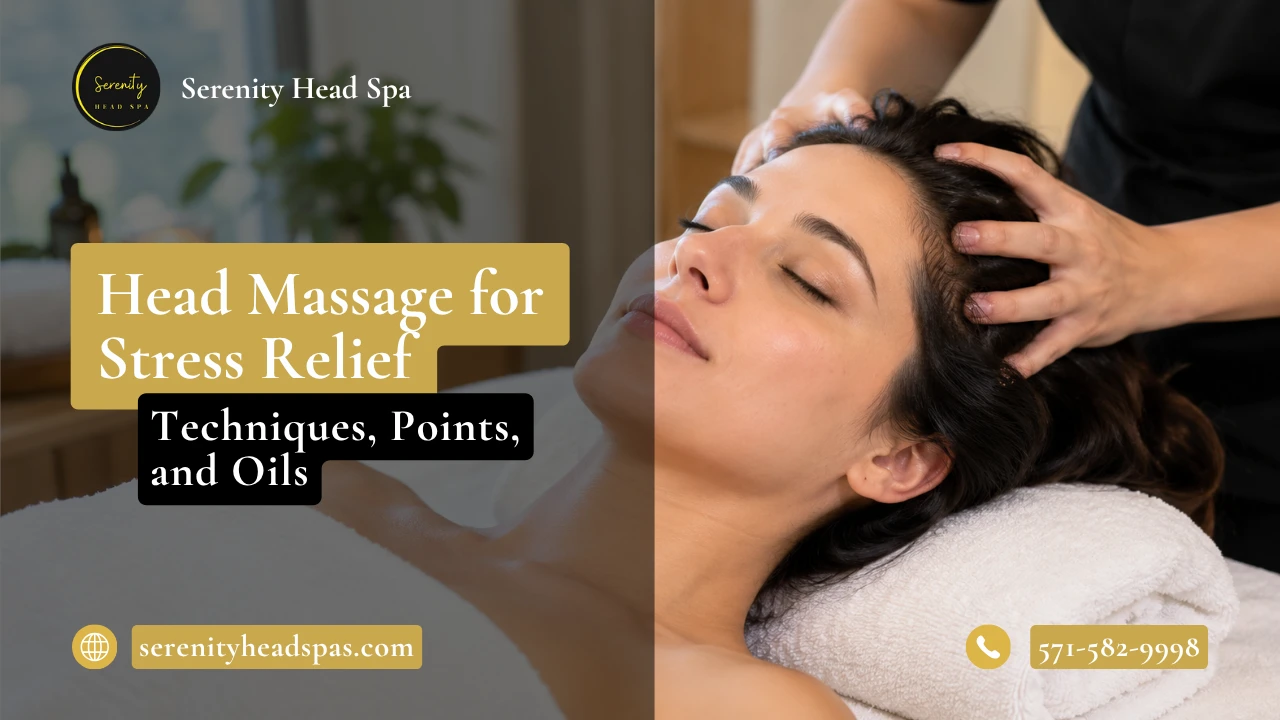
Stress can leave you feeling tense, restless, or mentally tired. A head massage for stress relief can offer a simple way to slow down, ease everyday tension, and create a quiet break during your day.
A gentle massage of the scalp, temples, forehead, neck, and shoulders may help you feel more relaxed. You can perform a head massage at home with your fingertips, or receive a professional treatment in a quiet spa setting.
Different massage techniques can suit different areas of tension. Gentle circular scalp movements, temple massage, forehead massage, and base-of-skull massage can all be included in a relaxing routine. Massage oil is optional, depending on your preference.
In this guide, you’ll learn how head massage may help with stress relief, which head massage techniques and points you can try, how to choose a head massage oil, and how to give yourself a relaxing head massage at home. You’ll also learn how long to massage your head, how often to do it, and when a professional treatment may be a better choice.
For a professional scalp-focused treatment, see our scalp massage service.
How Can Head Massage Help With Stress Relief?
A head massage for stress relief can help relax tight muscles around the scalp, temples, forehead, neck, and shoulders. Slow, gentle movements can create a calming routine when you feel mentally tired or physically tense.
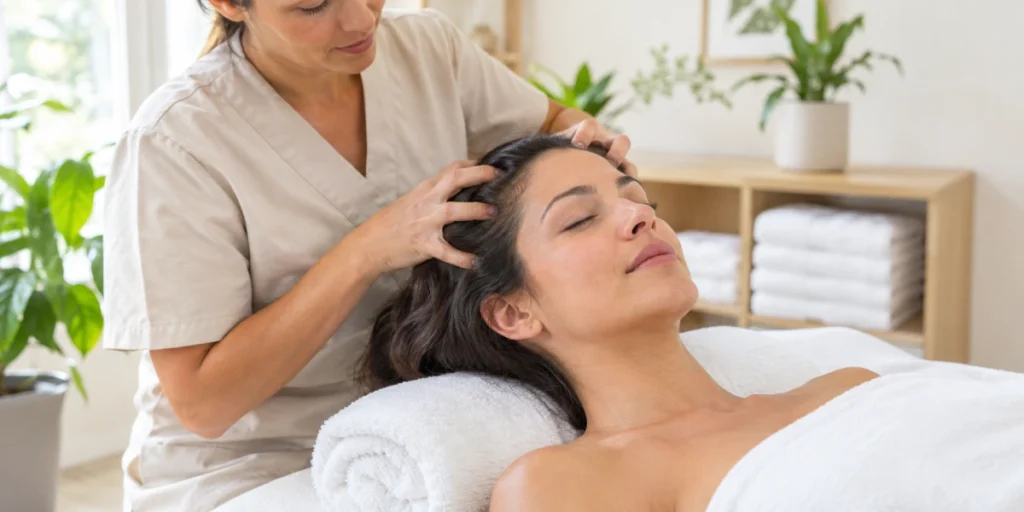
One of the main head massage benefits is the feeling of relaxation that can follow a few minutes of gentle massage. Focusing on the scalp and areas where tension builds can help you pause, slow your breathing, and release some of the physical tension linked with a stressful day.
A scalp massage for relaxation can be done with your fingertips without any special equipment. Small circular movements across the scalp, gentle pressure at the temples, and slow strokes around the base of the skull can form a simple routine.
Head massage may be useful during short breaks, before bed, or after a long period of work. The goal is not to press hard. Comfortable pressure and slow movements are usually more suitable for a relaxing massage.
Can Head Massage Help With Anxiety?
A head massage for anxiety may help create a calmer physical state when stress or nervous tension builds. Massage should not replace professional care for ongoing or severe anxiety, yet it can be used as one simple relaxation activity.
For people who carry tension in the scalp, forehead, neck, or shoulders, a short massage can provide a quiet pause and help the body settle before returning to normal activities.
Best Head Massage Techniques and Points for Stress Relief
You do not need a complicated routine to give yourself a relaxing head massage. Start with light pressure and slow movements, then spend a little more time on areas that feel tense.
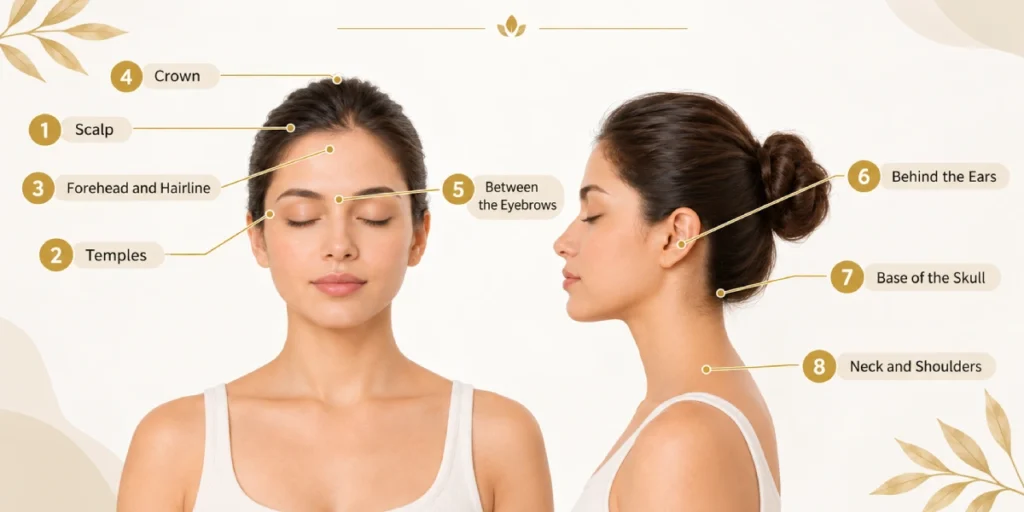
Gentle Circular Scalp Massage
Place your fingertips on your scalp and make small, slow circles. Start near your hairline and gradually move across the top and back of your head.
This is one of the simplest head massage techniques for stress relief. Keep your nails away from the scalp and use your fingertips instead. . If you are also interested in scalp massage beyond relaxation, read our guide to head massage for hair growth.
Temple Massage
Place two or three fingertips on each temple. Make small circles for around 30 seconds, then pause and take a few slow breaths.
Keep the pressure comfortable. Your temples can be sensitive, so there is no need to press hard.
Forehead and Hairline Massage
Start at the centre of your forehead and gently massage towards your temples. You can then follow the hairline with small circular movements.
This can feel particularly soothing after a long day of reading, working, or looking at a screen.
Crown Massage
Place your fingertips around the crown of your head and move them in small circles. Work across the area slowly rather than pressing firmly in one spot.
Between-the-Eyebrows Massage
Place one fingertip between your eyebrows and make gentle circular movements. Move along the brow line towards the temples.
This can be a nice addition to your routine if you have been concentrating for several hours.
Behind-the-Ears Massage
Use your fingertips to massage the soft area behind your ears. Make small circles and slowly move down towards the upper neck.
Base-of-Skull Massage
Place your fingertips where the bottom of your skull meets your upper neck. Massage the soft areas on either side of the spine using gentle circles.
This is one of the head massage points for stress relief you can focus on if you often feel tension around your upper neck. If that tension is also associated with headaches, learn more about massage for headache relief and the techniques commonly used around the head, neck, and shoulders.
Neck and Shoulder Massage
Finish by gently massaging your upper neck and shoulders. Use your fingertips or the flat part of your hand and move slowly across areas that feel tight.
If you carry a lot of tension in these areas, a dedicated neck and shoulder massage can give them more focused attention.
How Much Pressure Should You Use?
The right pressure should feel comfortable, not painful. Start gently and increase the pressure only if it feels good. Stop if you feel sharp pain, dizziness, numbness, or unusual discomfort.
These head massage points for stress relief can be part of a relaxing routine. They should not be treated as a way to diagnose or treat a health condition.
Tips for a More Relaxing Head Massage
For the best experience, keep these simple points in mind:
- Use your fingertips rather than your fingernails.
- Start with light pressure and increase it only if comfortable.
- Keep movements slow and controlled.
- Avoid pressing hard on sensitive areas.
- Relax your shoulders while massaging.
- Breathe slowly and avoid rushing through the routine.
- Stop if you experience pain or scalp irritation.
You do not need to use every technique in one session. Choose the areas where you notice the most tension and focus on gentle, comfortable movements
What Is the Best Head Massage Oil for Stress Relief?
The right oil can make a head massage feel smoother and more relaxing, but you do not need oil to massage your head. Your choice can come down to your scalp type, scent preference, and how the oil feels on your skin.
If you are looking for the best head massage oil for stress relief, these are a few common options to consider.
Lavender Oil
Lavender is often chosen for its gentle, calming scent. If you enjoy aromatherapy during massage, a lavender-based massage oil can make the experience feel more relaxing.
Never apply undiluted essential oil directly to your scalp. Use a properly diluted product or follow the instructions on the product label.
Coconut Oil
Coconut oil is a simple option for scalp massage. It has a smooth texture and can make it easier for your fingers to move across the scalp without pulling the hair.
If your scalp becomes oily easily, use a small amount and wash your hair after the massage when needed.
Almond Oil
Almond oil has a light texture that works well for massage. A small amount can help your fingertips move smoothly across the scalp and hairline.
Avoid almond oil if you have a known nut allergy.
Rosemary Oil
Rosemary oil is often used in scalp and hair-care routines. For massage, choose a properly diluted product rather than applying concentrated essential oil directly to your skin.
Herbal Massage Oils
Herbal massage oils can contain a blend of plant-based oils and essential oils. Check the ingredients before use, particularly if you have sensitive skin or known allergies. If itching is already a concern, learn more about ways to relieve scalp itchiness before choosing your scalp-care routine.
The head massage oil for stress relief you choose does not need to be expensive. Pick an oil that feels comfortable on your scalp and has a scent you enjoy. If you prefer a massage without oil, clean hands and gentle fingertips work perfectly well.
How to Give Yourself a Head Massage for Stress Relief
You can give yourself a head massage at home without any special equipment. Find a comfortable place, put your phone aside, and give yourself a few quiet minutes.
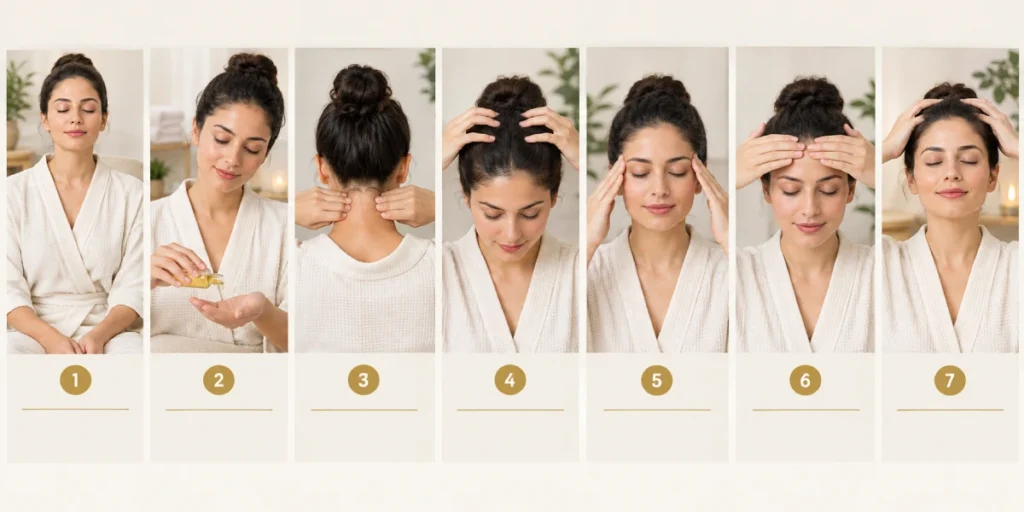
Step 1: Get Comfortable
Sit or lie somewhere comfortable. Let your shoulders drop and take a few slow breaths before you start.
Step 2: Choose Oil or Go Without It
You can use a small amount of your preferred massage oil or massage your scalp with clean, dry hands. If you use oil, keep the amount small so your scalp and hair do not become overly greasy.
Step 3: Start at the Neck
Place your fingertips on the upper neck, just below the base of your skull. Make slow circles for about 30 seconds.
Step 4: Massage Your Scalp
Move your fingertips onto your scalp. Start near the front and work towards the crown and back of your head. Use small circular movements and keep the pressure comfortable. Move your fingers rather than dragging your nails across the skin.
Step 5: Massage Your Temples
Place your fingertips on your temples and make slow circles. Spend around 30 seconds on each side.
Step 6: Massage Your Forehead
Move your fingertips along your forehead and hairline. Start in the centre and slowly work towards the temples.
Step 7: Finish With Slow Strokes
Place your hands on the sides of your head and make a few slow movements across the scalp. Take a few deep breaths and let your shoulders relax.
A head massage for stress relief can take only five to ten minutes. You can make the routine shorter or longer based on how you feel that day.
Tips for a More Comfortable Self-Massage
For a simple and relaxing routine:
- Keep your fingernails away from the scalp.
- Start with light pressure.
- Move slowly rather than rushing between areas.
- Keep your shoulders relaxed.
- Breathe naturally throughout the massage.
- Use oil only if you find it comfortable.
- Stop if you experience pain, irritation, dizziness, or unusual discomfort.
If you prefer having someone else perform the massage, a professional scalp massage service can provide a more hands-on experience.
How Long Should You Massage Your Head for Stress Relief?
You do not need a long massage to take a relaxing break. For most people, 5 to 10 minutes is enough for a simple head massage at home.
If you have more time, you can extend the massage to around 15 minutes. Focus on the areas where you tend to hold tension, such as the temples, scalp, base of the skull, neck, and shoulders.
A short routine can work well during a busy day. You might massage your head for a few minutes after work, before bed, or whenever you notice yourself feeling tense.
There is no fixed amount of time that everyone needs. Pay attention to how your scalp, head, and neck feel. If the massage starts to feel uncomfortable, stop rather than continuing for longer.
For a head massage for stress relief, slow and comfortable movements matter more than spending a long time on the massage.
How Often Should You Get or Perform a Head Massage for Stress Relief?
There is no set schedule for a relaxing head massage. If you are wondering how often should you get a massage, the answer can depend on your routine, comfort, and the type of massage you are having.
Some people enjoy a few minutes of scalp or head massage several times a week. Others prefer a longer session once a week or a professional treatment from time to time.
For a home routine, keep the pressure gentle. Give your scalp a break if it feels sore, irritated, or tender. A massage should leave you feeling comfortable rather than painful.
You can fit head massage stress relief into your routine after a long workday, during a quiet evening, or before bed. A short session can be enough when you simply want a few minutes to relax.
If you prefer professional treatments, the frequency can depend on your personal preference, budget, and how your scalp feels after each session. There is no need to follow a strict schedule for head massage for stress relief.
When Should You Skip a Head Massage?
Avoid head massage if you have an open wound, fresh scalp irritation, a recent head injury, or an area that is painful without a known cause.
Stop the massage if you experience:
- Sharp or increasing pain
- Dizziness or feeling faint
- Numbness or tingling
- A sudden or severe headache
- Nausea or unusual discomfort
- Skin irritation, burning, or swelling
A sudden severe headache, headache after a head injury, loss of consciousness, weakness, confusion, trouble speaking, or sudden vision changes needs medical attention rather than massage.
If you have a medical condition or take medication that may affect your skin, nerves, blood pressure, or ability to heal, ask a healthcare professional if massage is suitable for you.
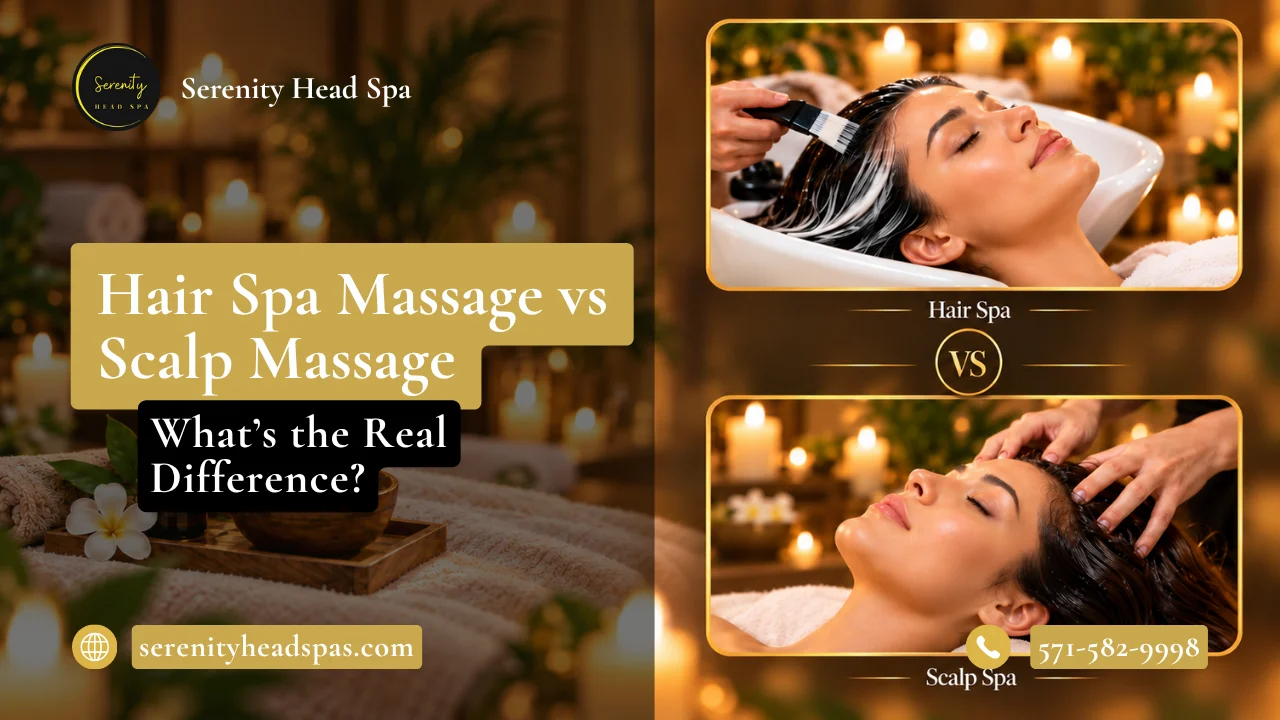
Head Massage vs. Scalp Massage for Stress Relief
The terms head massage and scalp massage are often used interchangeably, but they can describe slightly different approaches.
A scalp massage primarily focuses on the scalp, while a head massage may cover a broader area, including the scalp, temples, forehead, and sometimes the neck and shoulders. Both can be incorporated into a relaxing self-care routine.
| Head Massage | Scalp Massage |
| May include the scalp, temples, forehead, neck, and shoulders | Primarily focuses on the scalp |
| Often has a broader relaxation focus | Usually has a more localized focus |
| May be performed with or without oil | Can be performed dry or with oil |
| May include neck and shoulder movements | Usually concentrates on scalp movements |
| Can be adapted to different areas of head and neck tension | Focuses mainly on scalp comfort and relaxation |
Which Is Better for Stress Relief?
There is no single option that is best for everyone. If you tend to feel tension around your temples, forehead, neck, or shoulders, a broader head massage may feel more appropriate.
If you mainly enjoy the sensation of having your scalp massaged, a focused scalp massage may be enough for a relaxing break.
The two approaches can also be combined. A professional treatment may move from the scalp to the temples, forehead, neck, and shoulders to create a more complete relaxation experience.
When a Professional Head Massage May Be Better
Self-massage is convenient when you want a quick head massage for stress relief at home, but a professional treatment can provide a more complete and relaxing experience. Instead of focusing on the massage technique yourself, you can simply settle into the treatment and allow a trained therapist to work through the areas where you tend to hold tension.
When Should You Consider a Professional Head Massage?
A professional head massage may be a good option when:
- You want deeper relaxation: A dedicated treatment gives you time to disconnect from work, screens, and everyday responsibilities.
- You find it difficult to relax on your own: Having someone else perform the massage can make it easier to focus on the experience rather than the technique.
- You have tension in several areas: A professional treatment can incorporate the scalp, temples, forehead, neck, and shoulders rather than limiting the massage to one area.
- You want a consistent self-care routine: Regular professional treatments can become an intentional part of your relaxation routine, based on your preferences and schedule.
- You want more than a quick scalp massage: A professional head spa can combine massage with other relaxing scalp-care techniques for a more immersive experience. If you are also dealing with specific scalp concerns or thinning hair, learn more about how a head spa may support scalp issues and hair loss.
What Makes a Professional Treatment Different?
One of the main differences is that you do not have to manage the massage yourself. A therapist can maintain a steady rhythm, adjust pressure according to your comfort, and move between different areas of the head and upper body.
The environment can also play an important role. A quiet treatment setting gives you an opportunity to step away from the activities that may be contributing to everyday stress.
For those who enjoy a more comprehensive approach, a professional scalp massage service can provide focused scalp massage within a dedicated relaxation experience.
A professional massage should always feel comfortable. Let your therapist know if you prefer lighter pressure or if there are areas you would rather avoid.
Other Serenity Treatments That May Complement Head Massage
Head massage can be part of a longer relaxation session. If you enjoy scalp and head treatments, Serenity Head Spas has other services that can fit into the same visit. If you are deciding between exfoliation and a more complete spa treatment, our scalp scrub vs. head spa comparison explains the key differences.
Herbal Head Spa
A herbal head spa combines scalp-focused care with a relaxing treatment experience. It may suit people who enjoy herbal products and a longer scalp-care session.
Neck and Shoulder Massage
If you tend to carry tension below your head, a neck and shoulder massage can focus more attention on these areas.
Scalp Massage
A professional scalp massage service can be a good option if you prefer a scalp-focused treatment rather than doing the massage yourself.
You can choose the treatment that best fits how you want to relax on the day. For head, scalp, neck, and shoulder tension, combining a few suitable techniques can create a more complete relaxation session.
Frequently Asked Questions About Head Massage for Stress Relief
If you’re looking for a head massage for stress relief, these frequently asked questions cover the most common concerns about techniques, massage points, oils, duration, frequency, and self-massage. Find quick answers to help you create a simple and comfortable head massage routine.
Does Head Massage Reduce Stress?
A head massage for stress relief may help you relax when stress leaves you feeling tense. Gentle movements across the scalp, temples, forehead, neck, and shoulders can make a short break feel more calming.
How Do You Massage Your Head for Relaxation?
Use your fingertips to make slow circles across the scalp. Spend some time on the temples, forehead, crown, and base of the skull. Keep the pressure comfortable and avoid using your nails.
What Are the Best Head Massage Techniques for Stress Relief?
The best head massage techniques for stress relief include gentle scalp circles, temple massage, forehead massage, crown massage, and gentle work around the base of the skull and upper neck.
What Are the Best Head Massage Points for Stress Relief?
Common areas include the temples, area between the eyebrows, behind the ears, crown of the head, and base of the skull. Use gentle pressure and stop if an area feels painful.
What Is the Best Head Massage Oil for Stress Relief?
There is no single best oil for everyone. Lavender-based oils, coconut oil, almond oil, and properly diluted rosemary oil are common choices. Pick an oil that feels comfortable on your scalp and suits your skin.
How Long Should You Massage Your Head?
A 5 to 10 minute massage can be enough for a short relaxation break. You can spend more time on areas that feel tense, provided the massage remains comfortable.
Can Head Massage Help With Anxiety?
A head massage for anxiety may help you feel calmer when you are carrying physical tension. It should not replace professional care for ongoing or severe anxiety.
Are Head Massages Good for You?
For many people, gentle head massage can be a pleasant way to relax and release everyday tension. Use comfortable pressure and stop if you experience pain, dizziness, numbness, or other unusual symptoms.
Can You Give Yourself a Head Massage?
Yes. You can use your fingertips to massage your scalp, temples, forehead, and the base of your skull. A self-massage can take just a few minutes and does not require special equipment.
Head Massage for Stress Relief at a Glance
A head massage for stress relief can be kept simple. Use gentle pressure, slow movements, and focus on the areas where you naturally hold tension.
| Goal | Technique |
| Relax the scalp | Gentle circular scalp massage |
| Ease temple tension | Slow circular temple massage |
| Relax the forehead | Gentle movements along the forehead and hairline |
| Relax the crown | Small circular movements across the crown |
| Relax the base of the skull | Gentle fingertip movements where the head meets the upper neck |
| Release neck and shoulder tension | Slow movements across the upper neck and shoulders |
| Create a calming routine | Combine scalp, temple, forehead, and neck massage |
| Enhance the massage experience | Use a suitable carrier oil or properly diluted essential oil if preferred |
| Quick stress-relief break | Try a gentle 5–10 minute head massage |
The most important part is comfort. You do not need strong pressure or complicated techniques for a relaxing experience. Choose the areas and movements that feel soothing to you, and stop if massage causes pain, irritation, dizziness, or unusual discomfort.
Conclusion
A head massage for stress relief can be a simple way to create a relaxing pause in your day. Gentle techniques such as scalp massage, temple massage, forehead massage, and base-of-skull massage can be incorporated into a short self-care routine at home.
You do not need strong pressure or complicated techniques. Start gently, focus on the areas where you tend to hold tension, and choose a duration and frequency that feel comfortable for you. Oils are optional, and properly diluted essential oils can be used if they suit your preferences and skin.
If you prefer to step away from everyday distractions and enjoy a more complete relaxation experience, a professional treatment can provide focused attention on the scalp, head, neck, and shoulders.
Ready to make relaxation part of your routine? Explore our head spa services to find a treatment that suits your needs.