
If you are new to the treatment and wondering what a Japanese head spa is, it involves much more than washing the hair and giving the scalp a quick rub. The hands do most of the work. Different Japanese Head Spa Techniques are used across the scalp, temples, hairline, crown, neck, and shoulders. Each movement has its own pressure and pace.
Some techniques feel light and soothing. Others use firmer pressure to knead the scalp and release areas that feel tight. Circular fingertip movements, scalp kneading, pressure-point massage, and temple massage are common examples.
Knowing how these Japanese Head Spa Techniques work can make your treatment easier to understand. You’ll know why a therapist changes hand movements or spends extra time around certain areas.
At Serenity Head Spa, the massage is part of a relaxing scalp-care experience. The goal is simple: comfortable pressure, careful movements, and a treatment that feels good from the first touch to the final rinse.
What Are Japanese Head Spa Techniques?
Japanese Head Spa Techniques are a group of massage movements used to work the scalp, head, neck, and nearby areas. A therapist may use the fingertips, palms, or knuckles, depending on the area being treated and the type of pressure needed.
A Japanese scalp massage often includes slow circular movements and gentle kneading. The therapist works through small sections of the scalp instead of rubbing the whole head at once. This gives better control over pressure and movement.
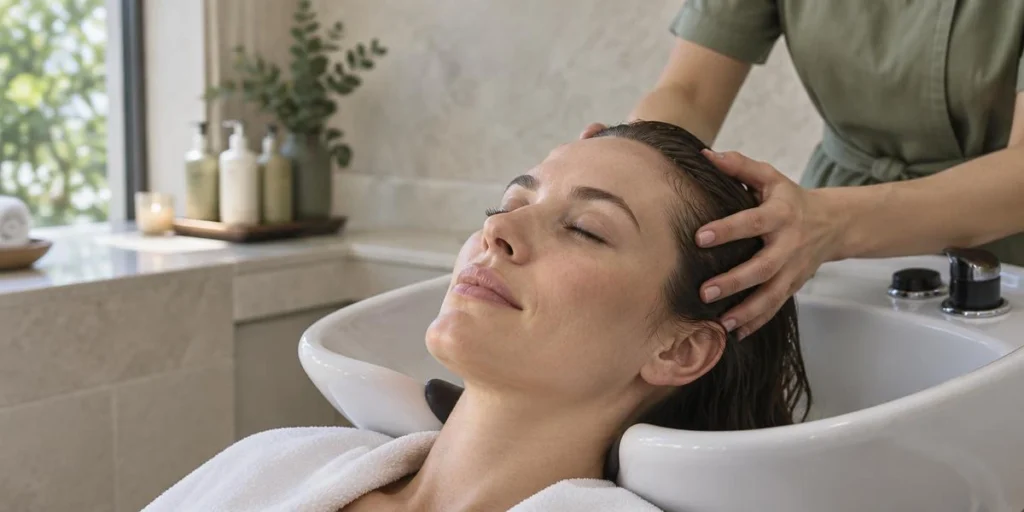
Other head spa massage techniques may focus on the temples, hairline, crown, area behind the ears, or base of the skull. These areas can feel quite different during a massage. Some may respond well to light fingertip pressure. Others may feel better with slower, deeper kneading.
Common Japanese Head Spa Techniques
- Scalp kneading: The fingertips gently move and knead the scalp.
- Circular scalp massage: Small circles are made with the fingertips or palms.
- Pressure-point massage: Controlled pressure is applied to selected areas of the head.
- Temple massage: Slow circular movements are used around the temples.
- Crown and hairline massage: The upper scalp and front hairline receive focused attention.
- Nape and neck massage: Massage continues from the lower scalp into the neck and shoulders.
The pressure should feel controlled, not painful. A good therapist adjusts the massage based on your comfort, scalp sensitivity, and the area being worked.
These techniques are often combined during a Japanese head massage rather than performed as isolated movements. The result is a structured scalp massage that feels calm, focused, and unhurried.
Japanese Head Spa Massage Techniques Explained
The difference between a basic scalp rub and professional Japanese Head Spa Techniques often comes down to hand placement, pressure, direction, and timing.
A therapist does not simply move their fingers around the head at random. The scalp is worked in sections. Pressure changes from one area to another, and the hands can move from the scalp to the temples, nape, and upper neck.
Here is how the main Japanese Head Spa Massage Techniques are performed.
Scalp Kneading: How the Movement Is Performed
With scalp kneading, the fingertips rest directly against the scalp. The therapist applies gentle pressure, moves the skin in a small motion, then releases before repeating the movement.
The fingers should move the scalp rather than pull at the hair. This gives the therapist better control over the massage.
Pressure can vary across the head. The sides and crown may receive firmer kneading, whereas a sensitive area may need a lighter touch.
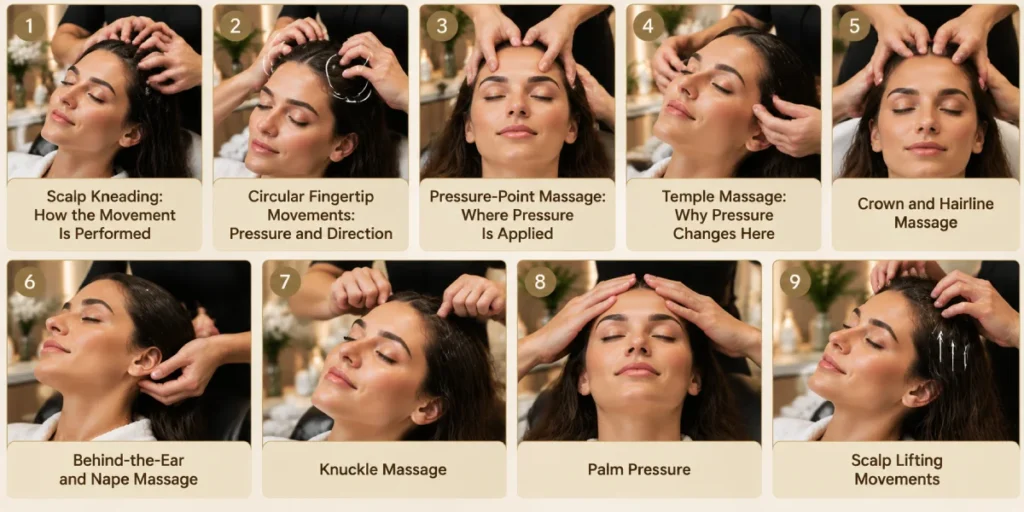
Circular Fingertip Movements: Pressure and Direction
A circular scalp massage uses the pads of the fingertips to make small, controlled circles.
The therapist may begin near the hairline, move across the sides, then work toward the crown and back of the head. The circles can be slow and shallow or slightly deeper, depending on the area.
The movement should stay close to the scalp. Fast rubbing through the hair is different and can create unnecessary pulling.
Pressure-Point Massage: Where Pressure Is Applied
Pressure point massage uses steady fingertip pressure rather than continuous rubbing.
A therapist may work around the temples, crown, hairline, area behind the ears, and base of the skull. The finger stays in place for a short period before the pressure is reduced.
The sensation can range from light to firm. It should never feel sharp or painful.
Temple Massage: Why Pressure Changes Here
The temples usually need a lighter touch. The therapist may use one or two fingertips to make slow circles over the area.
The movement is often smaller here than on the main scalp. This gives the therapist better control and makes it easier to adjust pressure.
A gentle temple massage can feel very different from firm scalp kneading. The slower pace can make this part of the session feel especially calming.
Crown and Hairline Massage
The crown and hairline require slightly different hand movements.
Around the hairline, the therapist may use small fingertip circles or gentle pressing. The skin can be more sensitive here, so heavy pressure may feel uncomfortable.
At the crown, the therapist can use broader circular movements or gentle kneading. The fingers stay close to the scalp and move through small sections rather than dragging across the entire head.
Behind-the-Ear and Nape Massage
The area behind the ears and the nape connects scalp massage with neck work.
A therapist may place the fingertips behind the ears and use slow circular movements before moving down toward the base of the skull. The nape can then receive gentle kneading or steady pressure.
This area often benefits from a slower pace. It is a good point for checking pressure with the client before moving into the neck and shoulder massage.
Knuckle Massage
Knuckles can be used when a therapist wants firmer contact across a particular area. The movement needs to remain controlled, especially around sensitive parts of the scalp.
Rather than pressing hard, the therapist can use the knuckles to make slow movements across the scalp. The exact pressure depends on the client’s comfort.
This technique can feel different from fingertip massage. The contact is broader, so the sensation may feel deeper without requiring excessive force.
Palm Pressure
The palm can cover a wider area than the fingertips. A therapist may use the palm to apply steady pressure or gently hold part of the head before moving to another section.
Palm contact can be useful during transitions between techniques. It can create a steady sensation instead of the more focused pressure produced by individual fingertips.
Scalp Lifting Movements
Scalp lifting involves gently moving the scalp rather than rubbing the surface of the hair.
The therapist places the fingertips against the scalp and applies controlled upward or lifting pressure. The movement should stay comfortable and should never involve pulling the hair.
This technique can be combined with kneading or circular movements. It gives the massage a different feel and helps vary the hand movements throughout the session.
How the Techniques Work Together
A skilled therapist may move from one technique to another rather than repeating the same movement for the entire massage.
For example, a session may begin with light circular movements, move into scalp kneading, then use focused pressure around the temples and crown. The massage can finish with work around the nape and neck.
Pressure and speed can change along the way. That variation is what makes Japanese Head Spa Techniques feel more structured than a simple scalp rub.
The goal is not to use the strongest pressure possible. Good technique comes from controlled movement, steady hands, and adjusting the massage to the person’s comfort. These movements are also connected to several Japanese head spa benefits, including scalp care, relaxation, and support for healthier-looking hair.
How Does Scalp Kneading Work?
Scalp kneading is a hands-on massage movement where the therapist gently presses and moves the scalp with the fingertips. It is different from simply rubbing shampoo through the hair.
The therapist usually places the fingertips against the scalp and works through small sections. A gentle press is followed by a controlled circular or lifting movement. The pressure is then released before the next movement begins.
The fingers should stay close to the scalp. Pulling the hair is not part of the technique.
How the Movement Is Performed
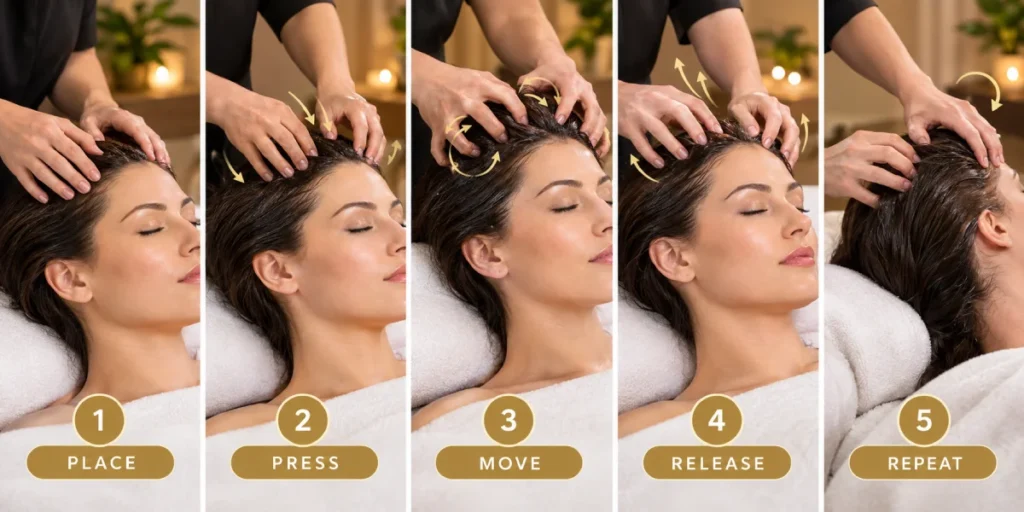
A typical scalp kneading movement follows a simple pattern:
- Place: The fingertips rest against the scalp.
- Press: Gentle pressure is applied.
- Move: The scalp is moved in a small kneading motion.
- Release: Pressure is reduced.
- Repeat: The therapist moves to the next section.
This can be repeated across the sides, crown, back, and other areas of the scalp.
Why Pressure Matters
Too little pressure may feel like someone is simply running their fingers through your hair. Too much can become uncomfortable.
A good scalp massage technique uses enough pressure to create a clear sensation without causing pain. The therapist may use lighter pressure around the hairline and temples, then adjust it around areas such as the crown or nape.
Your feedback matters here. If a movement feels too firm, say so. A relaxing massage should not require you to grit your teeth and pretend everything is fine.
Scalp Movement vs. Hair Movement
One of the easiest ways to tell the difference between proper kneading and ordinary hair rubbing is where the movement happens.
With proper Japanese scalp massage, the fingers work against the scalp. The hair may move with the fingers, but it should not be pulled from the roots.
This is particularly useful for people with long, thick, curly, or easily tangled hair. Controlled finger placement helps keep the massage comfortable without creating unnecessary tension on the strands.
What Does Scalp Kneading Feel Like?
The sensation can vary from gentle pressure to a firmer, deeper feeling. Some areas may feel more sensitive than others.
The movement should remain controlled from start to finish. Sharp pain, scratching, or strong hair pulling are signs that the pressure or technique needs to change.
When performed comfortably, scalp kneading can be one of the most relaxing parts of a Japanese Head Spa massage. It gives the treatment a focused, hands-on feel without relying on force.
How Is Pressure Applied During a Japanese Head Spa Massage?
Pressure is one of the details that can change the feel of a Japanese Head Spa Massage. The therapist does not need to use the same pressure across the entire scalp. Some areas may feel comfortable with firm contact, whereas others need a lighter touch.
A good massage uses gradual pressure rather than sudden force.
Light Pressure
Light pressure is often useful around sensitive areas such as the hairline and temples. It can involve gentle fingertip contact, small circles, or slow pressing.
This level can be a good choice if you have a sensitive scalp or prefer a softer massage.
Moderate Pressure
Moderate pressure gives you a clearer sense of the massage without feeling heavy. It can work well across areas such as the sides and crown of the scalp.
During Japanese Head Spa Techniques, the therapist may move between moderate pressure and lighter movements depending on the technique being used.
Firm Pressure
Some clients prefer firmer pressure, particularly around the thicker areas of the scalp or nape. Firm does not mean painful.
The therapist should increase pressure gradually and check how it feels. If you feel sharp pain, burning, or excessive tenderness, the pressure should be reduced.
Why Pressure Changes Across the Head
The scalp does not feel exactly the same everywhere. The hairline and temples can feel more sensitive. The crown, sides, and back may respond differently to massage.
Hand position matters too. Fingertips create focused pressure, palms spread contact over a wider area, and knuckles can create firmer contact across a smaller section.
This is why an experienced therapist does not simply choose one pressure level and use it from start to finish.
Your Feedback Matters
You should be able to tell your therapist what feels comfortable.
You can ask for:
- lighter pressure
- firmer pressure
- slower movements
- less pressure around a sensitive area
- extra attention to a comfortable area
There is no prize for tolerating the strongest massage in the room.
The best Japanese Head Spa Techniques rely on control rather than force. Pressure should support a comfortable massage experience, not leave you wondering why your scalp needs a recovery day.
Why Do Therapists Use Circular Scalp Movements?
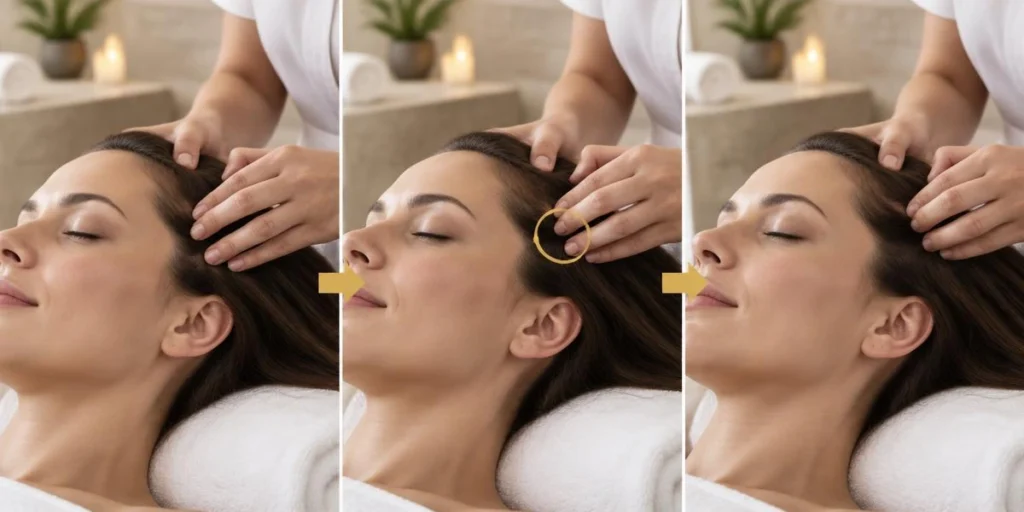
Circular movements are common in Japanese Head Spa Techniques because they give the therapist good control over both direction and pressure. Instead of dragging the fingers across the scalp, the fingertips make small, deliberate circles over one area before moving to the next.
The size of the circle can change. Smaller circles work well around the temples and hairline. Slightly broader movements can be used across the crown and sides of the scalp.
How Circular Scalp Massage Is Performed
The therapist places the pads of the fingers against the scalp and begins with gentle contact. The fingers then move in small circles while staying close to the same section.
The movement can be repeated several times before the therapist shifts position.
This section-by-section approach helps prevent unnecessary pulling. The hair may move with the fingers, but the main movement should happen at the scalp.
Why the Direction Can Change
A therapist may change direction during a circular scalp massage. They can move clockwise, counterclockwise, or combine circles with short pressing movements.
Changing direction gives the massage a different sensation and prevents the movement from feeling repetitive.
The therapist may pair circular movements with kneading, especially around the crown and sides of the head.
Circular Movements During Hair Washing
Circular movements can appear during the cleansing part of a head spa too. The therapist may use the fingertips to work the scalp gently rather than aggressively scrubbing the hair. Some treatments may also include a hair steam service to add warmth and hydration during the scalp and hair-care process.
The technique needs to remain controlled. Scrubbing harder does not mean the scalp is being cleaned better.
How It Feels
Circular fingertip movements usually create a steady, rhythmic sensation. The pressure can range from very light to moderately firm.
Around sensitive areas, the therapist can make smaller circles with less pressure. On broader areas of the scalp, the movement may feel slightly deeper.
This is one reason Japanese Head Spa Massage Techniques can feel different from an ordinary scalp rub. The movement has a clear pace and direction rather than being a series of random strokes.
How Do Knuckle and Palm Techniques Differ?
Fingertips are not the only part of the hand used during a Japanese Head Spa Massage. Depending on the area and the massage style, a therapist may use the knuckles or palm to change the type of contact.
Each hand position creates a different sensation.
Knuckle Massage
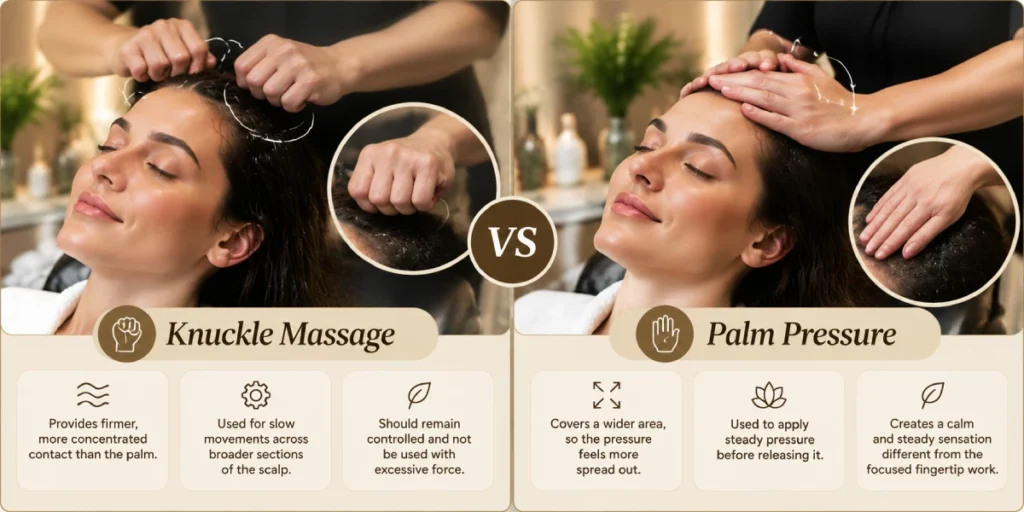
Knuckles provide firmer, more concentrated contact than the palm. A therapist may use them for slow movements across broader sections of the scalp.
The movement should remain controlled. The knuckles should not be dragged aggressively across the skin or used with excessive force.
This technique can feel deeper than fingertip massage. Some people prefer that stronger sensation, while others find fingertip work more comfortable.
Palm Pressure
The palm covers a wider area, so the pressure feels more spread out.
A therapist may place the palm against part of the head and apply steady pressure before releasing it. Palm contact can then transition into another technique, such as kneading or circular fingertip movements.
The broader contact can feel calm and steady. It is quite different from the focused sensation created by one or two fingertips.
When Are These Techniques Used?
There is no single rule for when a therapist must use knuckles or palms. The choice can depend on the massage style, the area being treated, and the client’s comfort.
For example, a therapist might use fingertips around the temples, knuckles across a broader scalp area, then palms during a transition.
This variation keeps the massage from feeling like the same movement repeated from start to finish.
Knuckles vs. Palms vs. Fingertips
| Hand position | Type of contact | Typical sensation |
| Fingertips | Focused | Precise and light to firm |
| Knuckles | Concentrated and broader | Firmer and deeper |
| Palm | Broad | Steady and spread out |
The best Japanese Head Spa Techniques are not about using the hardest contact. The therapist should choose the hand position that suits the movement and adjust it based on how the client responds.
Japanese Head Spa Neck and Shoulder Massage
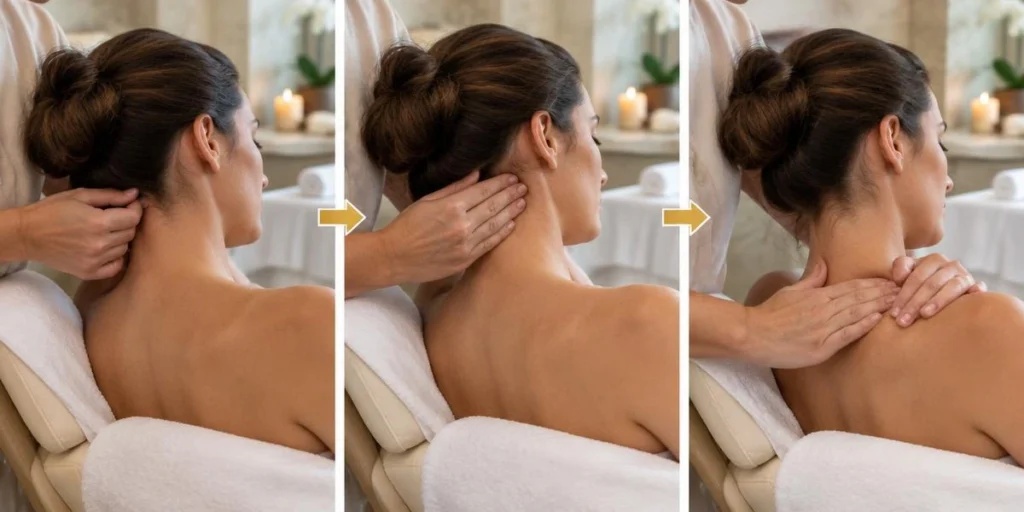
A Japanese Head Spa Massage does not always stop at the scalp. Many treatments continue down to the nape, neck, and shoulders. These areas connect closely with the lower part of the head, so the hand movements can change as the therapist moves downward.
The massage here usually feels different from scalp work. The therapist has more room to use the palms, fingers, and knuckles.
Nape Massage
The nape is the area where the back of the head meets the neck. A therapist may begin with gentle fingertip pressure near the base of the skull.
Small movements can then travel down the upper neck. The pressure is usually controlled, since this area can feel sensitive.
Neck Massage
Once the therapist moves onto the neck, the hand position may become broader.
The fingers can press along the sides of the neck, while the palm may be used for slower contact. Gentle kneading can be used around the muscles rather than pressing directly into the spine.
The pressure should remain comfortable throughout the movement.
Shoulder Massage
The shoulders may receive slow kneading with the fingers, palms, or knuckles. The therapist can work across the upper shoulder area using short, controlled movements.
This part of the treatment can feel firmer than massage around the temples or hairline. Your therapist should still adjust the pressure if an area feels tender.
How Neck and Shoulder Work Connects With Scalp Massage
The transition between the scalp and neck can be gradual. A therapist might work around the nape first, move down the neck, then continue across the shoulders before returning to the head.
This creates a smooth change between Japanese Head Spa Techniques rather than making the scalp, neck, and shoulder work feel like separate treatments.
If any area feels uncomfortable, let your therapist know straight away. Good massage technique depends on controlled hand movements and pressure that suits the person receiving the treatment.
Japanese Head Spa Techniques for Different Scalp Types
Not every scalp responds to massage in the same way. A therapist may change the pressure, speed, or hand movement based on how the scalp feels during the session.
The aim is not to treat a scalp type with one fixed technique. It is to keep the massage comfortable and controlled.
Sensitive Scalp
A sensitive scalp may respond better to light fingertip movements and slower circles. Heavy kneading or firm pressure may feel uncomfortable.
The therapist can use smaller movements around the hairline, temples, and other sensitive areas. Pressure can be increased only if it feels comfortable.
Dry or Tight-Feeling Scalp
A scalp that feels dry or tight may benefit from gentle scalp massage techniques rather than aggressive rubbing. For care that also focuses on hydration and hair condition, a hair spa service can provide a more complete treatment.
Slow circular movements and light kneading can keep the contact controlled. The therapist should avoid scratching with the nails or pulling at the hair.
Oily Scalp
An oily scalp does not need harder massage. Firm scrubbing can create an unpleasant sensation without making the cleansing process better.
During a head spa, the therapist can use controlled fingertip movements during scalp cleansing. The massage pressure should still be based on comfort rather than oiliness.
Thick or Dense Hair
With thick hair, reaching the scalp can require more deliberate finger placement. The therapist may work in smaller sections so the fingertips stay close to the scalp.
This helps the massage focus on the scalp rather than simply moving through the hair.
Fine or Easily Tangled Hair
Fine or easily tangled hair needs gentle handling. Fingertip movements should stay controlled, with minimal pulling through the strands.
A therapist can work close to the scalp and use smaller movements instead of dragging the fingers through the hair. For a broader look at how a Japanese head spa treatment can support shiny, healthy-looking hair, see our dedicated hair-care guide.
How a Therapist Adjusts the Technique
Scalp type is only one part of the decision. The therapist can adjust the massage based on sensitivity, hair density, personal preference, and how the scalp responds during the session.
The same Japanese Head Spa Techniques may feel very different when the pressure or movement is changed.
A good session should feel controlled from beginning to end. If a technique feels too strong, too fast, or uncomfortable, tell your therapist so the movement can be adjusted.
Japanese Head Spa Massage vs. Regular Scalp Massage
A regular scalp massage and a Japanese Head Spa Massage can both involve rubbing or kneading the scalp. The main difference is how the massage is structured, which areas are worked, and how the techniques change during the session.
| Feature | Japanese Head Spa Massage | Regular Scalp Massage |
| Massage techniques | Uses several techniques, such as scalp kneading, circular movements, pressure-point work, temple massage, palm pressure, and scalp lifting | Often uses basic rubbing, pressing, or circular movements |
| Hand movements | Fingertips, palms, and knuckles may be used for different areas | Usually relies on fingertips or palms |
| Pressure | Pressure can change from light to moderate or firm based on the area and client preference | Pressure may stay fairly consistent throughout the massage |
| Massage pace | Speed can change between slow, focused movements and broader massage strokes | Often follows a more consistent pace |
| Scalp coverage | Works through different sections of the scalp, including the crown, sides, hairline, and back of the head | May focus mainly on the scalp without as much section-by-section work |
| Temples and hairline | Often receive focused fingertip movements with controlled pressure | May receive little or no focused attention |
| Nape and neck | Can continue from the scalp into the nape, neck, and shoulders | May stop at the scalp or include limited neck work |
| Technique changes | The therapist can switch movements based on the area being treated and client comfort | Fewer technique changes are common |
| Hair handling | Movements stay close to the scalp to limit unnecessary pulling | Technique depends on the person giving the massage |
| Overall structure | More structured, with several Japanese Head Spa Techniques used during one session | Usually a simpler massage focused on scalp comfort |
The main difference is the variety and structure of the massage techniques. A Japanese head spa can move from fingertip circles to scalp kneading, then to temple, nape, neck, or shoulder work.
What Should a Japanese Head Spa Massage Feel Like?
A Japanese Head Spa Massage can feel light, rhythmic, or firm depending on the technique and pressure.
- Scalp: Gentle kneading and circular movements create steady pressure across the scalp.
- Temples and hairline: Smaller, lighter movements are usually used in these sensitive areas.
- Crown and sides: The pressure may feel slightly firmer during kneading.
- Nape and neck: Broader hand movements can create a deeper sensation.
- Overall: The massage should feel controlled and comfortable, not sharp or painful.
Your therapist can adjust the pressure, speed, or movement if anything feels uncomfortable. Your hair should not be pulled or scratched during the massage.
Japanese Head Spa Massage Techniques FAQs
How Is Scalp Kneading Performed in a Japanese Head Spa?
The therapist places the fingertips against the scalp, applies controlled pressure, and gently moves the skin in small sections. The movement should work on the scalp rather than pull the hair.
How Are Circular Scalp Massage Movements Performed?
The therapist uses the pads of the fingertips to make small, controlled circles. Smaller movements can be used around the temples and hairline, with broader circles across the crown and sides.
What Is the Difference Between Fingertip, Palm, and Knuckle Massage?
Fingertips create focused pressure over a small area. Palms provide broader, steadier contact. Knuckles can create firmer contact across a specific section.
Which Areas Are Used for Japanese Head Spa Pressure-Point Massage?
Pressure may be applied around areas such as the temples, crown, hairline, behind the ears, and base of the skull. Pressure should remain controlled and comfortable.
How Does a Therapist Adjust Massage Pressure?
Pressure can be changed based on the area being massaged and the client’s comfort. Sensitive areas may receive lighter pressure, while broader areas can tolerate firmer contact.
Can Japanese Head Spa Techniques Be Changed for a Sensitive Scalp?
Yes. A therapist can use lighter pressure, smaller movements, and a slower pace. Fingertip work can be adjusted around areas that feel particularly sensitive.
Final Thoughts
Japanese Head Spa Techniques rely on controlled movements, careful pressure, and precise hand placement. Scalp kneading, circular movements, fingertip pressure, palm contact, and knuckle techniques can all create different sensations.
The best technique depends on the area being massaged and your comfort level. A good therapist adjusts the movement and pressure rather than using the same approach from start to finish.
If you want to experience these techniques in a professional setting, Serenity Head Spa can help you choose a treatment that fits your preferences. Those looking for a Japanese head spa in Maryland can also see our local treatment guide and options. Clients in Maryland can also view our head spa services in Rockville for local treatment options.